

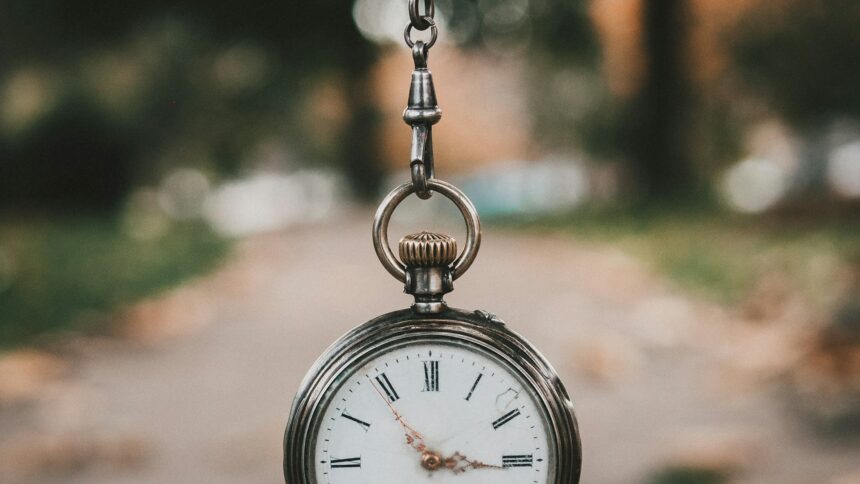
In a case at the Crowsnest Museum and Archives in Coleman sits a pocket watch, a 23 jewel Elgin of the kind Canadian Pacific Railway issued to its conductors. It cost $96. It came off Samuel Edward Jones on 2 August 1920, when three armed men robbed Canadian Pacific Railway train No. 63 near Sentinel in the Crowsnest Pass. That watch is the only object from the affair a person can stand in front of. It is also what closed the case, three years and five months later by our own arithmetic, long after the Alberta trail had gone cold.
Five days after the robbery, on 7 August, two of the three men sat eating in the Bellevue Cafe on Main Street. Constable James Frewin and Constable Frederick Bailey of the Alberta Provincial Police found them there, with Corporal Ernest Usher of the Royal Canadian Mounted Police. Frewin called on the two men to put their hands up. What happened next took less than a minute. George Arkoff was killed, Usher and Bailey were killed with him, and Thomas Bassoff went out into the street with a bullet in his leg and four days of freedom left.
The third man, Ausby Auloff, had split off before any of that and was already gone south.
Key facts
- The Alberta Police and Peace Officers’ Memorial Day honour roll, published by the Government of Alberta, records Constable Frederick W. E. Bailey of the Alberta Provincial Police as killed on 7 August 1920.
- The Alberta Royal Canadian Mounted Police Wall of Honour records Corporal Ernest Usher, regimental number 6096, as killed at Bellevue, Alberta on 7 August 1920.
- The Crowsnest Museum and Archives, at 7701 18 Avenue in Coleman, holds the conductor’s pocket watch taken during the robbery of Canadian Pacific Railway train No. 63 on 2 August 1920.
- The Crowsnest Heritage Initiative, in Heritage News issue 59 of June 2020, records that Thomas Bassoff was tried at Macleod in October 1920 and went to the gallows on 22 December 1920.
- The Provincial Archives of Alberta dates the Alberta Provincial Police to the years 1917 to 1932, after which the Royal Canadian Mounted Police took over provincial policing in Alberta.
How much the robbers took depends on which record you open
The executive director of the Crowsnest Museum and Archives put the haul at about $400 in cash and some valuables in 2020. A magazine account published in February 1958, written while men who had been in the Pass in 1920 were alive to correct it, put the cash at roughly $300. An Alberta weekly retelling the story in 2020 put it at $500 to $600 and a watch. Nobody is lying. The records thin out, and each teller reaches for the nearest number.
One figure does not move. The watch cost $96 in every account that bothers to name it, because a railway watch came with a price and a maker and an engraving, and those survive a century better than a tally of loose bills taken off frightened passengers in a coach. A number without a document behind it drifts. An object does not.
What the watch did that the manhunt could not
Bassoff was taken at Pincher Station, tried at Macleod that October, and hanged at Lethbridge on 22 December 1920. Auloff was another matter. He had crossed into the United States and his file went nowhere for years, which is what files do when they hold nothing but a description.
Then the watch turned up in a pawnshop in Portland, Oregon. Engraved railway watches are not anonymous, and this one carried enough on it to be matched back to a conductor near Sentinel. The Alberta Provincial Police followed it to Butte, Montana, and arrested Auloff there in January 1924. He drew seven years and died in prison in 1926. The manhunt across the Pass in August 1920 never found him. A watchmaker’s engraving did.
Why the cafe in Bellevue is the thinnest part of the record
The building is still there on Main Street. It was restored some years ago, and it is shut. Anyone who drives up to look sees a locked door and a front window with nothing behind it to say what happened there. Two officers died in that room. The official line for one of them runs to ten words. Killed while attempting to arrest train bandits, at Bellevue, Alberta.
That is what a hundred and six years of thin record leaves behind. The retellings have already begun to slide. The cafe picks up a different name in some of them. The money moves by hundreds of dollars from one telling to the next. None of that comes from bad faith. It comes from a case where almost nothing physical survived, so the gaps got filled with whatever sounded right, and each filling hardened into the next writer’s fact.
A province this young should still be able to reach the paper. The court file from Macleod exists. The Alberta Provincial Police records sit in the Provincial Archives of Alberta. The honour roll is a government publication anyone can open. What is missing is not evidence. It is the work of putting the evidence beside the place, so the building on Main Street tells a visitor something and the visitor does not go home and read a retelling of a retelling.
Stand in front of both and the difference is plain. In Bellevue, a restored front on a closed building, giving nothing back. A few kilometres west in Coleman, under museum glass, a conductor’s watch with the railway’s engraving still on it, the one thing in the whole business that never changed its story.