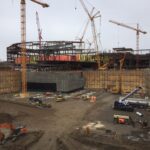



The province puts it this way on alberta.ca: “A skilled energy workforce has built megaprojects here for generations.” The sentence is true. The question is whether the jobs that follow data centres look like the ones that built the oil sands.
Key facts
- Construction employment cited: 7,400 job-years over three years.
- Permanent jobs cited: 339.
- Our arithmetic: 7,400 job-years over three years is about 2,500 jobs a year.
- Reported, not confirmed: a figure of 5,200 jobs also circulates. It does not appear on the summary page of the Information and Communications Technology Council.
What must be true
A job-year is one person working for one year. So 7,400 job-years spread across three years means roughly 2,500 people employed in each year of construction. When the build ends, 339 permanent jobs remain. That is our division, and it makes the long-run picture far smaller than the headline.
The case for the number
The strongest defence is that construction work is real work. Electricians, pipefitters and heavy equipment operators are paid well, and a data centre build keeps them local instead of sending them out of province. A permanent staff of 339 also understates the downstream effect on trades that service the sites.
Where it matters for Alberta
Alberta is competing for power, land and approvals. We covered the cost rule question in our column on the untested data centre cost rule and the land side in the Edmonton data centre application. The jobs case is the third leg, and it carries the most weight politically.
Prediction, dated. By the end of 2027, the number to watch is permanent jobs at announced sites, not construction job-years. If that count stays near 339 while projects multiply, the energy workforce story will need a better account.
Sources
- Government of Alberta, alberta.ca data centre announcement.
- Information and Communications Technology Council, summary page.