

Frank Slide and the Strength to Stay
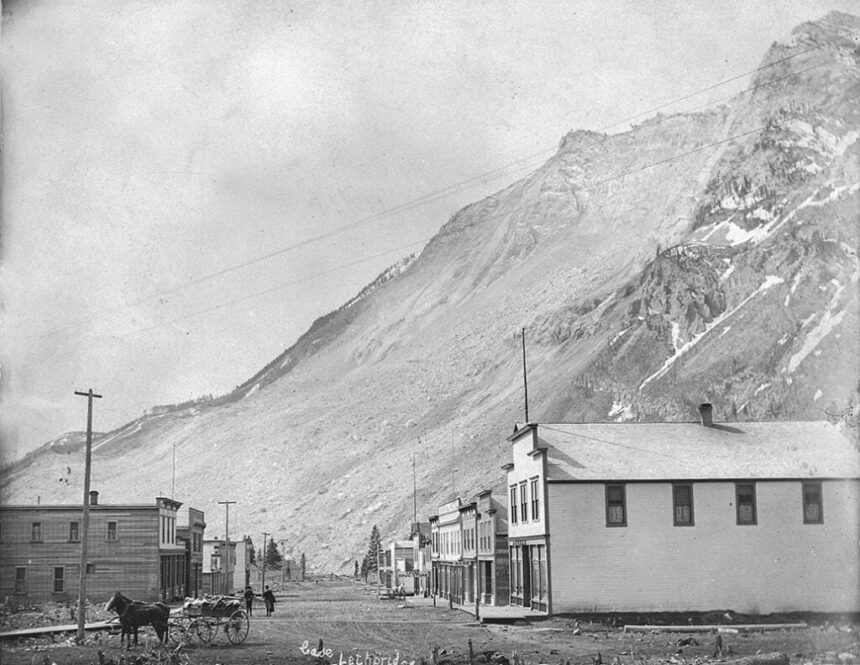
In the early hours of April 29, 1903, the eastern face of Turtle Mountain collapsed onto the town of Frank in what remains the deadliest landslide in Canadian history. More than 100 million tonnes of limestone thundered into the valley in less than two minutes, burying homes, rail lines, work camps, and businesses beneath layers of rock that in some places reached the height of a four storey building.
At least seventy people were killed. Fewer than two dozen bodies were ever recovered.
It was a moment of devastation that reshaped the land and defined a community for generations.
A Disaster That Did Not End the Town
Frank could have disappeared that morning. Many places would have.
Instead, survivors acted. Neighbours dug through rubble to rescue those they could. Rail workers restored the Canadian Pacific Railway line that ran through the debris field. Within weeks, the coal mine reopened and work resumed.
This was not denial of loss. It was acceptance of responsibility.
Despite the danger and the grief, many residents chose to stay. By 1906, Frank’s population had grown as workers arrived to help rebuild. Life resumed beside the rock that had buried part of the town.
That decision speaks to a kind of strength Alberta knows well. Not defiant. Not dramatic. Practical and resolved.
Living With the Mountain That Moves
Long before the slide, Indigenous peoples understood the instability of Turtle Mountain. The Blackfoot and Kutenai referred to it as the mountain that moves and avoided camping near its base.
Modern geology has confirmed what traditional knowledge already knew. Turtle Mountain remains unstable. It has been monitored for decades by the Alberta Geological Survey, which continues to track fissures and movement. Experts agree another slide will occur someday, though they believe it will be far smaller than the one in 1903 and not imminent.
Frank lives with that knowledge.
Each spring, small rockfalls remind residents that the mountain still shifts. The danger is not ignored, but neither is it allowed to define the community.
Grit Without Ceremony
There were no grand speeches about resilience in Frank. No slogans carved into stone.
People worked. Families carried on. Children grew up playing among the boulders that had once fallen from the sky. For many, the slide was not only a site of tragedy but part of daily life.
One longtime resident once described the rubble as his childhood playground. That kind of memory does not come from denial. It comes from endurance.
Frank did not survive because it was extraordinary. It survived because ordinary people chose to stay engaged with their responsibilities, even when the cost was high.
What Frank Represents Today
The original townsite now hosts an industrial park. The slide area is a burial ground and a protected historical site. An interpretive centre educates visitors from across Canada and beyond about what happened there and why it matters.
Frank is no longer a coal town. It is part of the broader Crowsnest Pass region, an area shaped by boom and bust cycles, natural risk, and steady human effort.
The mountain still casts its shadow. The town still stands.
Why This Story Matters
Frank Slide is often remembered only as a disaster. That misses half the story.
It is also about people who chose continuity over abandonment, responsibility over retreat, and work over despair. These are not abstract values. They are decisions made under pressure.
Alberta’s history is filled with moments like this. Communities facing hardship and choosing to carry on without asking for recognition.
Frank reminds us that strength does not always look heroic. Sometimes it looks like rebuilding quietly and staying put.
That is a legacy worth respecting.