

There is a log house north of Markerville, painted in cheerful colours and kept much the way it looked in 1927. It is a modest place, the home of a working farm family, and it does not look like the birthplace of anything historic. But for nearly forty years, the man who lived there spent his nights doing something extraordinary. He farmed Alberta soil by day, and by lamplight after midnight he wrote poetry that Iceland still ranks among the finest in its language.
A long road to a Markerville homestead
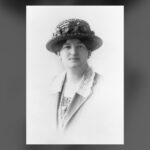
His name was Stephan G. Stephansson, and he was born in Iceland in 1853, on a farm in the north of that hard and beautiful country. He had almost no formal schooling. What he did have was the old Icelandic habit of verse, a culture in which ordinary farmers composed poetry as naturally as they mended fences, and he was making verses of his own as a teenager.
Iceland in the 1800s was a difficult place to make a living, and Stephansson joined the great wave of Icelanders who left it. He emigrated in 1873, first to Wisconsin, then to the Dakota Territory, and finally, in 1889, to a homestead north of the Red Deer River near Markerville. He arrived in late autumn with his family, found a stretch of unsurveyed land, and quickly threw up a small log cabin before winter closed in. That cabin, added to and improved over the years as money allowed, is the house that still stands today.
He was not alone out there. Markerville was the heart of a small Icelandic farming settlement, one of several the immigrants established on the Canadian prairies, and Stephansson lived among neighbours who spoke his language and knew his poems. He took part in the life of that community and wrote, always wrote, for an Icelandic-reading audience scattered across two continents.
The work of two full lives
Homesteading is not a part-time occupation. Breaking prairie, raising crops and animals, and feeding a large family is exhausting, year-round, daylight-to-dark labour, and Stephansson did all of it. He was, by every account, a serious and capable farmer. The poetry happened in the hours that were left over, which mostly meant the hours when he ought to have been asleep. He wrote at night, after the work was done, by the light of a lamp.
Sleepless Nights
He knew exactly what he was doing to himself, and he named the work for it. His collected poems were published under the title Andvokur, an Icelandic word usually rendered as Wakeful Nights or Sleepless Nights. The collection ran to six volumes, the first of them published in Winnipeg and the last after his death. That would be a large life’s work for a full-time poet with nothing else to do. Stephansson produced it in his spare hours, in a faraway country, on a working farm.
The honour from home
Iceland noticed. In 1917, the people of Iceland invited Stephansson to come home for a tour, and he was received there as what he had become. Iceland has long ranked him among the finest poets in its language. That is a remarkable sentence to be able to write about a man who spent his working life behind a plough near Markerville, Alberta.
Stephansson suffered a stroke in 1926 and died at the farm in 1927, in the house he had built and enlarged over thirty-eight years on the land.
A piece of Iceland, kept
The house did not become a ruin. It was restored to its 1927 condition, opened to the public as a museum, and named a Provincial Historic Site in 1976, according to the Alberta Historic Places blog. It is still there, north of Markerville, brightly painted and carefully kept, a small bright marker on the open central-Alberta landscape.
It is an easy place to drive past, and an easy story to underestimate. But the Stephansson House is a reminder that heritage is not only forts and railways and grand hotels. Sometimes it is a log farmhouse where a tired man sat up well past midnight, again and again for decades, and wrote something his old country would treasure for centuries. Alberta was built by people who worked very hard. A few of them, it turns out, were also doing something magnificent after dark.