


In 1949 Canada gave itself a national film awards ceremony, and it lasted twenty-nine years before being replaced, renamed, merged and renamed again. In 1973 a small group of Alberta producers incorporated an association of their own, and the year after that they handed out their first Rosie Awards. One of those two institutions is still operating under the same stewardship, in the same province, with the same name on the trophy; it is not the national one.
Key facts
- The Alberta Media Production Industries Association was incorporated in 1973, per the association’s own submission materials.
- The association’s published winners list records the first annual Rosie Awards in 1974.
- That same winners list records the seventh annual awards in 1980 and the eighth in 1982, with no ceremony held in 1981.
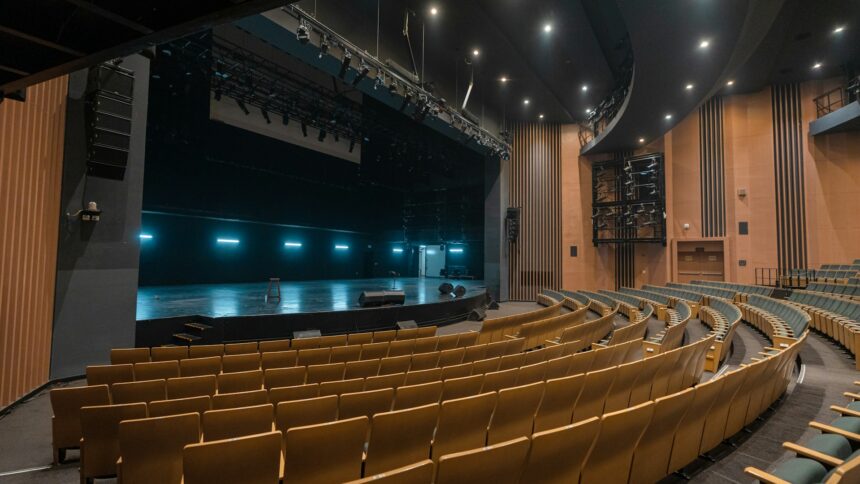
- The 2026 Rosie Awards are the 52nd annual edition, scheduled for 7 November 2026 at the Jubilee Auditorium in Calgary, per the association.
- The Canadian Film Awards began in 1949 and ran until 1978, with the successor line becoming the Canadian Screen Awards in 2013.
The arithmetic gives away a year that went missing
Take 1974 as the first and count forward without interruption, and 2026 lands on the fifty-third annual. The association calls this year’s the fifty-second, and it is right to; there was no ceremony in 1981, the seventh having been held in 1980 and the eighth in 1982. The missing year is recorded plainly in the association’s own list of winners, where it has sat for four decades without anybody making much of it. The reason given is that a conflict had arisen with the Banff festival, which is about as Albertan an explanation as an industry can offer: two events, one small pool of people, and somebody had to move.
That is more persuasive than an unbroken run would have been. An institution that never missed a year is usually an institution with an endowment; an institution that missed one year in fifty-two, over a scheduling conflict, in the middle of the worst stretch the Alberta economy had seen in a generation, is an institution run by people who were paying for it themselves and made a practical decision. The 1981 gap is evidence of exactly the fragility that makes the other fifty-one years worth noticing.
The claim to be oldest needs a qualifier it does not carry
The association describes the Rosies as the oldest film and video production awards show in Canada, without qualification, and that claim does not hold. The Canadian Film Awards were handing out prizes in 1949, twenty-five years earlier, and ran until 1978. The line from those awards through the Genies and the Geminis to the Canadian Screen Awards is continuous enough that anybody wanting to argue national primacy has a strong case.
Nor does the version repeated locally, that the Rosies are the oldest outside Quebec, improve matters, since Quebec’s Prix Iris only began in 1999 and is therefore a quarter of a century younger than the Alberta awards. The carve-out protects against a competitor that does not exist.
What survives, and what is genuinely remarkable, is narrower and better: these are the longest-running regional film and television awards in the country, and they have been run continuously by the same organization since 1974, which is a claim the national line cannot make at all. The nationals were rebuilt three times under three names by three bodies. The Alberta awards have simply carried on, put on by the same association that incorporated itself in 1973 because nobody else was going to do it.
What fifty-two years buys a province
In 1973 Alberta had no meaningful screen sector to speak of; a handful of production houses, some documentary work, and the occasional American crew arriving for country they could not get anywhere else. The province now puts the industry’s contribution at $1.25 billion in 2023, supporting more than 9,000 jobs. Nobody in Ottawa built that, and nobody in Ottawa would have thought to; the federal instruments that mattered arrived long after Albertans had already decided their own work was worth a ceremony.
That pattern has held across half a dozen sectors in this province. The thing gets built by the people who will be embarrassed if it is not built, and the funding arrives afterward and claims parentage. A film tax credit is an accelerant. It is not an origin. The origin was a room of people in 1973 filling out incorporation papers.
The ceremony returns to the Jubilee in Calgary on 7 November, and the Calgary film festival will have come and gone before it. Neither event needs to claim a record it cannot support. Fifty-two years of a province giving prizes to its own people, with one year off in 1981 for a scheduling conflict nobody now remembers, is a better story than being oldest at anything.
Institutions are not measured by the year they began; they are measured by the year they almost stopped and did not.