

J.M. Wardle and the Road That Made Banff Reachable
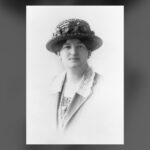
Mount Wardle stands inside Kootenay National Park, and most of the people who drive past it on Highway 93 South could not tell you who it was named for. James Morey Wardle, who lived from 1888 to 1971, was superintendent of Banff National Park from 1918 to 1921 and then Chief Engineer for Parks Canada until 1935, according to the Whyte Museum of the Canadian Rockies Archives.
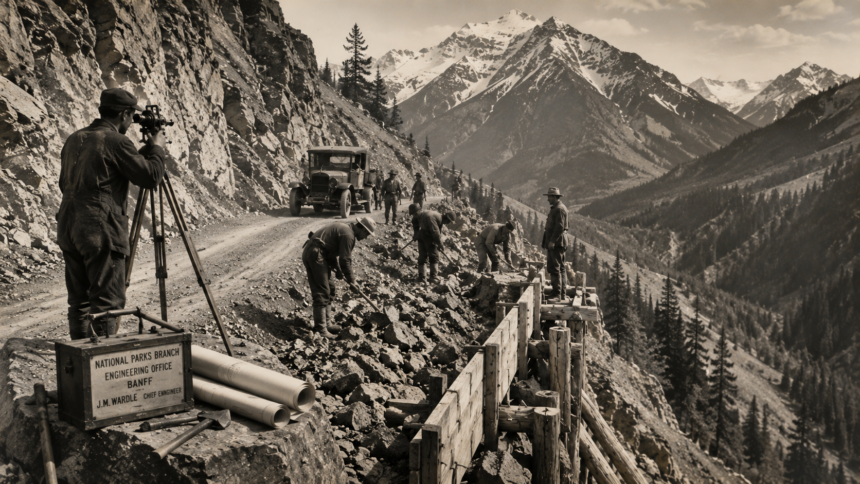
The same archive credits him with directing construction of three mountain roads: Banff to Windermere, Banff to Lake Louise and Banff to Jasper. Of the three, the first had the worst ground to cross.
Key facts
- James Morey Wardle was superintendent of Banff National Park from 1918 to 1921 and Chief Engineer for Parks Canada from 1921 to 1935, according to the Whyte Museum of the Canadian Rockies Archives.
- The Whyte Museum archives record that Wardle directed construction of the Banff-Windermere, Banff-Lake Louise and Banff-Jasper highways.
- Construction of the Banff-Windermere road began in 1911 from the Columbia Valley side and was completed in 1923, according to Parks Canada.
- Parks Canada reports that the federal government built the highway under the 1919 Banff-Windermere Road Agreement with British Columbia, using hand tools, horses and dynamite.
The Banff-Windermere road was cut through Sinclair Canyon by hand
Parks Canada describes the hardest stretch as Sinclair Canyon, where crews widened a narrow notch in the rock with pick axes, shovels and dynamite. There were no heavy machines on that job. Horses hauled, men drilled, and the grade was set by what the canyon walls would allow.
The result was a motor road from Banff over Vermilion Pass and down into the Columbia Valley, now Highway 93 South. A government publication from the 1920s, quoted by Parks Canada, said the finished road had practically eliminated fear for drivers and could be managed by a Model T. For a mountain road in the early 1920s, that was the whole test.
Wardle has a mountain and very little else to mark him
Alberta remembers explorers, premiers and oil men with statues and school names. It remembers the engineer who set the grades on its first road through the central Rockies with a peak most visitors cannot pick out from the highway.
That is how neglect works on a subject like this. Nobody decides to forget a chief engineer. The plaque simply never gets ordered.
Drive Highway 93 South through Sinclair Canyon and the road still threads the same narrow cut the crews opened with pick axes a century ago.
Updated October 7, 2026. Removed an unsourced reference to a 1924 publication.
Related from Alberta Tribune: The Banff Cave Where Canada’s National Parks Were Born · The Engineer Who Ran Banff and Built the Highway to Windermere · Hikers Still Climb 385 Metres From Lake Louise For Tea