

When a company promises a small town that a data centre will transform the local economy, the right response is gratitude mixed with a calculator. These projects bring real money to Alberta. They also bring far fewer permanent jobs than the announcements imply, and a town that does not understand the difference can negotiate badly.
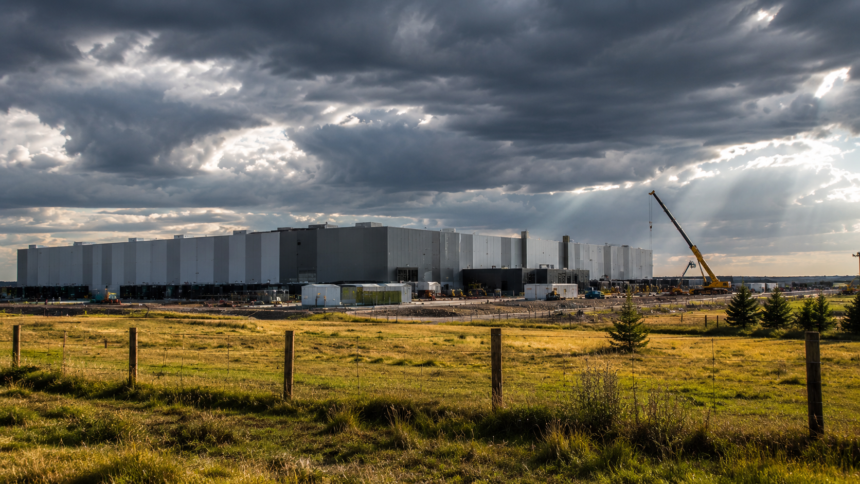
Look at the actual numbers. The Olds project is expected to create around 200 indirect jobs through 2026 and about 70 permanent positions by the end of the year, growing toward 150 permanent roles by 2029 or 2030, according to the Town of Olds. The investment is genuine, with the town putting it at $200 million to $300 million in 2026 and a further $500 million that depends on a power expansion. The permanent headcount is modest.
Key facts
- The Town of Olds said on December 18, 2025 that the Data District data centre project is expected to create approximately 200 indirect jobs during 2026, per its municipal announcement.
- The Olds project is projected to reach 70 permanent positions by the end of 2026 and about 150 by 2029 to 2030, according to the Town of Olds release.
- Data District plans $200 million to $300 million of investment in Olds in 2026, with a further $500 million over four to five years that depends on a planned 55 MW power expansion with FortisAlberta, the town states.
A data centre is a building full of machines
That is no knock on the industry, only a description of what a data centre is. Once the concrete is poured and the servers are racked, the place runs on a small crew of skilled technicians, not a shift change of hundreds. The big employment number is almost always the construction phase, which is real work for local trades but ends when the ribbon is cut. Anyone selling a server hall as the next auto plant is either confused or counting on you to be.
The real prize is the tax base
The lasting benefit to a rural municipality is usually not the payroll. It is the assessment. A large facility can throw off stable property tax revenue for decades, the kind of money that fixes roads, funds the rec centre, and keeps the mill rate off homeowners. The permanent jobs that do exist tend to pay well, and the construction years are good ones for local contractors. Those are solid wins. They are just different wins than the headline suggests, and a council that knows the difference will bargain from a stronger position.
Negotiate like it
Honesty about the jobs is what lets a town drive a fair deal. If the lasting value is tax revenue and a handful of careers, then a community should secure those in writing, alongside firm commitments on local hiring, training, and the cost protections that keep the project off everyone’s power bill. Gratitude is fine. So is reading the contract twice. Rural Alberta has been promised the moon before and learned to count what actually landed.