


The province’s Alberta Satellite Rebate Program page makes the promise in one line: “This rebate makes that a reality for Albertans in the hardest-to-connect households.”
For that to hold, two things have to be true. The household has to show up as eligible on a federal coverage map. Then it has to carry a monthly internet bill the rebate never touches.
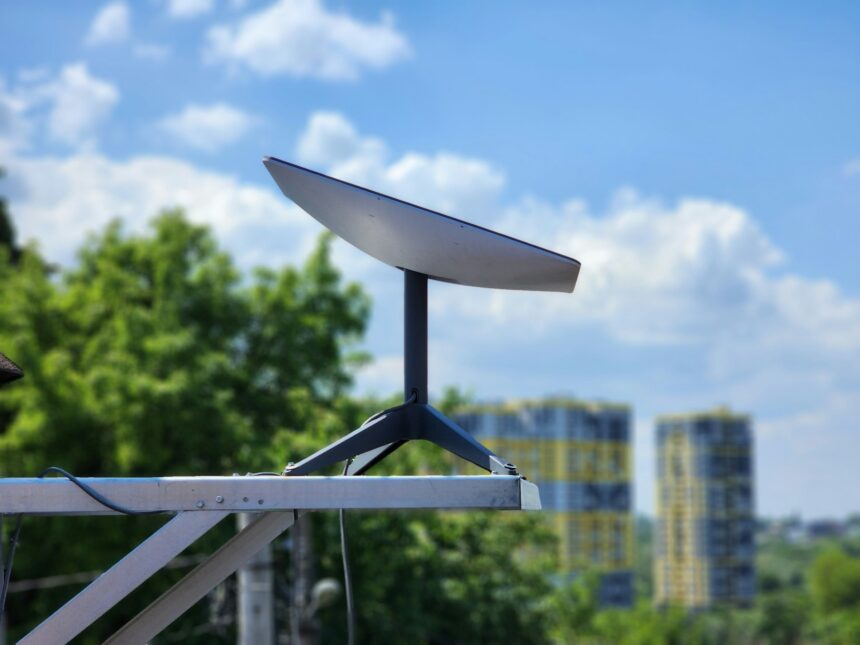
The rebate is up to $1,000, paid once, for low-Earth-orbit satellite hardware, installation and applicable taxes. Purchases count from August 11, 2026 to March 31, 2027. Households pay up front, apply after their first month of service, and wait for the direct deposit.
Key facts
- The Alberta Satellite Rebate Program, led by Alberta Technology and Innovation, offers eligible households a one-time rebate of up to $1,000 for low-Earth-orbit satellite hardware, installation and applicable taxes.
- Alberta Technology and Innovation lists purchases made between August 11, 2026 and March 31, 2027 as eligible for the Alberta Satellite Rebate Program.
- The Alberta Satellite Rebate Program requires service of at least 50 megabits per second download, 10 megabits per second upload and latency of 50 milliseconds or less.
- Alberta Technology and Innovation determines location eligibility for the rebate using National Broadband Map data from Innovation, Science and Economic Development Canada.
- Monthly service fees, hardware rental fees, Wi-Fi routers and purchases to connect a business are ineligible under the Alberta Satellite Rebate Program.
The best case for the rebate is a strong one
Start with what works. A yard far from any fibre line or fixed wireless tower has had few good options, and low-Earth-orbit satellites changed that. The program’s floor of 50 megabits down, 10 up and 50 milliseconds of latency matches the 50/10 standard the Alberta Broadband Fund uses to define an underserved home. The equipment arrives in a box. No crew has to trench a road allowance first.
For a household that would otherwise wait on a build that may never reach it, a one-time payment toward the hardware is a fast answer. That part of the design holds up, and it sits beside the province’s wider broadband build rather than replacing it.
It isn’t new, either. The province ran a Starlink pilot from November 16, 2023 to February 16, 2024 in parts of Cardston County, the County of Warner No. 5 and the County of Forty Mile, with the same $1,000 ceiling. This version opens the rebate to any eligible household the map identifies.
A federal map decides who qualifies
Eligibility runs on Innovation, Science and Economic Development Canada’s National Broadband Map data. Enter an address, a legal land description or GPS coordinates, drop a pin on the house, and the map answers. A home qualifies if it lacks access to high-speed broadband and no government-funded expansion project will serve it.
When the map shows coverage a provider won’t actually deliver, the household has to appeal. The appeal asks for proof from every active internet provider in the area, by email or by a screenshot from each provider’s address checker, that 50/10 service can’t be delivered there. It’s a fair test. It also puts the paperwork on the family, not the provider.
Speed is only one measure. Upload capacity and how satellite service holds up when the weather turns matter as much to a home office or a farm kitchen table, and a target built around downloads can miss both.
The rebate stops where the monthly bill starts
The program page lists what it won’t pay for: monthly service, subscription fees, monthly hardware rentals, Wi-Fi routers and extenders, and anything bought to connect a business. Rent the kit instead of buying it, and the rebate doesn’t apply.
The business exclusion deserves a careful read in rural Alberta, where a house and an operation often share one connection. The rebate covers the household. Anyone planning to run farm books or grain sales over the same dish should read the eligibility terms before claiming.
Then there’s the vendor list. Starlink kits are the only ones that currently meet the speed and latency requirements, bought from Starlink or from Best Buy, Home Depot, London Drugs, Visions Electronics or Walmart. The program says other suppliers may be added during intake. Until one is, the rebate pays for one company’s hardware, and that company sets the monthly price.
Each verified Alberta.ca account can claim for up to two households. Owners and renters both qualify, with one rebate per home.
Here is a test that can be checked. If a second low-Earth-orbit network clears the 50-millisecond latency bar and joins the authorized list before purchases close on March 31, 2027, the rebate will have bought rural Albertans a choice. If none does, it will have bought them a dish and a bill from a single supplier.