

The $513 Lancaster Bomber Three Nanton Men Towed Across the Prairie
On May 8, 2026, it was eighty-one years since the war in Europe ended. There were parades in Toronto and London. Crowds in Trafalgar Square. Church bells in towns most Albertans have never heard of. Within months, soldiers and airmen would start coming home. Many did not.
In Nanton, Alberta, along a stretch of Highway 2 between Calgary and Lethbridge, there is a hangar that tells the rest of the story. Inside the hangar is an Avro Lancaster bomber, FM159. It is one of seventeen Lancasters left in the world. It is one of very few Lancasters anywhere that can taxi under its own power, with all four Rolls-Royce Merlin engines running.
It is in Nanton because three men in 1960 thought it should be.
A purchase price of five hundred and thirteen dollars
Lancaster FM159 was built by Victory Aircraft Limited in Malton, Ontario in 1945. It arrived in England too late to serve in the war. After 1945 the Royal Canadian Air Force used it for maritime reconnaissance and search and rescue. By 1958 the type was retired. Most Lancasters were sold to farmers or scrapped. Some ended up with their bomb-bay doors lining flower gardens, their tail wheels strapped to threshing machines, and their escape hatches turned into outhouse windows.
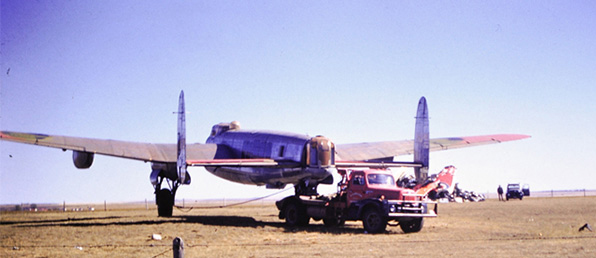
FM159 was on its way to that fate. The plane had been flown to a former training base near Vulcan, Alberta. The engines had been pulled. The aluminum was about to be cut up.
A Nanton resident named George White heard about it. White, with two friends, Howie Armstrong and Fred Garratt, bought FM159 from the Crown for $513.
The next problem was getting it home.
Towing a bomber across a wheat field
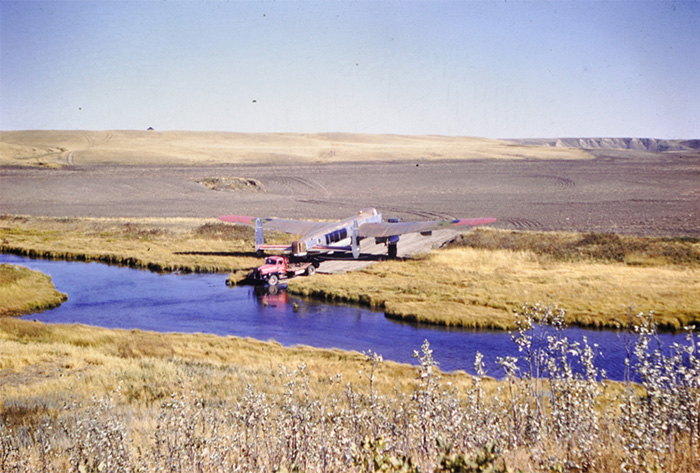
A Lancaster has a wheelbase too wide for any prairie road. The men did the only thing they could. They waited until harvest was finished. They got permission from farmers to cross fields. They organized two crews. One crew took down barbed wire fences ahead of the plane. The other put them back up after the plane passed.
The bomber, missing its engines, was towed backwards, with the tail wheel sitting in the back of a pickup truck. They eased it down the bank of the Little Bow River, through the ford, and up the other side. It took 28 kilometres of fields and back roads to get the plane to Nanton.
Once there, it was placed beside the highway as a war memorial. The town painted it. Fenced it. Tried to keep the vandals away.
For the next twenty-five years, almost nobody who lived in Nanton went inside it. Nobody knew very much about it. It was simply the bomber. People driving from Calgary to Lethbridge would pull off the highway to look at it.
The town that built a national museum
In 1985 the town asked George White to find someone who would take care of the bomber. White wrote an article in the Nanton News asking if anyone wanted to help. He was overwhelmed by the response. The Nanton Lancaster Society was born. By 1991, through donations from three levels of government, Legion branches, corporations, and thousands of individuals, a hangar had been built. FM159 was towed by a tractor into its first indoor home in three decades.
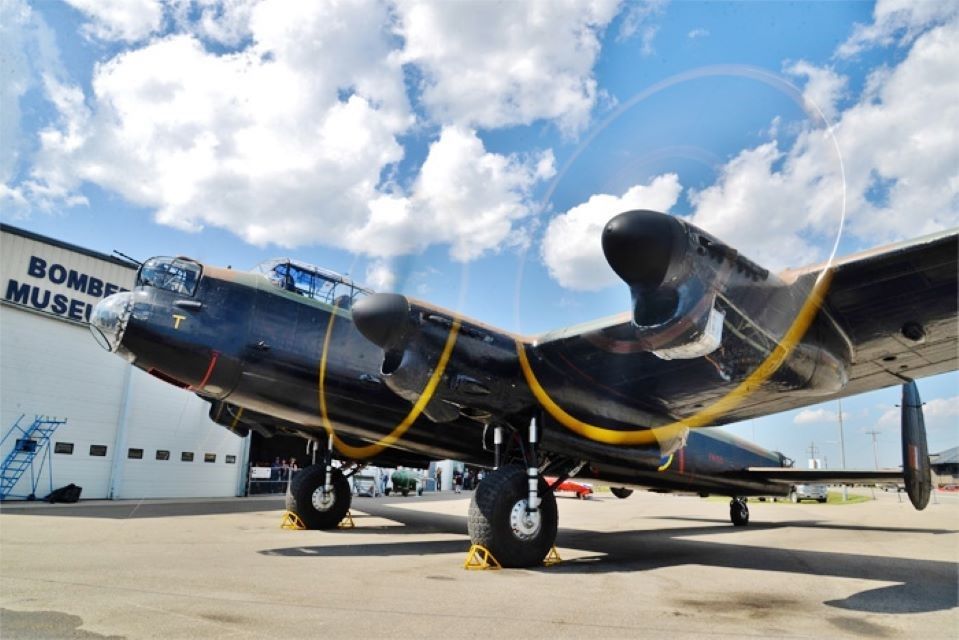
The restoration took the rest of the 1990s and most of the 2000s. The Society sourced original parts from farms across Western Canada. Volunteers overhauled all four Merlin engines. On August 23, 2013, the fourth engine roared back to life outside the hangar. The aircraft was now one of the few taxiable Lancasters in the world.
In 2010 the museum changed its name to the Bomber Command Museum of Canada. It now holds 15 World War Two aircraft, a memorial wall with the names of more than 10,600 Canadians killed serving with Bomber Command, and over 220,000 archival records on RCAF and RAF crews.
The plane itself was dedicated to Squadron Leader Ian Bazalgette, a Calgary-born pilot who received the Victoria Cross.
What VE Day looks like in Alberta
This is the part that matters. The story of Bomber Command did not end in 1945. The 10,600 Canadians who never came home did not get to come home. Their names are on a wall in a small Alberta town because three men in Nanton, in 1960, decided a $513 bomber was worth saving. They were not historians. They were not curators. They were three Albertans who knew a memorial when they saw one.
Eighty-one years after VE Day, the Lancaster in Nanton still has all four Merlins running. Volunteers fire them up several times a year. The roar carries, on a still day, all the way to High River.
The Bomber Command Museum of Canada sits on Highway 2 at Nanton.