

In 1962 the Canadian Library Association put every known surviving copy of a Calgary humour paper onto microfilm and called the job done. The reel is a small grey object, a few inches across, and it holds everything anyone could then find of The Eye Opener. “Could then find” is the whole story.
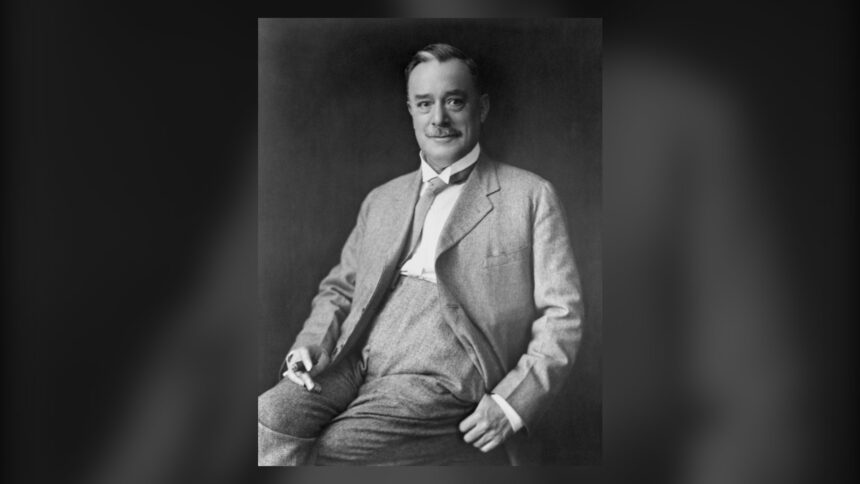
Bob Edwards brought out the first issue at High River on March 4, 1902, and moved the paper to Calgary after a 1903 dispute with a local minister. By 1908 it was printing 18,500 copies, a big number for a weekly run by one man and read on trains and in cities from Vancouver to Toronto. In its Calgary years Edwards sent his copy to a local daily to be printed, so the paper never owned the machinery that makes a record.
Key facts
- The Eye Opener first appeared at High River on March 4, 1902 and reported a circulation of 18,500 by 1908, according to the Dictionary of Canadian Biography.
- Edwards died in Calgary on November 14, 1922, and his wife continued the paper until at least August 18, 1923, the same entry says.
- No complete file survives. The Canadian Library Association microfilmed the known copies in 1962, and later issues went to the Glenbow Library in Calgary and the University of Alberta Library in Edmonton.
- The University of Calgary Archives holds an authority record for Edwards, and Glenbow keeps a biographical profile.
A paper without a plant leaves little behind
Most newspapers of the period left something solid for later historians. A daily with its own building had a bound file in the front office, a clipping morgue, a composing room full of type. The Eye Opener had a desk, a mailing list and a printer busy with somebody else’s news. The issues went out on the trains, and nobody was assigned to keep the last copy.
That’s a plain reason, and it explains the gaps better than any legend does. Two collections in two cities, one reel made in 1962, and no single list that says what’s missing.
The fiction is better preserved than the paper
Edwards invented a drinker named Peter J. McGonigle, supposed editor of a Midnapore Gazette that never existed, and wrote him into the columns for years. The man is easier to find than plenty of real people the paper covered, which tells you how selective the surviving record is. A made-up editor is remembered because he was funny. The ordinary run of Calgary business, the advertisements and timetables and small notices a weekly carried between the jokes, went missing with the issues nobody kept.
After Edwards died the paper kept coming out under his wife, and it was later sold to a Minneapolis firm that ran it as a small humour magazine. He had also been elected to the Alberta legislature in 1921 as an independent, though that is a footnote to the paper and not the reason it matters to an archive.
Alberta needs one list of what survives
The Eye Opener is among the best-known papers Alberta ever produced, and its record rests on a 1962 reel and two library shelves. That is the wrong way to treat a source this heavily quoted. Historians lean on Edwards as a witness to early Calgary, so the paper deserves to be handled as evidence and not folklore. That means a union list of every issue known to exist in any library, archive or family trunk, with the gaps stated openly. Calgary has lost records before, as the story of the 1885 Immigration Hall shows, and the Glenbow collection is a reminder of how much depends on who agrees to keep things.
A reel of 1962 microfilm sits in a drawer. Somewhere behind it, in another drawer or a trunk or a bound volume nobody has opened, there is an issue the reel never saw.