

The largest fortunes in this province were mostly built by people who grew up without one. Clay Riddell was the youngest child of a farm family near Treherne, Manitoba, born in July 1937, two older sisters ahead of him and no particular reason to expect that his surname would end up carved into the front of a Calgary library. He took an honours geology degree at the University of Manitoba in 1959 and went west, which is what you did. The rest took sixty years.
Key facts
- Clay Riddell completed an honours Bachelor of Science in geology at the University of Manitoba in 1959, per the University of Manitoba.
- Paramount Resources states that Clay Riddell incorporated the predecessor company Paramount Oil and Gas in 1971, and that Paramount Resources raised $5 million on the Alberta Stock Exchange in 1978 in exchange for 40% of its equity.
- Jim Riddell became president and chief executive officer of Paramount Resources in May 2015, and chairman of the board in November 2018, per Paramount Resources.
- A $10 million gift in 2005 created the Clayton H. Riddell Faculty of Environment, Earth, and Resources at the University of Manitoba, per the University of Manitoba.
- A $15 million family gift announced on 4 March 2013 created the Vi Riddell Children’s Pain and Rehabilitation Centre at the Alberta Children’s Hospital, where Vi Riddell had worked as a nurse for 30 years.
The company took longer to build than the legend suggests
There is a version of this story that gets told at fundraising dinners, in which a young geologist arrives in Calgary, starts a company, and the company becomes large. The paperwork is slower and better. Paramount’s own history puts the predecessor firm at 1971 and the public listing at 1978, when the assets went into a new company and the market paid $5 million for 40% of it. The company’s own release on his death in 2018 says 1976. Two dates from the same organization, which is what happens when a business grows out of a filing cabinet rather than a launch event, and it is worth saying plainly rather than picking whichever year makes the arc cleaner.
He ran it until May 2015, when his son Jim took the chief executive’s job and he stayed on as chairman. Forty-odd years in one chair. That is the part of the record that actually explains the rest, because philanthropy at the scale he practised it is not a moment of generosity. It is compound interest with a conscience attached, and it requires somebody to sit still for decades while the compounding happens.
The giving followed the life rather than the letterhead
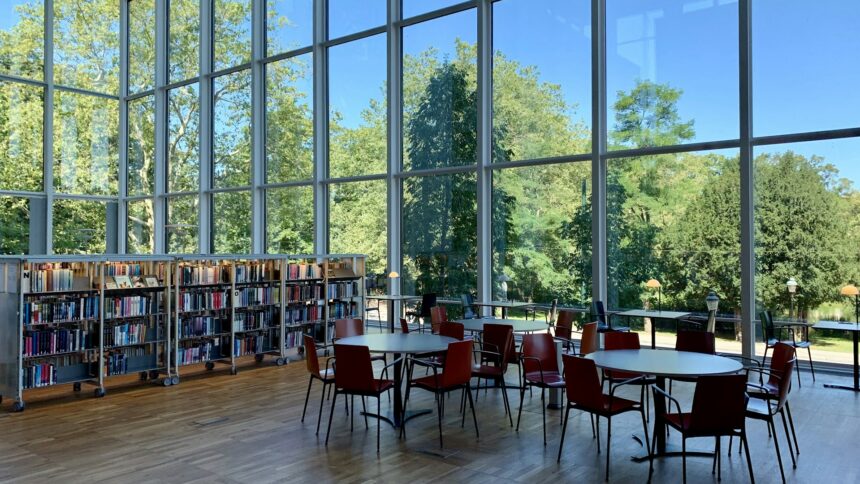
Look at where the money actually went and a pattern shows up that no consultant would have designed. A $10 million endowment in 2005 to the university that taught him, creating the Clayton H. Riddell Faculty of Environment, Earth, and Resources, which is to say he paid for more people to learn the specific thing he had learned. The library at Mount Royal University in Calgary, four storeys and nearly 16,000 square metres, roughly 1,700 seats, opened to students in the summer of 2017 with the formal opening that September. He was in the room. He had been the named donor since 2010.
The one that says the most is the hospital. In March 2013 the family gave $15 million to the Alberta Children’s Hospital for a children’s pain and rehabilitation centre, and put his wife’s name on it. Vi Riddell had been a nurse there for thirty years. She died in 2012, and the gift was made the following spring. A man does not build that particular building for tax reasons. He builds it because he watched somebody go to work in that place for three decades and he knew exactly which part of it was underfunded.
He joined the Calgary Flames ownership group in 2003-04, alongside names that show up on half the donor walls in the city. That is the part people repeat. It is the least interesting thing about him. Alberta has produced a run of men who made resource money and then spent a serious share of it on institutions they would never personally use, and Calgary philanthropy as a civic habit is one of the few things this province built that nobody in Ottawa has ever tried to take credit for.
What the pattern says about where the next one comes from
He died on 15 September 2018, aged 81, a year after the library opened. The buildings are the obvious legacy and they are not the important one. The important one is the demonstration, repeated often enough in this province to count as a tradition, that the people who fund the public realm here tend to be people who arrived from somewhere smaller with nothing behind them, and who never entirely stopped thinking like it. Treherne is a village of a few hundred people. It produced a geologist who paid for a faculty, a library and a children’s pain centre, and who signed off on the last of those while burying his wife.
There is a habit in the national conversation of treating Alberta wealth as something that happened to the province rather than something built inside it, and of treating the people who built it as a problem of distribution. Go stand in the library. Count the students. Then explain the distribution problem to the farm kid from Treherne.
A man is remembered for what he paid for, and for who he was paying attention to.