

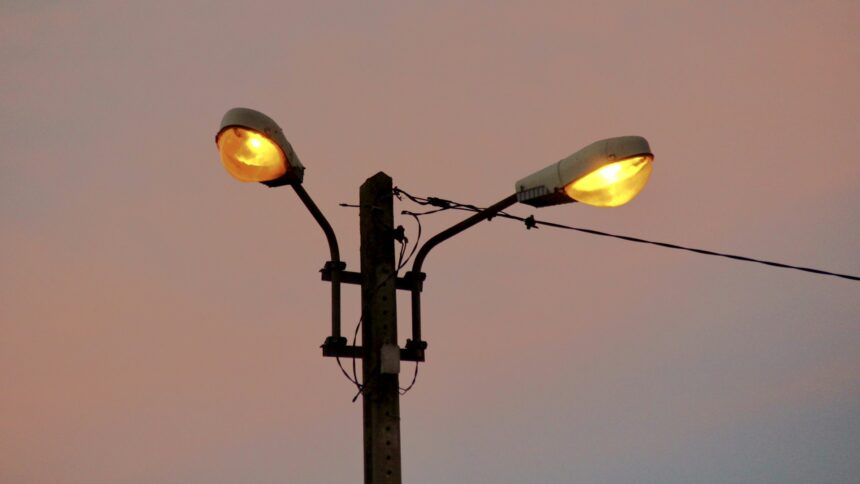
In 1947, the year Leduc No. 1 came in and Alberta’s energy history supposedly began, Medicine Hat took more than 100 gas streetlamps out of service. The city had been lighting its streets with its own natural gas for more than four decades by then, and for part of that time it did not bother to turn the lamps off at all.
The mechanism was simple. The gas sat shallow, it was plentiful, and the city owned the supply. A lamp burning at noon consumed gas that cost the city next to nothing at the wellhead, while a man walking the rounds with a key cost a wage every day of the year. The Government of Alberta’s own energy heritage record states it plainly: it was cheaper to keep the lights on constantly than to pay someone to switch them.
Key facts
- Canadian Pacific Railway crews drilling for water near Medicine Hat struck natural gas in 1883, according to the Government of Alberta’s Energy Heritage record.
- By the end of 1913, Medicine Hat operated 20 natural gas wells supplying 30 major industries, and its gas streetlights burned continuously, according to the Government of Alberta’s Energy Heritage record.
- Medicine Hat became the first urban area in western Canada with its own gas utility, according to the Government of Alberta.
- Medicine Hat installed two 750 candle power gas lamps at $15 each in 1904 and removed more than 100 gas lamps from service in 1947 when electric lights went in downtown, according to a 2019 history published by the Network in Canadian History and Environment.
How the arithmetic of free lamps worked
Start with the cost structure, because that is where the story sits. A municipal gas system has large fixed costs, the wells, the mains, the pressure equipment, and very small marginal costs once the gas is flowing. The streetlamp was the clearest demonstration of that ratio anyone could ask for. When the cost of one more hour of burning rounds to zero, labour becomes the only line item worth managing, and the city managed it by removing the labour.
The same ratio drove the industrial pitch. Medicine Hat offered free land, free water and cheap gas, and by the end of 1913 it had 30 major industries running on 20 wells. Flour mills, brick and glass works, foundries and greenhouses all set up where the fuel bill was lowest. Population nearly tripled between 1911 and 1913, according to the provincial heritage record.
Rudyard Kipling saw the flares in 1907 and wrote that the region had “all hell for a basement.” The city kept the line. Engineers would have written it differently, with a pressure reading, but the observation was sound.
Why the Leduc date undersells the province
Leduc matters. It turned Alberta into an oil province and changed the balance sheet of the whole country. But dating the energy economy to 1947 skips 64 years of gas history in the southeast, by our arithmetic from the 1883 strike, and skips the first practical lesson Alberta learned about energy. Cheap, reliable supply pulls industry toward it the way a magnet pulls filings.
That lesson is still the working one. The fuel changes, the customer changes, the mechanism does not. A plant goes where its input cost is predictable and low, and it stays where the supply has proved itself over decades. This site has argued before that energy security is what keeps the lights on for people outside the big cities, and Medicine Hat is the oldest proof on the map.
The people who describe Alberta’s energy sector as a passing phase are usually working from a chart that starts in 1947, or in 2015, and ends at the next election. They have not stood at a wellhead that has been producing for longer than most of them have been alive.
What is still running in Medicine Hat today
The gas lamps came back to the downtown core in 1987, and the city’s logo carries a gas streetlight above the words The Gas City. Those are symbols. The better evidence is underground.
Well 12-30 in Medicine Hat has produced natural gas since March 1913.