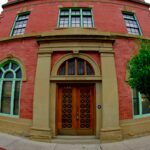


At 914 Highway Avenue in Nobleford there is a quonset with cedar shingles on its curved roof and pebble dash stucco on its side walls, built in 1942 with a clear span roof so the floor inside could become whatever the business needed. For nine years it was the main building of Noble Cultivators Ltd., where the blades were built and shipped out. The province now protects it as the earliest standing structure tied to the Noble Blade.
The man the town is named after had lost every acre he owned some twenty years before that roof went up, and the tool the quonset was built for came out of that loss.
Key facts
- The Canadian Encyclopedia records that Charles Sherwood Noble farmed 13,134 hectares near Lethbridge by 1918 and lost everything to drought and depression in 1922.
- Alberta’s Historic Resources Management Branch dates the Noble Blade to 1936, when Charles Noble built it in his Nobleford machine shop while working with scientists at the Lethbridge Research Station.
- The Noble Cultivators Retail Manufacturing Building at 914 Highway Avenue in Nobleford, built in 1942, was formally recognized as a historic place on July 4, 2002, according to the Canadian Register of Historic Places.
- Charles Noble was named a Member of the Order of the British Empire in 1943 and became the first inductee of the Alberta Agricultural Hall of Fame in 1951.
Noble farmed one of the largest dryland operations of its day
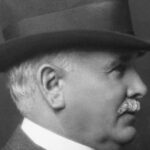
Noble was born in State Centre, Iowa, in 1873, took out a homestead at Knox, North Dakota, in 1896, and came north to the Claresholm country in 1902. In 1909 he bought 2,024 hectares near Lethbridge and laid out the hamlet that would carry his name, renamed Nobleford in 1913 so the mail stopped going to a place called Noble in Ontario.
The war years were good to wheat. Noble took several international grain championships between 1912 and 1916, and the Canadian Encyclopedia puts his farmed land at 13,134 hectares by 1918. The province’s own heritage statement counts the Noble Foundation at 30,000 acres when the war ended, with as many as 300 people on the payroll, and calls it the largest dryland farm in the British Empire.
Then the rain stopped and the grain price fell with it. By 1922 the land was gone. An Alberta heritage biography puts what he owed his creditors at about $600,000 when they foreclosed.
The blade started with a sugar beet field in California
He stayed on. Through the 1920s and early 1930s he and his neighbours tried what dryland farmers were trying everywhere, from strip farming to leaving a cover of old stubble on the ground so the wind had less to lift. None of it was enough on its own, and the dirty thirties made the point every windy afternoon.
After the dry summer of 1935 his family talked him into a holiday in California. There he watched a sugar beet grower run a straight blade a few inches under his rows to loosen the beets for harvest, and he saw that the weeds behind it died without being turned under. He found a length of old grader blade, built a rough version of the tool, and hauled it home to Nobleford.
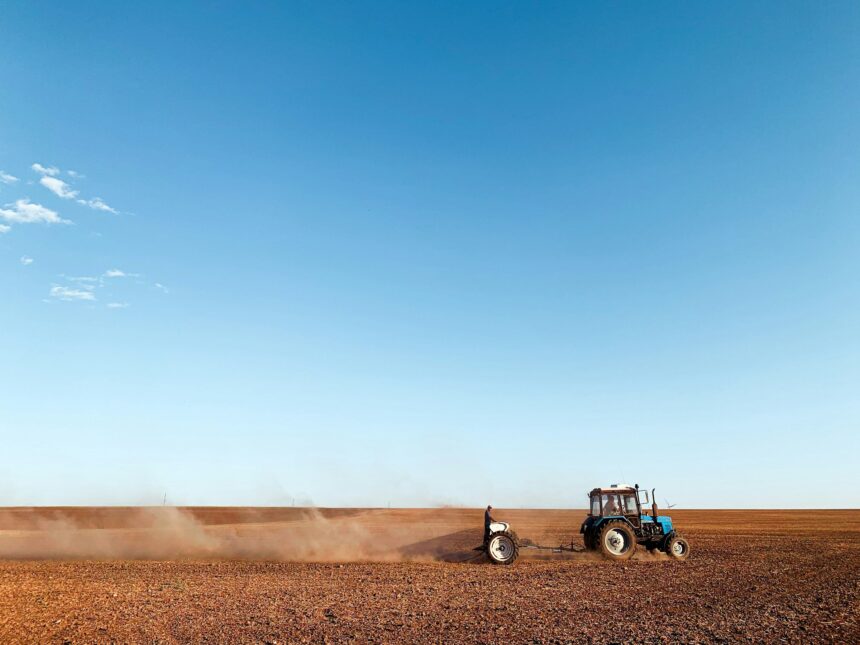
The provincial heritage record dates the Noble Blade itself to 1936, worked out in his own machine shop with scientists from the Lethbridge Research Station. The principle was simple. The blade cut weed roots below the surface and left the stubble standing on top, so the field kept its moisture and the soil stayed put. The patent came in 1937. Orders from neighbours turned a farm workshop into a manufacturer, which is how Noble Farms Ltd. became Noble Cultivators Ltd. Later models swapped the straight bar for a V-shaped blade.
The record outlasted the factory
The blade travelled further than its maker ever farmed. The province’s record says it was used across North America and adapted in Europe and the Soviet Union. The honours came late. The University of Alberta gave him an honorary doctorate in 1952, nine years after he was made a Member of the Order of the British Empire. He died in Lethbridge on July 5, 1957.
The factory kept building variations of his blade in Nobleford until 1998. A plain wood frame under a curved roof is the easiest kind of building to lose once the work inside it stops. Survival in this province has often come down to luck, the way the Belgian coke ovens at Lille outlasted their village and the Burns Building came through Calgary on a single council vote. This one was listed in 2002 instead. Further east, the collection at Etzikom keeps the machines that made dry land settlement possible in the first place.
The Nobleford Area Museum, which says it is housed in the original cultivator factory, keeps a permanent display on the town’s founder. The register of historic places lists the quonset’s shingled vault roof, its concrete shop floor and its model Noble Blades among the things that make the building worth keeping, and all of them are still there on Highway Avenue.