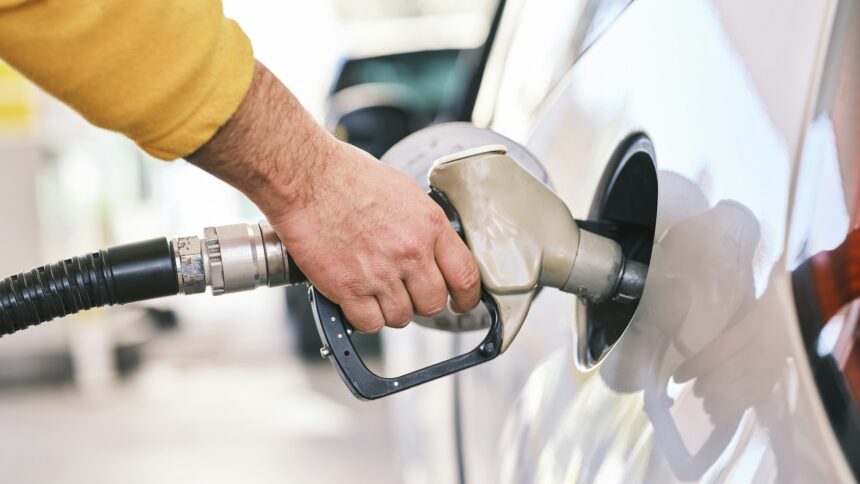
Alberta’s fuel tax is $0.13 a litre on gasoline and diesel, and from Oct. 1 it is zero. That takes about $6.83 off a 50 litre fill.
The $6.83 is a calculation made here, not the province’s figure. GST gets charged on top of the tax, so removing it pulls about $0.1365 a litre out of the bill. On 60 litres the saving is $8.19, calculated the same way.
Key facts
- Alberta Treasury Board and Finance states that the provincial fuel tax on gasoline and diesel, normally $0.13 per litre, is suspended effective October 1, 2026, through at least December 31, 2026.
- Under the Government of Alberta’s Fuel Tax Relief Program, the fuel tax falls to $0 per litre when West Texas Intermediate averages US$90 per barrel or more over the quarterly measuring period, according to the program fact sheet of March 2024.
- The Government of Alberta reported on September 22, 2026, that West Texas Intermediate averaged US$90.54 per barrel from August 18 to September 15, 2026, and that Alberta’s average gasoline price was $1.755 per litre on September 21.
- The federal fuel excise tax of $0.10 per litre on gasoline and $0.04 on diesel has been suspended since April 20, 2026, and legislation to extend the pause to January 31, 2027, with half rates from February 1 and full rates from April 1, 2027, was introduced on September 22, 2026 and has not passed.
Alberta’s fuel tax comes off because oil crossed a line written in advance
Nobody had to hold a vote for this one. Alberta wrote the rule years ago. When oil averages US$90 or better over the measuring window, the tax goes to zero. Between US$80 and US$90 it drops part way. Under US$80 it is back to the full $0.13. The province checks the average every quarter.
West Texas Intermediate averaged US$90.54 from Aug. 18 to Sept. 15, which is US$0.54 over the line. So the tax comes off, the way a thermostat kicks the furnace on. No bill required.
Ottawa’s pump relief needs a bill to last past January
Ottawa has a pause too. The federal excise, $0.10 a litre on gas and $0.04 on diesel, has sat at zero since April 20. Ottawa announced in early September that it would extend the pause to Jan. 31, with half rates in February and March and full rates again on April 1. A bill to carry it went in on Sept. 22. It has not passed.
The fair case for Ottawa’s way is flexibility, since a pause can be extended without waiting on a price. The fair case against Alberta’s is that its formula puts the tax back in steps if oil falls, and the province reviews it every quarter. Still, one of these is a rule anybody can read ahead of time. The other is a bill that has to clear the House before anyone’s tank is sure of anything past January.
The sign at your station is the part no law sets
The tax comes off the fuel. The price on the sign is still the station’s call. When the full tax last came off, in April 2022, stations in Edmonton and Calgary were reported to have passed through less than the full amount at first. That is a report, not a measurement. Wholesale prices move every day, and a single morning will not tell you much. A week will.
Write down your usual station’s price on Sept. 30, then check it on Oct. 1 and again the week after. The province says it will monitor pump prices, and suspected unfair pricing can be reported to Alberta’s Report a Rip-Off line at 1-877-427-4088.
The province took its $0.13 off the litre. Now the question is who keeps it.
Updated October 7, 2026. The federal extension was announced in early September and a bill to carry it was introduced on Sept. 22. An earlier version dated the announcement to Sept. 22.
Frequently asked questions
When does Alberta’s fuel tax suspension start and end?
The provincial fuel tax on gasoline and diesel, normally $0.13 per litre, is suspended effective October 1, 2026, through at least December 31, 2026, per Alberta Treasury Board and Finance.
How much does the suspension save per litre?
The tax itself is $0.13 a litre, and GST is charged on top of that tax, so taking it off pulls about $0.1365 a litre out of the bill. On a 50 litre fill that is $6.83, and on 60 litres it is $8.19. Those figures are calculated here, not published by the province.
What triggered the fuel tax suspension?
Under the Fuel Tax Relief Program, the fuel tax falls to $0 per litre when West Texas Intermediate averages US$90 per barrel or more over the quarterly measuring period. WTI averaged US$90.54 from August 18 to September 15, 2026. Between US$80 and US$90 the tax drops part way, and under US$80 it returns to the full $0.13. The province checks the average every quarter.
Is the federal fuel tax also paused?
Yes. The federal excise, $0.10 a litre on gasoline and $0.04 on diesel, has been suspended since April 20, 2026. Ottawa announced in early September that it would extend the pause to January 31, 2027, with half rates from February 1 and full rates from April 1, 2027, and a bill to carry the extension was introduced on September 22. It has not passed.
What if a station does not lower its price on October 1?
The province says it will monitor pump prices. Suspected unfair pricing can be reported through Alberta’s Report a Rip-Off line at 1-877-427-4088. Businesses found guilty of price gouging can face court-imposed fines of up to $300,000 or as much as two years in jail.
Related reading: Cenovus Agrees to Buy Athabasca Oil at $5.7 Billion Value and Two Thirds of Alberta’s June Business Openings Were Reopenings.
Related from Alberta Tribune: Alberta’s Fuel Tax Formula Went Missing When Brent Hit US$102