

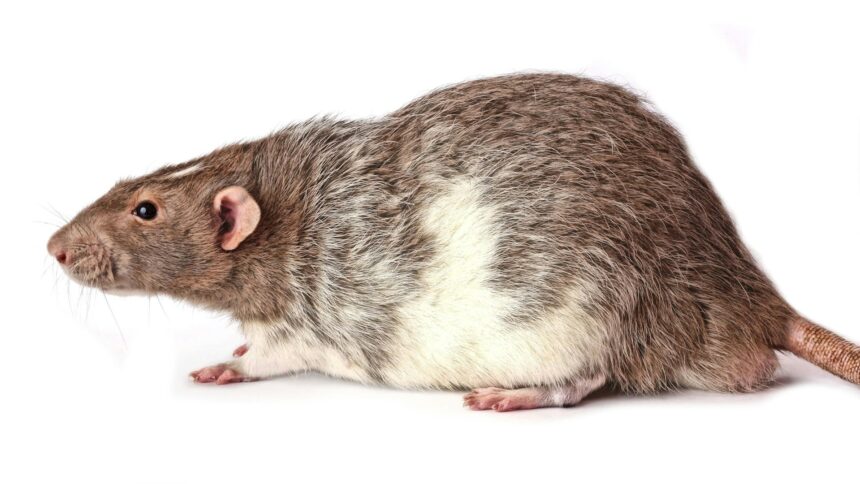
A province can decide what it will not live with. In Alberta, one of those decisions is still kept in farmyards along the Saskatchewan border, where inspectors walk out to the bins and the sheds and the old buildings nobody uses anymore, looking for sign of an animal most Albertans have never seen alive.
Rats were first reported on that eastern border in 1950. They had been moving northwest across Saskatchewan since the 1920s, about 24 kilometres a year, the way water finds the low ground. Alberta declared them a pest that same year and went to meet them.
Seventy six years later the line holds.
Key facts
- The Government of Alberta records that rats were first reported on the province’s eastern border in 1950, after spreading northwest from Saskatchewan at roughly 24 kilometres a year.
- Alberta’s rat control zone is a strip 600 kilometres long and 29 kilometres wide running from Cold Lake to the Montana border, according to the Government of Alberta.
- The Government of Alberta reports that 573 rat infestations were recorded in 1955, and that since 1959 only 1 to 5 infestations have been confirmed per year.
- In 2023, the Government of Alberta confirmed 23 rats in the province and logged 435 reported sightings that turned out to be other animals.
- Alberta law prohibits importing, selling or keeping rats as pets, with exceptions only for zoos, universities, colleges and recognized research institutions, according to the Government of Alberta.
What the border farms actually did
Consider the early years in their own numbers. In 1951 there were 30 infestations along 180 kilometres of border. By 1955 there were 573. The animals came on the wind of their own appetite, and the people standing in the way were farm families, municipal pest officers, and a province willing to pay for the work.
The 1952 to 1953 arsenic program alone cost $152,670, most of it spent on tracking powder. Crews treated 8,000 buildings on 2,700 farms. That is a great deal of labour done in cold granaries and manure sheds by people whose names appear in no history book, and whose reward was that nothing happened.
After 1959 the count fell to between one and five confirmed infestations a year. It has stayed there. Inspectors still check between 2,000 and 4,000 premises every year in the control zone, the same farms, the same sheds, generation after generation.
Why a city owes this to the country
It is easy in Calgary or Edmonton to think of rural Alberta as the place you drive through on the way to the mountains. People say it without meaning harm. They say it often enough that it becomes a kind of weather in the culture, a low front of condescension that settles over anyone with a feed bill and a half ton.
Yet the alley behind every city house in this province is free of rats because farm families on the Saskatchewan line opened their yards to inspectors, laid bait, reported what they saw, and kept doing it long after anyone thanked them. The province paid for the program. The border carried it.
That is the part worth saying plainly. A thing can be true about the character of a people, and this is one. The farms along that strip kept the rats out of every kitchen from Lloydminster to Lethbridge, and out of every grain bin that feeds the harvest Alberta wants to keep and process here.
What seventy six years of watching asks of the rest of us
The work never ends, and that is the hard lesson in it. A single breeding pair can multiply faster than any committee can meet. The Government of Alberta says a single pair, under ideal conditions, could produce 15,000 offspring in a year. So the inspectors go back each season, and the people on the border answer the door.
The cities do their part now by picking up the phone. In 2023 Albertans reported hundreds of sightings, and all but 23 turned out to be something else entirely. The province logged each one. That is what vigilance looks like when it is done by ordinary people who have learned to take a small thing seriously, and it is a habit the country taught the city, patiently, over three generations of harvests, without ever asking to be admired for it and without much expecting to be.
The farms kept the promise.