


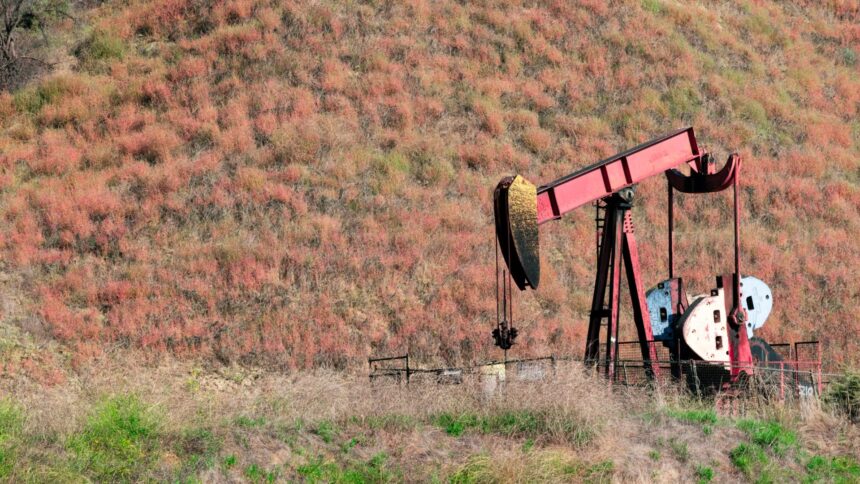
Draft amendments to the Income Tax Act published by the Department of Finance Canada on September 15, 2026 would let a corporation that drills a development well in Alberta after that date deduct the full cost in the year the money is spent. A regulated utility laying natural gas distribution line under the same township road would get no such treatment. Both results come from one package, which Finance calls the Productivity Mega Deduction and describes as immediate expensing for a broad range of depreciable property on a permanent basis.
The Prime Minister announced the measure at the first Canada Investment Summit, held in Toronto on Tuesday, and the department released its backgrounder and the draft legislative text the same day. The text is a proposal. Parliament has to pass it before any taxpayer can claim a dollar under it, and the reading that follows is of the draft as published, which is the only version that exists.
Key facts
- The Department of Finance Canada estimated on September 15, 2026 that the Productivity Mega Deduction would cost $36 billion over five years, beginning in 2026-27.
- Finance Canada’s backgrounder of September 15, 2026 puts Canada’s marginal effective tax rate on new business investment at 6.4% with the measure, down from 13.0% after the Spring Economic Update 2026, against 16.9% for the United States in 2026.
- According to the Finance Canada release, about two-thirds of investment in capital assets would qualify, compared with about 15% under the Productivity Super-Deduction announced in Budget 2025.
- Draft legislative proposals published by the Department of Finance Canada on September 15, 2026 exclude buildings in capital cost allowance classes 1 and 3, franchises and licences in classes 14 and 14.1, and class 51 regulated natural gas distribution pipelines.
- The same proposals make Canadian development expenses incurred on or after September 15, 2026 deductible in full in the year incurred, with the existing 30% rate continuing for costs that do not qualify.
What the draft text lets an Alberta producer deduct
Canadian development expense is the tax pool the Canada Revenue Agency describes as “certain expenses for the development of an oil or gas well in Canada,” along with the equivalent costs for a mine. Under the rules in force today that pool is claimed at 30% a year on the remaining balance, which means a dollar spent completing a well is written off across a long run of tax years rather than in the year the rig leaves the lease.
The draft creates a new defined term, immediate Canadian development expense, and allows it to be deducted in full in the year it is incurred for costs incurred on or after September 15, 2026. Costs that fall outside the definition stay at the 30% rate. The Finance release gives this change a single sentence. The draft gives it a defined term, a start date and a rate, and for Alberta it is the paragraph that carries the most weight.
One limit belongs beside it. The release states that rules will restrict the ability of individuals, and of partnerships with members who are individuals, to create or increase a loss. An oil and gas partnership with individual partners that intends to use the new deduction against other income should read those rules in full before it commits to a drilling schedule on the assumption that they do not apply to it.
Where the announcement and the draft text part ways
The Prime Minister’s release lists “oil and gas pipelines” among the assets the deduction covers, while the Finance backgrounder places class 51, described there as “regulated natural gas distribution pipelines,” on the list of excluded property. Read together, the two documents are consistent. Transmission pipe sits in a different capital cost allowance class that the draft does not exclude, so a long-haul line qualifies and the gas main that feeds a new subdivision in Airdrie or Grande Prairie does not.
A headline list should not require a reader to open the Income Tax Regulations to learn which pipe it means, and this one does. The same exclusion schedule removes class 1 and class 3 buildings, certain passenger vehicles in classes 10 and 10.1, industrial mineral mines, timber limits and qualified liquefaction equipment, the last of which receives its own accelerated treatment for assets acquired on or after November 4, 2025. None of that appears in the list read out in Toronto. All of it governs what a return will show.
The federal government set this measure inside its plan to catalyse $1 trillion in additional investment, a target this publication has already set against the $192 billion list of named projects behind it. The deduction is the instrument meant to close that distance, which is why the precise boundary of the instrument matters more than the figure attached to it.
Which sectors gain most on Finance Canada’s own table
The backgrounder carries a table of marginal effective tax rates by sector, one column after the Spring Economic Update 2026 and one after the new deduction. By our arithmetic from that table, transportation and storage falls 15.6 points, from 13.3% to minus 2.3%. Agriculture and fishing falls 13.6 points, from 7.6% to minus 6.0%. Utilities fall 6.3 points to 7.1%, and retail trade moves 2.3 points, from 21.6% to 19.3%. A negative rate means that, on the department’s model, the tax system subsidizes the last dollar of investment in that sector rather than taxing it.
The table has nine sector rows and a total. None of them is oil and gas extraction or mining. The line in the package that reaches Alberta’s largest industry most directly, the development expense change, has no row of its own in the department’s published estimate, and the $36 billion cost is stated for the country as a whole with no provincial split.
That leaves the text itself as the best guide to what changes in Alberta. The text is specific enough to read. If Parliament passes the proposals as drafted, a corporation that completes a development well in Alberta in 2027 deducts that cost on its 2027 return, and a gas distributor that extends service to an Alberta subdivision in the same year claims its pipe at the class 51 rate it claims today.