

Close to 20,000 barrels a day of ethane, propane, butane and condensate is what Wolf Midstream’s third phase adds, by our arithmetic, and none of it needs a new gas well. The Calgary company took a final investment decision on Sept. 16, 2026 to spend about $500 million on its NGL North System, with shareholder money from the Canada Pension Plan Investment Board (CPP Investments). The liquids come out of gas that oil sands plants were always going to burn.
Our figure is the gap between two stated capacities. The company’s July 2024 release said the second phase would take natural gas liquids (NGL) output past 90,000 barrels a day, and the Sept. 16 release says a third de-ethanizer tower lifts the Sturgeon County separation plant to about 110,000. Hold the project to the second number.
Key facts
- Wolf Midstream announced on Sept. 16, 2026 a final investment decision on Phase Three of its NGL North System, about $500 million of capital supported by shareholder Canada Pension Plan Investment Board, according to the Wolf Midstream release of that date.
- Phase Three adds about 0.6 billion cubic feet per day of processing capacity, bringing Wolf Recovery Facility 1 near Mariana Lake and Wolf Recovery Facility 2 northwest of Fort McMurray to a combined capacity of more than 2.1 billion cubic feet per day, per the Sept. 16, 2026 Wolf Midstream release.
- The Sept. 16, 2026 Wolf Midstream release states that a third de-ethanizer at Wolf Feedstock Separation in Sturgeon County raises NGL production capacity to about 110,000 barrels a day, more than 80,000 of them ethane.
- Wolf Midstream’s July 2, 2024 release set Phase Two at $1 billion, processing about 1.5 billion cubic feet per day and producing more than 90,000 barrels per day of NGL, with operations expected in 2027.
- NGL North has an ultimate design capacity of about 3 billion cubic feet per day and 170,000 barrels a day of NGL, according to Wolf Midstream on Sept. 16, 2026.
How liquids come out of gas bound for the oil sands
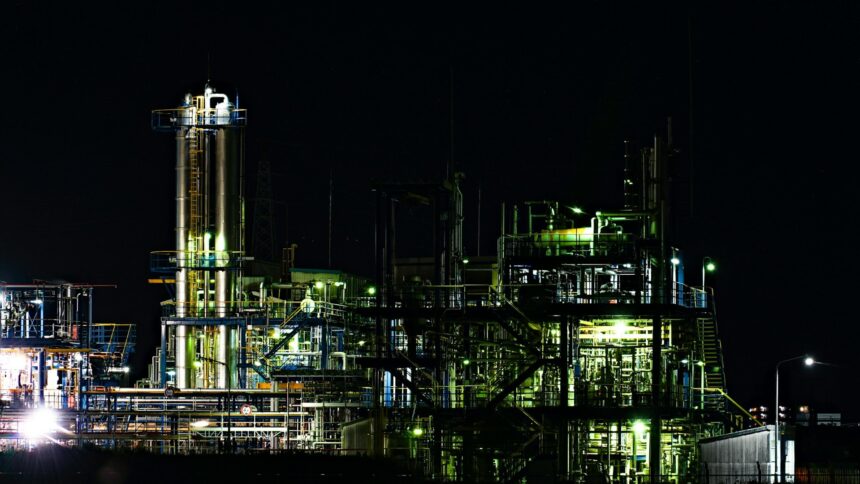
Oil sands operations burn natural gas to raise steam and heat. The gas delivered to those sites carries heavier molecules along with the methane, and inside a boiler those molecules are nothing more than fuel. Wolf’s recovery plants, one near Mariana Lake and one northwest of Fort McMurray, pull the heavier fraction out before the gas reaches the burner. The liquids then travel south on a 450-kilometre pipeline system to Wolf Feedstock Separation in Sturgeon County, where towers split the mix into ethane, propane, butane and condensate for petrochemical plants and, by unit train, for domestic and export buyers.
The engineering case for doing this holds up on two counts. The heavy ends are worth more as feedstock than as boiler fuel. Methane, for its part, delivers the heat the steam plant needs with less carbon per unit of energy than ethane or propane, which is why the company describes what it recovers as higher carbon liquids taken out ahead of combustion.
A third train on a running site buys capacity without buying the site again. The pipe, the plot plan and the operating crew are already in place, so this phase spends on process equipment: a third recovery train at each northern plant, the third de-ethanizer, a 37-megawatt gas-fired cogeneration unit for heat and power, and rail loading of about 60,000 barrels a day.
What $500 million buys per barrel of new liquids capacity
By our arithmetic, $500 million spread over roughly 20,000 barrels a day of added liquids comes to about $25,000 per daily barrel. That overstates the cost of the liquids alone, because the same budget also covers 0.6 billion cubic feet per day of processing, the cogeneration unit and the rail loading. The second phase is no clean benchmark either. It cost $1 billion and carried a new recovery facility, a 125-kilometre pipeline lateral, salt cavern storage and a rail terminal.
Read the two together and the pattern is familiar to anyone who has expanded a plant. The second phase built the frame. The third phase fills it, at half the capital, and takes NGL output to about 65% of the 170,000 barrels a day the system was designed for, again by our arithmetic.
The commercial side is just as plain. The release says most Phase Three output is “contracted under long-term, fixed-fee commercial arrangements against investment-grade counterparty credit.” A fixed fee paid by a buyer with a strong balance sheet is the sort of cash flow a national pension fund is built to hold for decades. Contracts decide midstream steel on every scale, the same discipline at work when nine shippers and twenty years of commitments decide a much larger line.
Why policy written away from the plant misses this kind of project
Energy policy drafted in an office tends to see the oil sands through two ledgers, barrels of bitumen and tonnes of emissions. This project sits between them. It takes a fuel stream that already exists and removes the carbon-heavier share before it reaches a stack, then sells that share under contract as chemical feedstock, with Canadian retirement savings paying for the equipment. Nobody who has walked a gas plant would call that a trade-off. It is a better use of the same molecules, and it only shows up if the person writing the rules counts what flows through the pipe as well as what leaves the chimney.
The schedule gives the numbers a test. Wolf Recovery Facility 2 and the de-ethanizer are due in service in early 2027, and that start-up will show if Sturgeon County can run near 110,000 barrels a day. The third train at Wolf Recovery Facility 1 comes last, due in service in mid-2028.
Frequently asked questions
How does Wolf Midstream get liquids out of oil sands fuel gas?
Oil sands plants burn natural gas to raise steam and heat, and the gas delivered to them carries heavier molecules along with the methane. Wolf’s recovery plants, one near Mariana Lake and one northwest of Fort McMurray, pull the heavier fraction out before the gas reaches the burner, and a 450-kilometre pipeline system carries the mix south to Wolf Feedstock Separation in Sturgeon County. There, towers split it into ethane, propane, butane and condensate for petrochemical plants and, by unit train, for domestic and export buyers. None of it needs a new gas well.
How much is Wolf Midstream spending on Phase Three and what does it add?
The Calgary company took a final investment decision on Sept. 16, 2026 to spend about $500 million, with shareholder money from the Canada Pension Plan Investment Board. Phase Three adds about 0.6 billion cubic feet per day of processing capacity, bringing the two northern recovery facilities to a combined capacity of more than 2.1 billion cubic feet per day. A third de-ethanizer tower at Wolf Feedstock Separation raises NGL production capacity to about 110,000 barrels a day, more than 80,000 of them ethane, up from past 90,000 a day, a gain of close to 20,000 barrels a day by the Tribune’s arithmetic.
When do the new Wolf Midstream facilities come into service?
Wolf Recovery Facility 2 and the de-ethanizer are due in service in early 2027, and that start-up will test whether Sturgeon County can run near 110,000 barrels a day. The third train at Wolf Recovery Facility 1 comes last, due in service in mid-2028. A 37-megawatt gas-fired cogeneration unit and rail loading of about 60,000 barrels a day are also part of the phase, and all required permits and approvals are already in hand.
What is the commercial case for the NGL North expansion?
Most Phase Three output is contracted under long-term, fixed-fee commercial arrangements against investment-grade counterparty credit, which is the cash flow profile a national pension fund can hold for decades. The heavy ends are worth more as chemical feedstock than as boiler fuel, while methane delivers the steam plant’s heat with less carbon per unit of energy than ethane or propane. The system has an ultimate design capacity of about 3 billion cubic feet per day and 170,000 barrels a day of NGL, so Phase Three takes it to about 65% of the full plan.