

Most of Alberta’s earliest heritage sites are commercial. Fur trade posts, supply stations, trading hubs. Rundle’s Mission is one of the first that is not. Established in 1847 on the shore of Pigeon Lake by Methodist missionary Robert Terrill Rundle, the post was the first Protestant inland mission in what is now Alberta. Rundle himself only worked in the country for eight years total. The footprint he left behind is still visible on the modern map.
1847 on Pigeon Lake
The Wesleyan Methodist Missionary Society sent Rundle west in 1840 to work as the first Protestant clergy posted to the Hudson’s Bay Company’s western territories. He arrived at Fort Edmonton in October 1840. For most of his eight years in the country, his work involved long horseback circuits between fur trade posts across central and southern Alberta. By 1847 he had settled his principal Alberta base near the south end of Pigeon Lake, where the conditions were right for a small permanent mission building.
A short tenure with a long footprint
Rundle’s mission work in Alberta ended in 1848 after a riding injury that forced him to return to England. He never came back. The mission building was relatively short-lived. The work he did in those eight years had a much longer half-life than the building.
The Stoney Nakoda partnership
Rundle worked most closely with the Stoney Nakoda Nation. He travelled with Stoney camps for extended periods, learned their language carefully, and built relationships based on direct contact rather than the supervised arms-length style that characterised some of his contemporaries. Stoney Nakoda oral history records his presence in detail. He earned the trust of community leaders and was, by the standards of the era, an unusually direct partner.
From Pigeon Lake to Mount Rundle
The name lives on in a few places.
- Pigeon Lake itself retains the historical association.
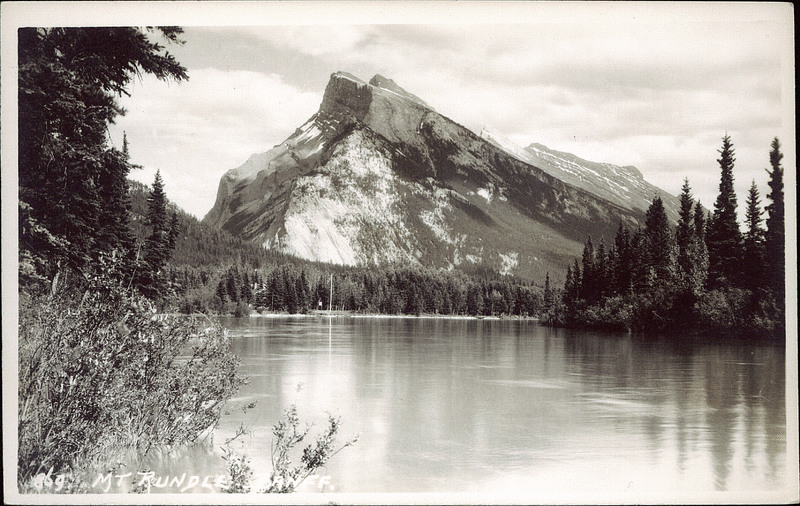
- Mount Rundle, one of the most photographed peaks in Banff National Park, was named after him by James Hector during the Palliser Expedition in 1858.
- The Methodist mission system that followed him into the country shaped the development of early schools, social services, and rural church infrastructure across the southern half of Alberta.
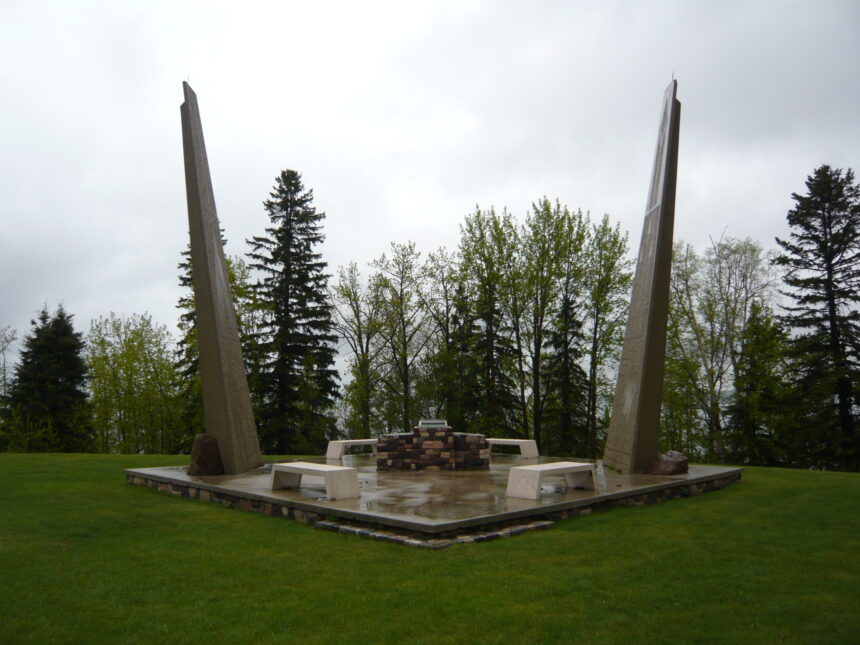
The site was designated a National Historic Site of Canada on October 28, 1963, and is listed on the Canadian Register of Historic Places under ID 13218.
Reading the cultural layer over the commercial layer
Here is the heritage buff opinion. The province’s early story is usually told as a single commercial track. Furs, ranches, railways, oil, pipelines. That track is real. It is also incomplete. The non-commercial institutions that arrived in the second half of the nineteenth century shaped the cultural infrastructure of Alberta in ways that still register. Schools, hospitals, language preservation work, mutual aid networks. Rundle’s Mission is one of the earliest examples of this second layer in the country. The mission building did not last long. The instinct to put a permanent institution into a place that previously only had commercial traffic shaped the next century of Alberta development.
If you stand on the south shore of Pigeon Lake at last light in summer, the country has not changed all that much. The water is calm. The forest sits the way it has sat for centuries. Rundle was working from a small mission building on that shore one hundred and seventy-nine years ago. The Stoney Nakoda were already living there. Both presences are still part of the modern story.