Farm families have always paid for the weather, one way or another. In the spring of 1921, farmers around Medicine Hat tried paying for it directly, and the Redcliff Review of March 3, 1921, reported that the United Agricultural Association had already raised about half the money for its rainmaker contract, with another drive planned before the month was out.
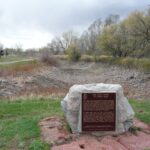
The rainmaker was Charles M. Hatfield, a Californian who sold rain by the inch. The Medicine Hat rainmaker contract put his plant at Chappice Lake, northeast of the city, and the money came out of the pockets of the farm households who had watched it not rain for years.
Did Medicine Hat farmers really hire a rainmaker? Yes. The United Agricultural Association of the Medicine Hat district raised a fund in 1921 to pay Charles Hatfield for rain, and he operated from Chappice Lake that summer.
Key facts
- The Redcliff Review of March 3, 1921, reported that the United Agricultural Association had raised about half the funds for its rainmaker contract.
- The Redcliff Review of April 28, 1921, reported that Charles Hatfield moved his outfit, a cook car and two wagons of lumber and chemicals drawn by a tractor, to Chappice Lake.
- The Redcliff Review of June 30, 1921, reported that dry, hot weather had ruined the district’s chance of even an average crop.
- The Redcliff Review of February 16, 1922, reported that the United Agricultural Association had decided not to bring Hatfield back for a second season.
Why the Medicine Hat rainmaker made sense to a dry-belt farmer
The arithmetic of the dry belt explains the subscription list better than any theory of gullibility. The Canadian Museum of History describes how southeastern Alberta and southwestern Saskatchewan, kept closed to homesteaders until 1905, filled quickly afterward, delivered bumper crops in 1915 and 1916, and then went into ten years of drought, made worse by fire and insects, until farms and whole towns were abandoned. By Alberta Tribune’s arithmetic, a family on that ground had seen two good years and then four bad ones in a row by the spring of 1921.
Land like that had been doubted from the start. The Palliser Expedition called it a desert decades before settlement, and the people who farmed it spent the next century proving which parts could carry a crop and which needed help. Some of that help was real and is still working, like the century-old dam that still waters southern Alberta. Some of it was a windmill and a dugout, the kind of hardware kept at Etzikom’s windmill museum. A rainmaker was one more tool on offer, and the price was only due if it worked.
That last condition is the part usually left out of the joke. Period newspapers that printed the contract’s terms don’t agree on the figures, and the scanned pages are too damaged to settle them. They do agree on the principle. Hatfield was paid by the inch, and only for rain above what the district could expect without him. A New Zealand paper, the Manawatu Herald of July 21, 1921, reported that the fund came from voluntary subscriptions by local heads of families and that the signed contract sat in a deposit box at Medicine Hat. People who write terms like that aren’t fools. They’re buyers who’ve been burned before.
What happened at Chappice Lake in the summer of 1921
He moved out in late April. The Redcliff Review of April 28, 1921 reported that Hatfield had hauled his outfit to Chappice Lake behind a tractor, a cook car and two wagons loaded with lumber and chemicals, and that he planned to start the plant on a Saturday night and expected the first rain within four to six days. He asked visitors to stay away until May 10, when, the paper said, they would be heartily welcome.
Then the summer went the way dry-belt summers went. By the end of June the Redcliff Review reported that the town no longer took Hatfield seriously. Another week had gone by without the shower, it said, and the hot, dry weather of the past weeks had finished any hope of even an average crop. The same editorial gave the farmers something the headline didn’t. Few of them had ever had much faith in the man, it said, but they had been willing to try him, and “they kept up their hopes and encouragement as long as was humanly possible.”
The skeptics had the better case, and the record shows it. The federal government discouraged the experiment. The local paper said in March that it couldn’t vouch for Hatfield, calling the whole thing “only an experiment” while urging townspeople to back the farmers anyway. When the season was over, the Redcliff Review of February 16, 1922 reported that the United Agricultural Association would not ask Hatfield back, and its editorial said the rain he’d contracted to deliver was no greater than the district’s average natural rainfall over the previous twenty-seven years. His plant, the paper said, was a joke. On the science, the people who laughed were right, and anyone tempted to defend Hatfield’s methods now would be defending nothing. Weather work around the city now runs on instruments, the kind being tested with Medicine Hat’s reusable weather drone, and none of it descends from Hatfield’s plant at Chappice Lake.
Being right cost the skeptics nothing at all.
What the Medicine Hat rainmaker fund says about the people who paid
The farmers lost money they couldn’t spare, on a contract they’d locked in a deposit box. They’d also done something harder than mocking a salesman. They’d organized. The United Agricultural Association called its own meetings, ran its own drives, and wrote a contract that tied payment to measured results. When the results didn’t come, the same association made the decision not to renew. That’s a district governing itself, badly informed on one question and entirely clear on the rest.
Dry years still come to that country, and the people who farm it still read the sky and the soil before they spend, as the Tribune found when Alberta crops ran above average while the soil dried out. The bet looks different now. The stake hasn’t changed.
A district owes the families who signed that 1921 subscription list the plain credit of having tried, with their own money, in a dry year, and of having stopped when the rain didn’t come.