Project descriptions in 2024 put the Yellowhead pipeline at more than $2 billion and about 200 kilometres. The line that broke ground on October 13, 2026 is a $2.9 billion, 235-kilometre build, and the $2.9 billion carries a class III margin of plus or minus 20%. That is a range from roughly $2.3 billion to $3.5 billion, Alberta Tribune arithmetic on the published figure, and the number that gets repeated in headlines is the middle of it.
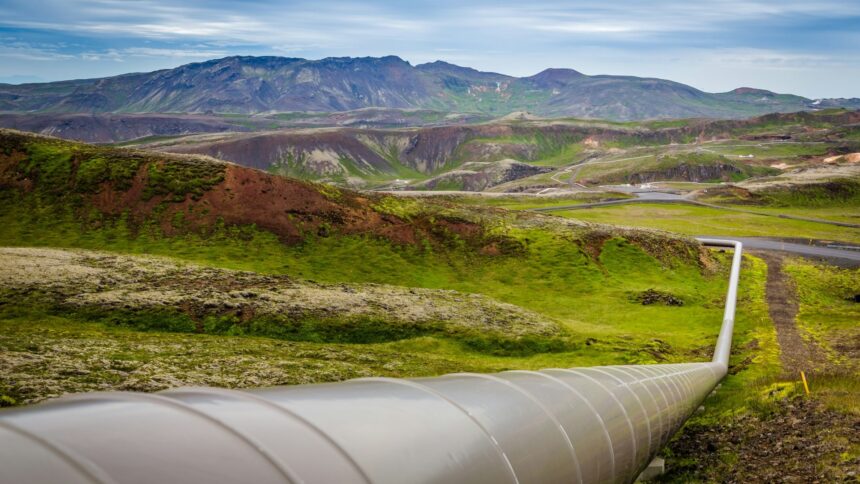
The line runs from Peers, west of Edmonton, to Fort Saskatchewan in 36-inch pipe, with capacity above 1.1 billion cubic feet a day and an in-service target of late 2027. Construction is projected to employ about 2,000 people directly. A projection of jobs is not a count of jobs, and the first real count arrives when the crews mobilize.
Key facts
- The Alberta Utilities Commission approved the need for the Yellowhead pipeline in Decision 29318-D01-2025 on August 21, 2025, based on 1,125 terajoules a day of 15-year contracts (Alberta Utilities Commission, August 21, 2025).
- The Alberta Utilities Commission issued the facility decision for the project, Decision 30422-D01-2026, on July 17, 2026 (Alberta Utilities Commission, July 17, 2026).
- The project is a 235-kilometre, 36-inch line from Peers to Fort Saskatchewan with capacity above 1.1 billion cubic feet a day and a cost estimate of $2.9 billion, accurate to plus or minus 20% (ATCO and Alberta Utilities Commission filings, 2025 and 2026).
- The Alberta Utilities Commission need decision states that the project’s costs are recovered through the system revenue requirement, and it put the effect on low-use ATCO Gas residential customers at between $1.90 and $9.65 a year from 2028 (Alberta Utilities Commission, August 21, 2025).
How a gas line of this size gets paid for
A pipeline in a regulated system collects its cost through a revenue requirement. The regulator approves the capital, adds an allowed return and depreciation, and the system recovers that total from the customers who use it. Shippers sign contracts that justify building the line, but the cost is not fenced off to them. It joins the pool, which is why the need decision puts a dollar figure on a household that will never ship a molecule of gas through Peers.
The arithmetic on the contracts is worth doing. A capacity of 1.1 billion cubic feet a day converts to about 1,170 terajoules a day at typical heating values, by Alberta Tribune conversion, so the 1,125 terajoules a day under 15-year contract covers about 96% of the pipe. A line sold that full before steel is ordered is a line with little volume risk in its first years. The risk that remains is cost, and that is the part still moving: an estimate that grew from $2 billion to $2.9 billion before the first ditch was dug has no reason to treat the next 20% as a ceiling.
What the household number actually measures
The range of $1.90 to $9.65 a year applies to low-use residential customers on one utility’s system, and it begins in 2028. It does not describe an average household, a high-use household, a commercial customer or a customer on another distributor. None of that makes the number wrong. It makes it narrow, and the narrow figure is the one most likely to be repeated as if it described everybody.
The project sits beside two questions the site has covered, who carries the cost of the wires that serve a region and where new gas demand is forming near Edson. It also belongs to an older Alberta pipeline story, told in the history of the Trans Mountain line.
What the filings leave open
The Alberta Utilities Commission record sets out the need and the facility. It does not set out a final cost, because no one has one. ATCO carries the construction schedule, and the schedule is the quickest test of the estimate: a line that runs late tends to run over.
Two dates settle the question. Late 2027 is the in-service target, and 2028 is the first year a low-use ATCO Gas customer sees a charge between $1.90 and $9.65.