Key facts
- Jasper National Park’s Dark Sky Preserve covers 11,228 square kilometres. The Royal Astronomical Society of Canada designated it in 2011. Travel Alberta
- It is promoted as the largest accessible Dark Sky Preserve. (Wood Buffalo, which straddles Alberta and the Northwest Territories, is larger overall.)
- The Jasper Dark Sky Festival ran October 16 to 25, 2026, its 16th year, with events priced from $10 to $500 and many free. Tourism Jasper
- Beaver Hills, around Elk Island National Park east of Edmonton, has been a Dark Sky Preserve since 2006.
- Aurora viewing season runs through the dark months, when the nights are long and the skies are clear.
Jasper keeps 11,228 square kilometres of night sky dark on purpose, and Alberta’s tourism pitch still sells the daytime. The ski posters and summer peaks get the budget. The darkness, which few places in North America can match at that size, gets a festival and not much else.
Jasper National Park’s Dark Sky Preserve spans 11,228 square kilometres, designated by the Royal Astronomical Society of Canada in 2011. Nearly the entire park is managed to keep its skies dark. The town points its lights down. Emissions are measured. On a clear night the Milky Way shows plainly from a roadside pullout.
This is not a novelty. It is an industry waiting for its marketing department.
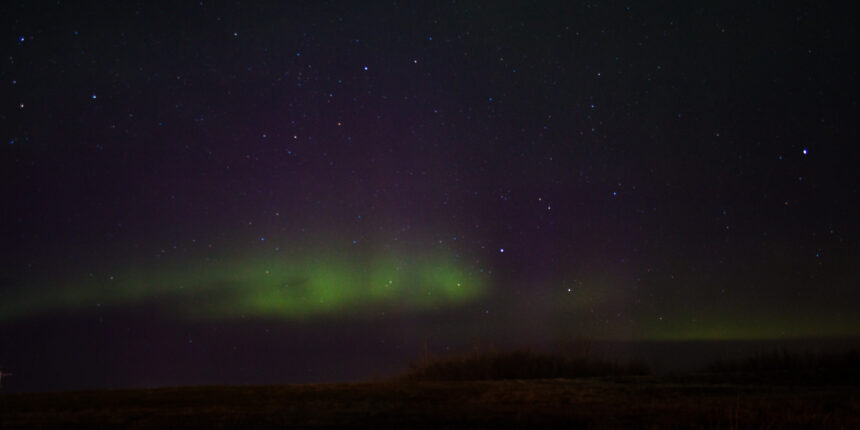
Aurora chasers drive north on a -25 night
Every aurora season, the forecasts light up and the cars point themselves at the dark. They drive the Yellowhead past Hinton. They park at Pyramid Lake or Maligne Lake and stand in the cold with cameras and thermoses. Some of them see the lights. Some of them see clouds. All of them buy gas, food, and hotel rooms in the months when Jasper’s hotels would otherwise sit half empty.
That is the economic point, and it is worth stating plainly. Dark sky tourism fills beds in October and February. Research on the festival’s growth credits it with economic gains in a season when local restaurants and hotels normally sit under-used. A province that worries endlessly about shoulder-season tourism already owns the product. It just has not decided to sell it.
The Jasper Dark Sky Festival has been doing the selling anyway. The 2026 edition ran October 16 to 25: Symphony Under the Stars at the Fairmont Jasper Park Lodge, a drone show, speaker series, free stargazing with the Royal Astronomical Society of Canada, planetarium programs. Events ranged from $10 to $500, with plenty free. It is in its 16th year. Festivals do not survive 16 years on novelty. They survive on demand.
The province should treat the dark as an asset
The fixes are cheap.
First, protect the dark like the asset it is. Dark sky preserves work because of lighting policy: lights pointed down, emissions measured, development held to a standard. Every new highway light and every lit-up subdivision near a preserve erodes the product. Alberta already has the designations. It needs the discipline to keep them meaningful.
Second, market the aurora the way it markets the ski hills. Travel Alberta lists the festival and calls Jasper the largest accessible Dark Sky Preserve. Good. Now put the northern lights in the winter campaigns next to the powder. The aurora does not require a lift ticket. It requires a clear night and a willingness to be cold, which Albertans have in documented abundance.
Third, think beyond Jasper. Beaver Hills has been a Dark Sky Preserve since 2006, a short drive east of Edmonton, which makes it an easy aurora trip for the capital region. Wood Buffalo, straddling the Alberta and Northwest Territories border, is the largest dark sky preserve on the planet. The province’s dark-sky portfolio runs from the Rockies to the far north. No other province can say that.
There is also a pricing advantage that rarely makes the headlines. An aurora trip has no ticket. The costs are fuel, a thermos, warm clothes, and maybe a hotel room. Compare that to a ski weekend or a summer festival. Darkness is the cheapest premium product Alberta sells, and it is the one with the most room to grow.
Darkness relieves the summer crowding problem
The mountain towns are having the same argument every summer about crowds, capacity, and who the parks are for. Darkness is the pressure valve. It cannot be crowded the way a lakeshore gets crowded. It happens at night, in the cold, in places with no gift shop. It selects for visitors who want the place itself, not the photograph of the place.
There is a limit to how many people you can put on Banff Avenue in July. There is no such limit on how many people can look up in November.
Jasper already holds the designation, and its festival is in its 16th year. What the province lacks is a winter campaign that puts the aurora beside the powder.
Frequently asked questions
Where is the best place to see the northern lights in Alberta?
Jasper National Park’s Dark Sky Preserve is the headline asset. It covers 11,228 square kilometres, designated by the Royal Astronomical Society of Canada in 2011, and is promoted as the largest accessible Dark Sky Preserve. Wood Buffalo, which straddles Alberta and the Northwest Territories, is larger overall.
Is there a Dark Sky Preserve near Edmonton?
Yes. Beaver Hills, around Elk Island National Park east of Edmonton, has been a Dark Sky Preserve since 2006.
When is the best time to see the northern lights in Alberta?
Aurora viewing season runs through the dark months, when the nights are long and the skies are clear.
What is the Jasper Dark Sky Festival?
The Jasper Dark Sky Festival ran October 16 to 25, 2026, its 16th year, with events priced from $10 to $500 and many free. The 2026 edition included Symphony Under the Stars at the Fairmont Jasper Park Lodge, a drone show, a speaker series, free stargazing with the Royal Astronomical Society of Canada, and planetarium programs.