


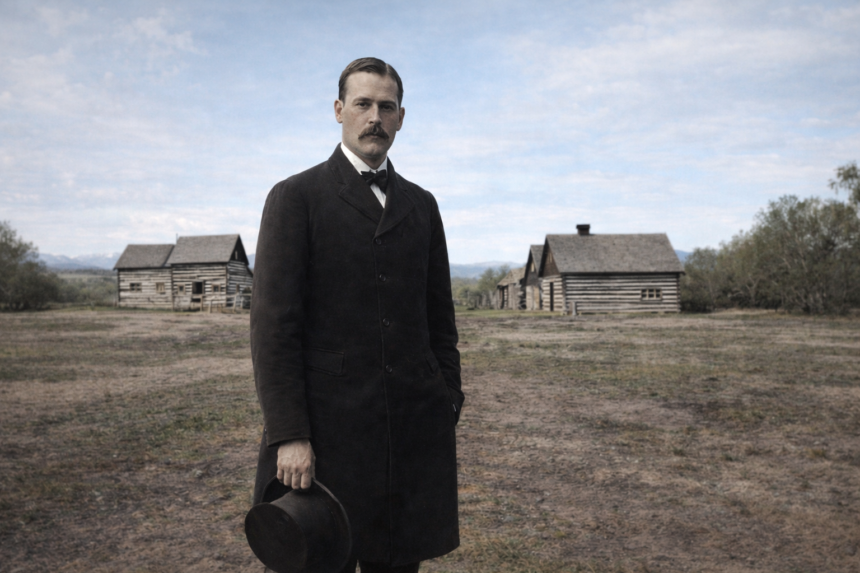
Before he became the Sundance Kid, Harry Longabaugh worked as a ranch hand in southern Alberta. That detail is often treated as novelty. In fact, it offers a revealing window into Sundance Kid Alberta history and the institutional character of the province at the end of the nineteenth century.
- Did the Sundance Kid really live in Alberta
- Alberta frontier history was institutional before it was legendary
- Why did American cowboys come north
- What does the Sundance Kid’s Alberta chapter tell us about provincial identity
- A concise answer for the historical record
- The gap in public understanding
- Memory without myth
- Related from Alberta Tribune
Longabaugh was employed at the Bar U Ranch, one of the largest and most professionally managed ranching operations in what was then the Northwest Territories. He arrived as many American cowboys did, drawn by expanding cattle leases and steady wages. He left before his later criminal career made him a continental legend.
The question is not whether he passed through Alberta. The records confirm that he did. The more enduring question is what his presence here reveals about how this province was formed.
Did the Sundance Kid really live in Alberta
Yes. Harry Longabaugh worked in southern Alberta in the early 1890s before his crimes in the United States made him infamous.
He was part of a cross border labour stream that linked Montana and southern Alberta through cattle markets, railway expansion, and shared ranching practices. His employment at the Bar U Ranch placed him within a disciplined corporate enterprise rather than a frontier free for all.
That distinction is important.
Alberta frontier history was institutional before it was legendary
Popular memory often compresses Alberta frontier history into images of open range independence. Yet by the time Longabaugh rode north, the region was already governed by layered administrative systems.
Large tracts of grazing land were leased under federal authority. Ranching corporations operated with managerial hierarchies. The North-West Mounted Police patrolled the territory, enforcing contract law and maintaining order across dispersed settlements.
This was not incidental. Ottawa sought to avoid the cycles of violent instability that marked parts of the American West. The Canadian model emphasized early institutional presence. Police posts preceded mass settlement. Survey lines preceded homesteads. Lease arrangements preceded speculation.
Longabaugh worked inside that system. He was not resisting it. He was earning wages within it.
The irony is that one of North America’s most romanticized outlaws spent part of his formative years in a region defined less by lawlessness than by administrative foresight.
Why did American cowboys come north
The answer lies in economics rather than myth.
Southern Alberta in the 1880s and 1890s offered access to expansive grasslands, British capital investment, and railway connectivity. Corporate ranching required experienced horsemen. American cowboys possessed the skill set. Movement across the forty ninth parallel was fluid.
Wages were competitive. Employment was structured. Work was demanding but predictable.
For many, Alberta represented opportunity without the volatility of boomtown mining camps or cattle towns prone to speculative swings. It was a frontier, but it was also regulated.
Longabaugh’s decision to leave and later participate in robberies across the United States speaks to his individual path. It does not characterize the province he temporarily called home.
What does the Sundance Kid’s Alberta chapter tell us about provincial identity
It tells us that Alberta’s foundations were practical before they were symbolic.
The province that would formally emerge in 1905 inherited systems of land administration, policing, and commercial coordination already in place. Corporate ranching foreshadowed later patterns of resource management. External capital played a defining role. Labour migrated in response to structured demand.
Those themes repeat across Alberta political history.
Oil development in the mid twentieth century followed a similar pattern. Provincial oversight expanded. Regulatory frameworks evolved. Intergovernmental tensions surfaced over revenue and jurisdiction. Yet the underlying instinct remained institutional rather than insurgent.
Sundance Kid Alberta history therefore offers perspective. The presence of a future outlaw does not convert the province into an outlaw culture. Alberta’s long term trajectory has been shaped more by regulatory design and fiscal negotiation than by romantic defiance.
A concise answer for the historical record
The Sundance Kid worked in southern Alberta at the Bar U Ranch in the early 1890s. His time here occurred within a structured ranching economy overseen by federal land policy and the North-West Mounted Police. Alberta’s frontier was governed, surveyed, and commercially organized well before provincial status in 1905.
The gap in public understanding
Contemporary coverage often isolates this episode as colourful trivia. What it rarely examines is how Alberta’s early governance model distinguished it from other frontier jurisdictions.
The Canadian West was integrated into Confederation through policy sequencing. Infrastructure investment, policing presence, and land administration advanced together. That model aimed to prevent precisely the instability that later defined Longabaugh’s notoriety elsewhere.
This historical continuity matters in present debates.
Modern arguments over federal emissions caps, resource jurisdiction, and provincial autonomy echo earlier disputes about who controls land, who regulates commerce, and how authority is divided. Alberta has consistently engaged these questions through institutional channels. Courts, legislatures, and negotiated agreements have shaped outcomes more than spontaneous rebellion.
The Sundance Kid episode, viewed through that lens, reinforces a broader point. Alberta’s development was not accidental. It was structured.
Memory without myth
There is no need to romanticize the past to understand it. Harry Longabaugh was a ranch hand in southern Alberta before he became a symbol of American outlaw folklore. His employment here reflected economic integration and labour mobility, not provincial complicity in criminal mythmaking.
If anything, his story underscores the contrast.
He departed into legend. Alberta remained and matured into one of Canada’s principal economic engines.
Sundance Kid Alberta history is therefore less about spectacle and more about institutional memory. The province was shaped by administrative foresight, commercial coordination, and incremental political development. Those elements continue to define its public life.
History does not flatter. It clarifies.