At about 1:03 in the afternoon on July 9, 1918, an American pilot opened the throttle of a one-off Curtiss biplane at the Calgary Exhibition grounds and lifted into a summer sky with letters aboard. The flight ended near eight o’clock that evening on the infield of the grandstand at the Edmonton Exhibition, and it is remembered as Western Canada’s first airmail.
Katherine Stinson was an exhibition flyer, born in 1891 in Fort Payne, Alabama, according to the Alberta Aviation Museum. She was not in Alberta for the mail. She was in Alberta to fly at the fairs, and the mail was an arrangement made around her.
Key facts
- Katherine Stinson flew from Calgary to Edmonton on July 9, 1918, carrying Western Canada’s first airmail (Alberta Aviation Museum, 2018; Canadian Aviation Historical Society, July 2018).
- The aircraft was the Curtiss Special, a one-off 1917 Curtiss biplane with a Curtiss OX V-8 engine of about 100 horsepower (Vintage Wings of Canada).
- Most sources give 259 letters carried, and Canada’s History gives 380 envelopes (Alberta Aviation Museum; Canadian Aviation Historical Society; Canada’s History).
- The first official airmail in Canada, flown from Montreal to Toronto, came about two weeks earlier according to Canada’s History, so Stinson’s flight was the first in the West and not the first in the country.
The arrangement
The mail flight grew out of the exhibition circuit. Stinson was flying at the Calgary Exhibition, and the Edmonton Exhibition was the next fair on her list. The Alberta Aviation Museum says Calgary’s postmaster, George King, arranged the carriage with the Edmonton Exhibition’s manager and that Edmonton’s postmaster, George Armstrong, received the mail at the other end. Vintage Wings of Canada names the Calgary exhibition’s manager as Ernest Richardson, which is a different job from the postmaster’s.
A hastily made rubber-stamp cachet marked the envelopes. Many of them were lost over the years, and one account describes some dispute about the count, which is why the number of letters differs between sources.
The flight
The route followed the Canadian Pacific Railway line north, according to the Canadian Aviation Historical Society and Vintage Wings, which agree on it.
Stinson had engine trouble. She made a forced landing soon after takeoff. The Alberta Aviation Museum puts the cause at a loose carburetor bolt and the place at a farm about seven miles out. Canada’s History names a different place, and a third account says only engine trouble a few miles outside Calgary. The sources do not agree on where she came down.
She was in the air again at 5:55 in the evening and landed at the Edmonton Exhibition at about eight. By Alberta Tribune arithmetic on those two times, the second leg took about two hours and five minutes. The clock time from the first takeoff to the landing was close to seven hours. No source reviewed gives a net flying time, so neither figure should be read as one.
What the record leaves open
The museum, the Canadian Aviation Historical Society and Vintage Wings each give 259 letters, and Canada’s History gives 380 envelopes. Takeoff is about 1:03 in the museum’s account and 1:30 in a stamp-collectors’ history. The commemoration of 2006 is dated June 9 by one source and July 9 by another. None of this changes the date or the route, and all of it is a reason to treat the smaller numbers as reported and not settled.
The Tribune has also written about how Edmonton’s first airport began as a farm with runways, which covers the ground side of Alberta’s early flying.
Where to read more
The Alberta Aviation Museum published the account that most of the Alberta detail rests on, and the Canadian Aviation Historical Society carries its 2018 commemorative article. Canada’s History and Vintage Wings of Canada carry the aircraft and the earlier Montreal flight.
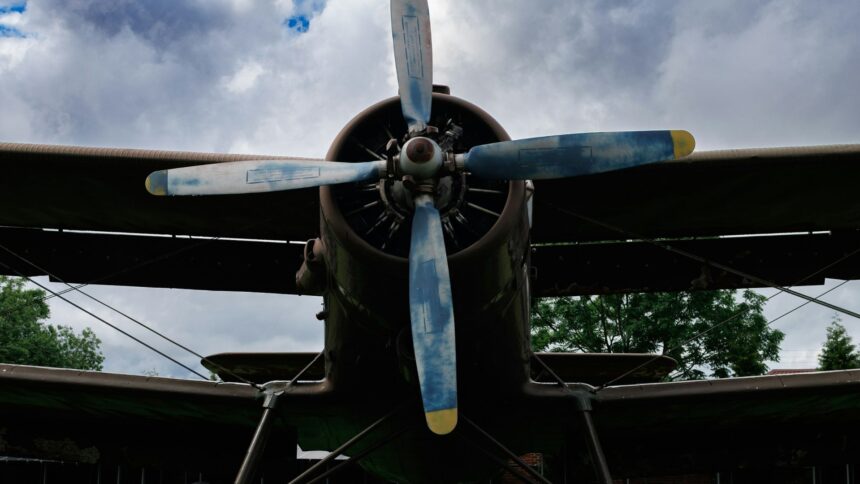
A full-size replica of the Curtiss Special is reported to stand at the Alberta Aviation Museum in Edmonton. It is the nearest thing to the machine that left Calgary that afternoon, and it is the picture of the flight that survives where anyone can walk up to it.