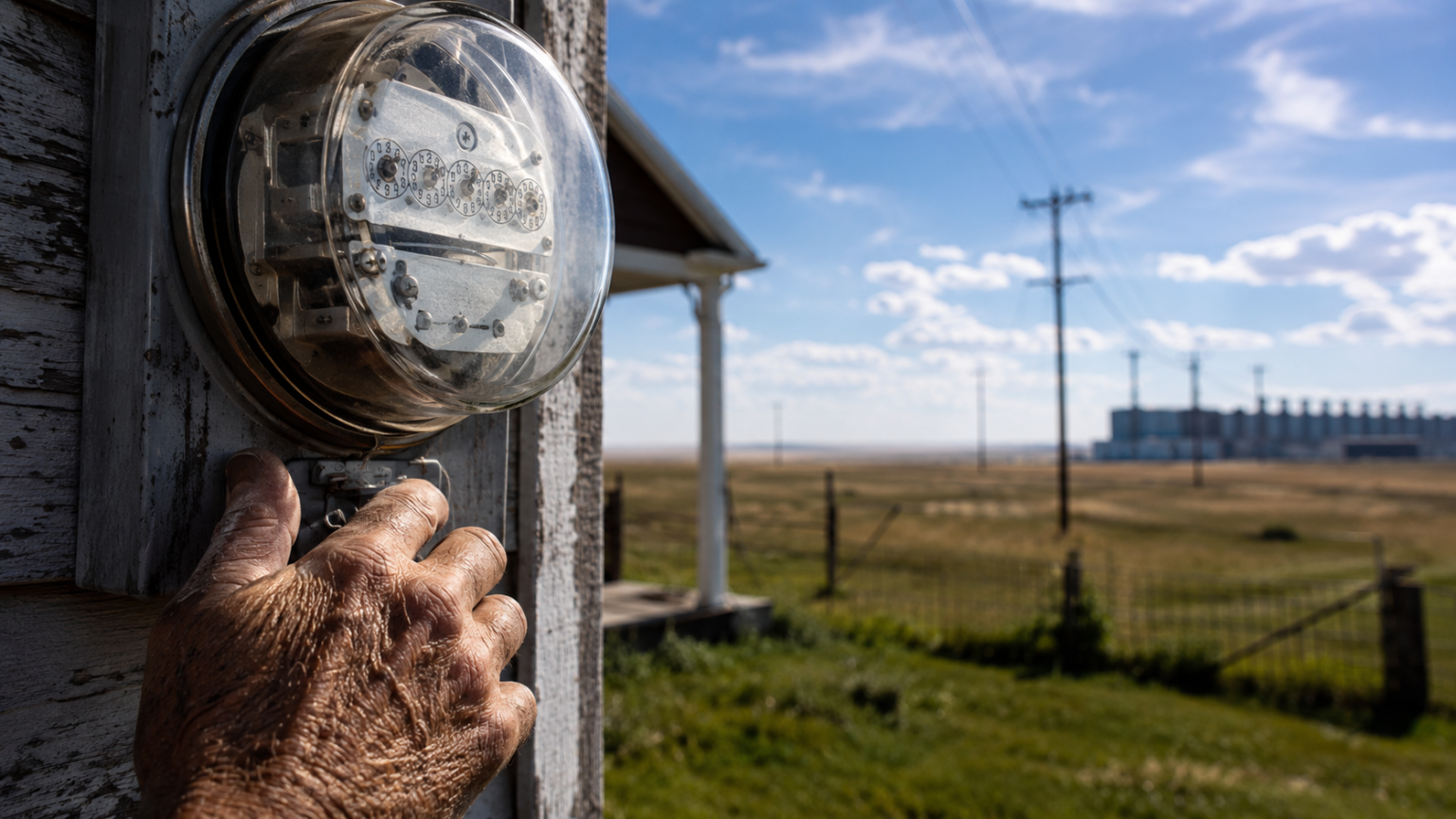

Here is a simple test for any data centre deal in Alberta. When the power bill arrives in a farmhouse outside Stettler or a bungalow in Camrose, has it gone up to wire in someone else’s server hall? If the answer is yes, the deal was structured wrong. The good news is that, so far, the province has mostly understood that.
The demand is staggering. As of June 2025, 29 proposed projects had lined up to connect to Alberta’s grid, representing more than 16 gigawatts if they all proceeded, which they cannot. The grid operator has set an aggregate cap of 1,200 megawatts for these large loads before 2028, roughly the amount it judges can be added without driving up costs for the people already plugged in. That cap is the system protecting the ratepayers who were here first.
Key facts
- The Alberta Electric System Operator announced on June 4, 2025 an interim limit of 1,200 megawatts of new large load connections through 2028, according to the AESO.
- The AESO interim approach applies to load projects of 75 megawatts or more, such as data centres, as described in the AESO announcement.
- As of June 4, 2025, 29 proposed projects totalling more than 16 gigawatts of demand were seeking grid connection, the AESO reported.
Whoever causes the cost should carry it
The principle that matters here has an unglamorous name, cost causation, and it is exactly right. The price of the transmission upgrades needed to connect a data centre should fall on the developer, not on the existing customer base. The grid operator’s interim approach already targets projects of 75 megawatts or more, the biggest draws on the system. In plain terms, the company that wants the electricity pays to bring it. That is how it should have always worked.
Bring your own power
Alberta’s real edge is that it can ask these companies to bring their own generation, usually natural gas, rather than leaning on a grid that rural Albertans depend on for heat and livelihood. That keeps the lights reliable in the countryside and creates a market for Alberta gas. It is the kind of arrangement that lets the province lead on AI without asking a single ratepayer to subsidize it.
Hold the line when the pressure comes
The test will come the first time a large, well-connected project asks for an exception, a small bit of socialized cost, a break that nudges the bill onto everyone else. That is the moment to hold firm. Rural and small-town Albertans already stretch every dollar, and they should not become the silent co-signers on a billionaire’s electricity contract. The rules on the books are sound. Whether they survive contact with lobbying is the part worth watching, and it is one more reason the towns hosting these projects need a real seat at the table.
Correction: an earlier version gave more than 30 projects and about 21 gigawatts; the grid operator’s June 4, 2025 release shows 29 proposed projects and more than 16 gigawatts.