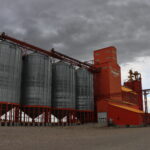



You cannot grow wheat on a server. That sounds obvious until you look at where some of Alberta’s biggest data centre proposals want to put down concrete. The proposals aim at classified, farmable soil that has fed people for generations, while marginal scrub and old industrial lots sit untouched. Once that land is paved, it is not coming back, and no amount of computing power replaces it.
Rocky View County saw this clearly last year. A developer pitched a campus of roughly 448 hectares, six data centres built out over 15 to 20 years, with its own reservoir and power plant. More than 50 residents stood up to oppose it and only a handful spoke in favour. Council rejected it, and the reeve pointed straight at the proposed location and its impact on local agricultural producers. The county then went further and moved to set dedicated standards for setbacks, noise and review.
Property rights cut both ways
Conservatives believe in the right of a landowner to do what they want with their land, and that belief is sound. But property rights have always run both directions. The farmer next door has rights too, and so does the community that has to live with the traffic, the noise, the water draw, and the loss of soil that took thousands of years to build. A bedrock principle is not violated when a county weighs all of those interests and says no. That is the principle working as intended.
Local councils should hold the pen
The pressure is real, too: the grid operator has already allocated all 1,200 MW of its interim limit for large loads, so developers are hunting for the next site. The danger sits in a future where the province decides these projects are too important to leave to local people and starts overriding municipal land-use decisions from Edmonton. Albertans of all people should recoil at that. The county council, elected by the people who farm and live there, is the right body to weigh a project against the land it sits on. Different counties will weigh the same project differently, and each answer is legitimate because it is local.
A finite asset deserves a real test
Alberta’s farmland is not making a comeback once it is gone, any more than a town gets its say back after the fact. That argues for a simple rule. Steer these projects toward industrial land, brownfields, and sites where the soil is poor, and make any move onto prime agricultural ground clear a high bar with the neighbours in the room. Pair that with honest limits on how much water a project can pull, and Alberta can welcome the industry without trading away the thing that made rural Alberta rural in the first place.
A community owes the next generation of farmers the ground that feeds them. It only gets one chance to keep it.