

Most of the noise in technology these days is about software, apps, and the latest model that promises to change everything. So it is worth slowing down for a piece of news that is the opposite of noise. A semiconductor company is putting $20 million into expanding a factory in Edmonton that makes things you can hold, sensors so small you can barely see them, built for the real world. This is the kind of win Alberta should chase harder.
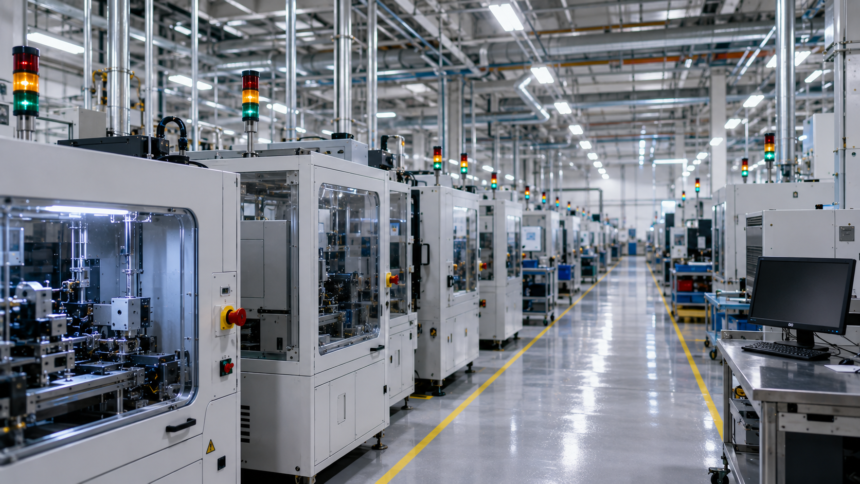
Teledyne’s Edmonton operation builds micro electro-mechanical systems, the tiny sensors and components that end up in vehicles, medical diagnostics, industrial safety equipment, telecommunications gear, aerospace, and consumer electronics. The expansion adds new wafer processing and automation equipment and is expected to create 16 jobs. The province is backing it with a $620,000 grant from its Investment and Growth Fund. That is a small public stake riding on top of a much larger private bet.
Key facts
- Teledyne MEMS is investing $20 million to expand its Edmonton semiconductor facility, according to Edmonton Global.
- The Government of Alberta is providing a $620,000 grant from its Investment and Growth Fund for the Edmonton expansion, according to Edmonton Global.
- Teledyne MEMS announced the Edmonton expansion on June 24, 2026, with new wafer processing, inspection and automation equipment, according to the company release.
Real things, made here
The appeal here is exactly that it is unglamorous. This is physical manufacturing, skilled technical work, and a product with genuine export demand in export markets. Semiconductors are strategic in a way few industries are, because almost everything modern runs on them, and the countries that can make them are not eager to share. A province that can build them, even at the micro scale, is holding something valuable. These are not jobs that vanish when a venture fund changes its mind. They are anchored to a building, a process, and a workforce that gets harder to replace as it gets more skilled.
This is what diversification actually looks like
Albertans have heard the word diversification for decades, usually from people who treat it as a polite way of saying the energy industry should shrink. That was always the wrong frame. The right kind of diversification does not apologize for the energy economy. It builds alongside it, using the same strengths, a skilled trades workforce, cheap power, and a culture that knows how to make and move real things. A semiconductor plant in Edmonton sits comfortably next to an aerospace plant you can walk through. Both are proof that Alberta can win in advanced manufacturing without pretending to be Silicon Valley.
The right role for government
The provincial grant is worth a word, because it is the right size and shape. At $620,000 against a $20 million private investment, the public money is a nudge, not a crutch. It rewards a company that is putting up the real capital and creating the real jobs, and it pays out because the investment is happening, not as a bet that it might. That is the model Alberta should stick to, the same instinct behind building the conditions for industry to choose Alberta rather than trying to manufacture winners from a government office.
More of these, please
Sixteen jobs will not change the provincial economy on their own. The point is the direction, and the kind of company choosing to grow here. A future where more of these high-skill plants pick Edmonton and Calgary over other cities is a future where Alberta’s young people do not have to leave to work on the frontier of technology. That is worth a modest grant and a good deal more attention than a factory expansion usually gets.
Investment like this builds a durable economy, and it deserves at least the attention the latest app gets.