

Before Alberta was a province, it was a trading empire
Long before the Alberta Legislature overlooked the North Saskatchewan River, Fort Edmonton stood along its banks as a centre of commerce and power. There were no elections. No municipalities. No oil royalties.
There were traders.
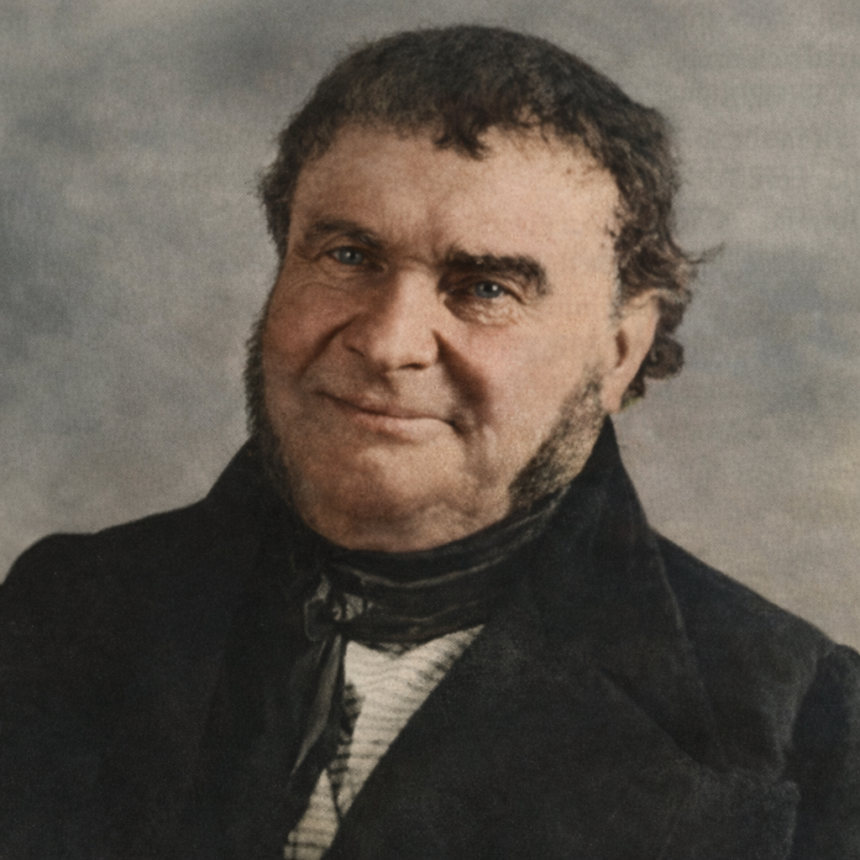
Among them, few shaped this region more than John Rowand, chief factor of the Hudson’s Bay Company’s Saskatchewan District for much of the early nineteenth century. If we want to understand Alberta’s economic instincts today, we need to look at men like him.
The making of a frontier power broker
Born in Montreal in 1789, Rowand entered the fur trade as a teenager with the North West Company. After its 1821 merger with the Hudson’s Bay Company, he rose steadily and eventually commanded Fort Edmonton, one of the most important inland posts west of Red River.
The North Saskatchewan River was the artery of the West. York boats carried furs east and supplies west. Indigenous nations were essential trade partners. Survival depended on negotiation, strength, and reputation.
Rowand had all three.
He was large in stature and strong in temperament. He spoke multiple languages, including Cree and Blackfoot. He managed trade relationships, supervised brigades, and kept the district profitable in a period of fierce competition and political tension.
Fort Edmonton under Rowand was not a quiet outpost. It was a regional headquarters. Decisions made there affected trade patterns across the Prairies and into the Rocky Mountains.
Rowand’s Folly and the signal of permanence
In 1829, Rowand built a substantial residence at Fort Edmonton, later nicknamed “Rowand’s Folly.” The structure reportedly stood four storeys tall and was among the most imposing buildings in the region.
On a frontier dominated by log structures and seasonal movement, this house sent a message.
The fur trade was no longer temporary. It was entrenched.
Floods would eventually force relocations of the fort. Time erased the original building. But the symbolism remains important. Rowand’s house reflected ambition and permanence along a river that would later anchor Edmonton’s growth.
Relationships, power, and Prairie realities
Rowand lived with Louise Umfreville, a Métis woman, and together they raised a large family connected to the fur trade world. Like many senior traders, his household reflected the cultural blending that defined Rupert’s Land.
His relationships with Indigenous communities were complex. He relied on Plains nations for trade and maintained working alliances. At the same time, he represented corporate authority expanding across Indigenous territories.
That duality is part of Alberta’s foundation.
The fur trade was an economic engine built on partnership and disruption. It created opportunity and altered traditional systems. It tied the Prairies to global markets decades before settlement towns appeared.
Rowand operated in that tension every day.
The Alberta thread
Why does this matter now?
Because Alberta often celebrates its independence, its resource economy, and its directness. Those traits did not appear in 1905. They emerged from a frontier economy where decision makers operated far from eastern oversight and where leadership required force of will.
Rowand governed his district with autonomy. He demanded discipline. He believed in results. Fort Edmonton’s profitability under his command strengthened the Hudson’s Bay Company’s hold on the region.
Sound familiar?
Alberta’s modern industries still revolve around resource extraction, global markets, and strong regional leadership. The scale has changed. The framework has evolved. But the instinct for economic self direction runs deep.
A history that deserves honesty
Rowand was not a simple hero. He could be harsh with employees and uncompromising in conflict. His authority reflected the hierarchy of his era.
Understanding him means understanding the full fur trade context. Indigenous agency. Corporate power. Economic ambition. Cultural blending. Territorial change.
Heritage is not about polishing reputations. It is about seeing clearly.
When we walk through Fort Edmonton Park today, we see reconstructed buildings and curated narratives. Behind those walls were negotiations that shaped what this province would become.
Rowand’s life reminds us that Alberta’s foundations were economic long before they were political. Trade preceded governance. Commerce preceded confederation.
The river still runs
The North Saskatchewan River still cuts through Edmonton. It flows past the Legislature grounds, past modern bridges and glass towers.
Two centuries ago, York boats moved along that same current carrying bundles of beaver pelts. Decisions made at Fort Edmonton helped define the region’s economic future.
John Rowand did not build Alberta. But he helped shape the conditions that made it possible.
If Alberta wants to understand itself, it should look back to the river, to the fort, and to the complicated figures who governed before there was a province to govern.
Our heritage is not tidy. It is layered, ambitious, and sometimes uncomfortable.
That makes it worth studying.