

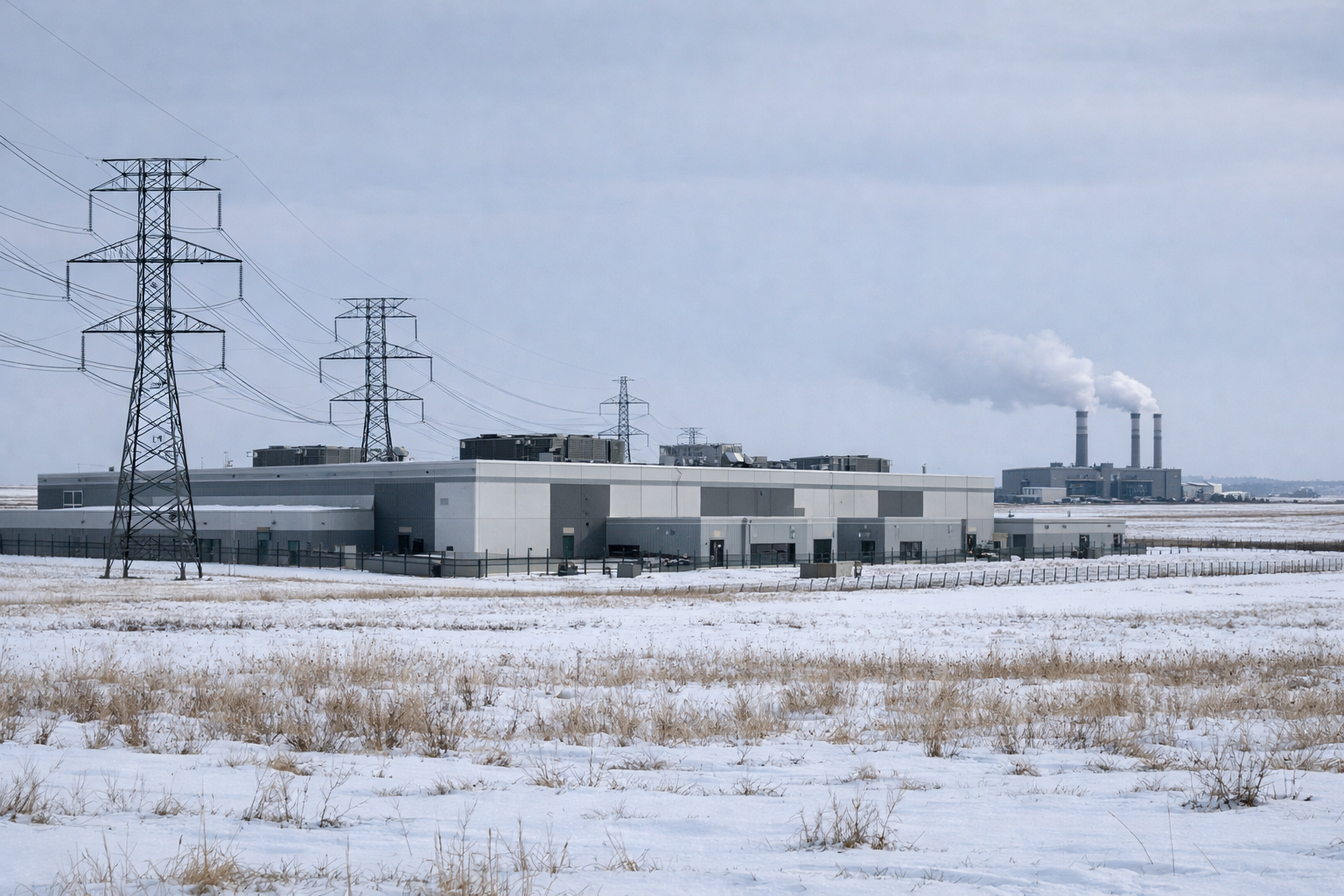

Alberta’s energy sector is no longer just fueling trucks and heating homes. It is increasingly powering artificial intelligence infrastructure at industrial scale.
- Alberta Energy Powers the Next Industrial Layer
- Natural Gas Is Now a Strategic Digital Asset
- Investment Signals Confidence in Industrial Growth
- Alberta Is Competing on Structure, Not Subsidies
- The Grid Question Cannot Be Ignored
- Federal Policy Risk Remains a Variable
- A Province That Builds What It Powers
- Frequently Asked Questions
- Why are data centres choosing Alberta
- How much power does the TransAlta deal involve
- What is Emissions Reduction Alberta funding
- Could data centres raise electricity prices
- Related from Alberta Tribune
In early March 2026, TransAlta announced a long term power supply agreement tied to Alberta data centre development, beginning with 230 megawatts of capacity and expandable toward 1,000 megawatts. That is not a pilot project. That is hyperscale territory.
At the same time, the province confirmed approximately 28 million dollars in funding through Emissions Reduction Alberta on February 20, 2026, backing industrial transformation projects including methane reduction, renewable natural gas from agricultural waste, and advanced energy technologies.
Taken together, these developments point to something bigger. Alberta’s traditional energy advantage is becoming a digital infrastructure advantage.
Alberta Energy Powers the Next Industrial Layer
Data centres are not abstract technology. They are power intensive industrial facilities that require stable, large scale electricity supply.
A single hyperscale data centre can demand hundreds of megawatts, equivalent to a small city’s electricity load. Alberta’s deregulated electricity market, combined with abundant natural gas generation capacity, offers a structure few other provinces can match.
TransAlta’s March 2026 agreement reflects that reality. An initial 230 megawatts of supply is significant on its own. The ability to scale toward 1,000 megawatts signals long term industrial load growth, not temporary demand.
For Alberta, that means private capital is betting on grid reliability and energy availability.
Natural Gas Is Now a Strategic Digital Asset
Much of Alberta’s grid is powered by natural gas following the province’s phase out of coal in recent years. Gas generation offers dispatchable power, which means it can ramp up or down to meet demand.
AI driven computing does not tolerate instability. Hyperscale operators require consistent uptime and predictable supply.
Alberta’s natural gas infrastructure, built over decades to serve oil sands operations and industrial clients, is now positioned to serve data centres.
This is not a departure from Alberta’s resource economy. It is an extension of it.
Investment Signals Confidence in Industrial Growth
On February 20, 2026, Emissions Reduction Alberta announced approximately 28 million dollars in funding for energy and clean technology projects.
These investments support methane reduction technologies, pipeline monitoring systems, renewable natural gas from agricultural waste, and well site innovation. Many of these projects leverage private sector co investment, multiplying the economic impact.
For a province facing a projected 9.4 billion dollar deficit in the 2026 to 2027 fiscal year, attracting capital intensive infrastructure matters.
Diversification does not mean abandoning core strengths. It means monetizing them in new ways.
Alberta Is Competing on Structure, Not Subsidies
Unlike jurisdictions that rely heavily on public subsidies to lure technology firms, Alberta’s pitch is structural.
The province offers a deregulated electricity market, competitive industrial power rates, relatively streamlined permitting, abundant land availability, and cold climate conditions that reduce cooling costs for data facilities.
These are structural advantages, not temporary incentives.
That matters for long term competitiveness. Capital flows to stability and predictability.
The Grid Question Cannot Be Ignored
Growth at this scale requires careful planning. A 1,000 megawatt industrial load is not trivial.
Alberta Electric System Operator planning documents already reflect increasing demand projections tied to electrification and industrial expansion. Data centres add another layer of complexity.
The province must ensure that industrial growth does not undermine affordability for households and small businesses.
Grid upgrades, generation capacity planning, and clear regulatory signals will determine whether Alberta’s digital advantage strengthens or strains the system.
Federal Policy Risk Remains a Variable
Artificial intelligence policy is increasingly on Ottawa’s radar. Federal regulation around AI, data governance, and environmental standards could shape how quickly Alberta projects advance.
Alberta’s advantage lies in regulatory clarity and energy reliability. If federal policy becomes unpredictable or heavy handed, capital could hesitate.
For now, the signals from private investment suggest confidence.
A Province That Builds What It Powers
Alberta has always been an infrastructure province. Pipelines, transmission lines, processing plants, and export terminals define its landscape.
Data centres are simply the next layer of that industrial story.
The difference is that instead of shipping barrels, Alberta may increasingly export computing capacity.
If managed responsibly, this shift strengthens fiscal resilience, supports skilled trades and construction jobs, and anchors long term private investment.
Energy built this province. Energy may now anchor its digital future.
Frequently Asked Questions
Why are data centres choosing Alberta
Alberta offers a deregulated electricity market, abundant natural gas generation, cold climate cooling efficiency, and competitive industrial power rates.
How much power does the TransAlta deal involve
The agreement announced in March 2026 begins with 230 megawatts and has potential expansion toward 1,000 megawatts.
What is Emissions Reduction Alberta funding
On February 20, 2026, approximately 28 million dollars was allocated to industrial and clean technology projects including methane reduction and renewable natural gas initiatives.
Could data centres raise electricity prices
If demand outpaces generation planning, prices could be affected. Proper grid management and capacity expansion are critical.