


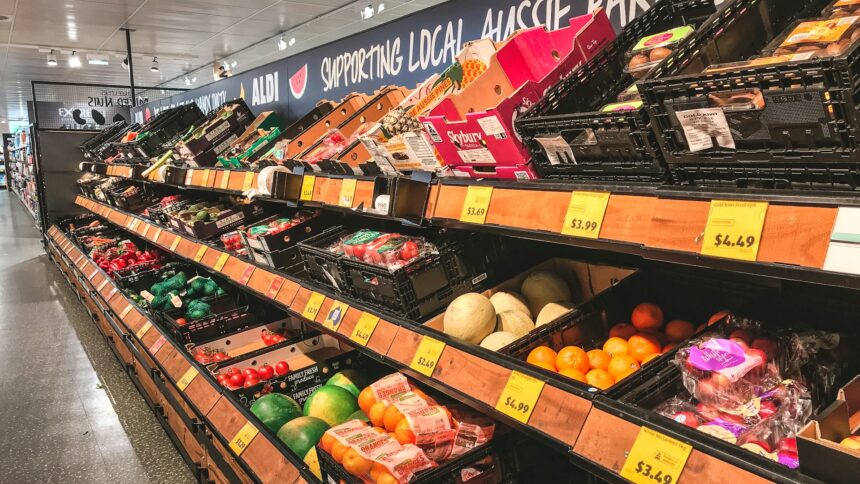
Checkout lane, Friday night. A cashier at an Alberta grocery store runs a clamshell of tomatoes across the glass, and the customer watches the screen instead of the bag.
Everybody watches the screen now.
Statistics Canada put a number on that habit on June 22. Grocery prices climbed 4.3% in the year to May. The whole basket, rent and gas and everything else, climbed 3.2%. That makes 16 months in a row that food bought at the store has run ahead of the headline rate. Sixteen.
Tomatoes jumped 45.2%. Fresh vegetables rose 9.0%. Most families noticed long before the release did.
Key facts
- Statistics Canada reported on June 22, 2026 that the Consumer Price Index rose 3.2% in the 12 months to May 2026, up from 2.8% in April 2026.
- Prices for food purchased from stores rose 4.3% year over year in May 2026, the 16th consecutive month above headline inflation, according to Statistics Canada.
- Statistics Canada tied the 45.2% year over year rise in tomato prices in May 2026 to poor weather and smaller plantings in Mexico, while fresh vegetables overall rose 9.0%.
- Canada’s Food Price Report 2026, released by Dalhousie University on December 4, 2025, projected that a family of four would spend $17,571.79 on food in 2026, up to $994.63 more than in 2025.
- The Government of Alberta’s Alberta Energy Rebate pays $100 per eligible Albertan in households earning $225,000 or less, with applications open from July 1, 2026 to September 30, 2026.
What sixteen months in a row tells a family
One bad month is weather. Two is a rough patch.
Sixteen is a trend with a receipt stapled to it.
Back in December, the Dalhousie forecast said a family of four would spend $17,571.79 on food this year. Up to $994.63 more than last year. By our arithmetic, that is $19.13 a week, every week, before anybody buys a treat. The same report flagged Alberta as one of the provinces facing bigger than average increases.
Nobody at the till needed a briefing. They felt it in the fridge. They felt it when the kids came home from hockey and ate like a thrashing crew.
Why Ottawa’s affordability talk has not reached the till
Be fair about the tomatoes. Ottawa does not grow them. Statistics Canada says the jump came from bad weather and fewer acres planted in Mexico, and no finance minister fixes a dry spell in another country.
Fair goes both ways, though.
Ottawa has talked affordability for two years running, and the grocery line kept climbing through every speech. Federal policy sits on top of every pallet. Fuel taxes on the truck that hauls it. Payroll costs on the plant that packs it. Paperwork on every step between the farm gate and the shelf. Those are choices. Choices pile up over sixteen months the way snow piles on a quonset roof, a little at a time, until something sags.
The folks who call a grocery bill a mystery have never carried one to the truck in February.
Alberta opened its own $100 per adult rebate on July 1. Honest money, easy to claim. A household with two adults collects $200. By our arithmetic, that covers about ten and a half weeks of the extra $19.13. Welcome. Short.
Earlier this summer this site noted that five straight rate holds still left families squeezed, and the energy money coming back to Alberta households helps at the margin. Neither one touches the price of lettuce.
What to watch when the June numbers land
Statistics Canada publishes June prices later this month. One line decides the grade. Food from stores, set next to the headline rate.
If groceries drop under the headline, somebody earned a nod.
If they do not, that is month 17. Seventeen months of families doing the arithmetic at the till while the speeches do it on paper. A family does not get to average its grocery bill over a decade, or wait for a better quarter, or book the increase against next year. The rent comes due on the first. The kids eat three times a day no matter what the forecast said, and the cashier still runs the tomatoes across the glass.
Friday comes anyway.