


Alberta started 5,825 fewer homes in the first half of 2026 than it had going at the same point last year. A 21% decline, and there is no framing that turns 21% into a small number.
Calgary is responsible for 3,361 units of that drop, down 23%. Edmonton gave up another 2,184, down 20%. Almost the entire provincial decline sits inside those two cities, and they are moving in the same direction at almost the same speed. When two markets that different move that similarly, the cause usually sits above both of them.
So say it plainly. The run cooled.
A record is a hard number to beat
Alberta posted three consecutive record years before this one. Every comparison a builder makes in 2026 gets measured against the highest bar the province has ever set for itself. Beat a record once and the next year is harder. Beat it three times running and the arithmetic works against you even when nothing in the market weakens.
That is a real part of the explanation. It is not the whole explanation. A 21% decline is too large to write off as a difficult comparison, and pretending otherwise would be the kind of spin this industry gets accused of often enough already. Something on the demand side changed. Alberta did not change it.
More than 23,000 units are still going up
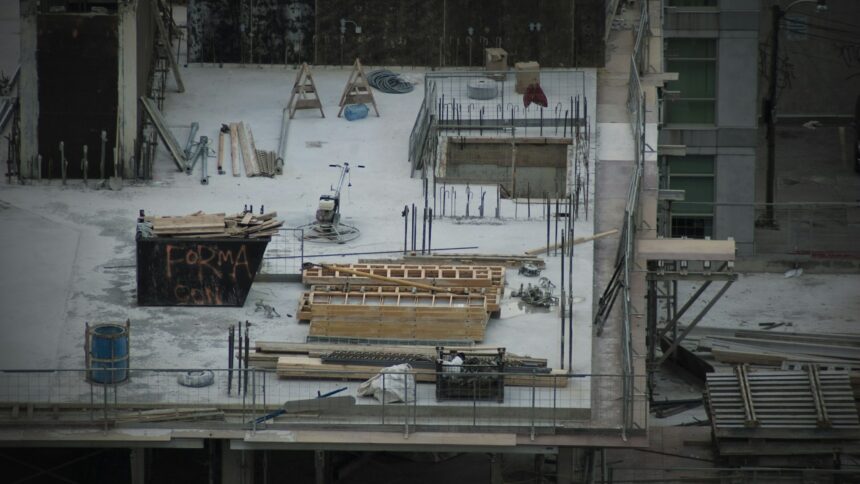
Here is the figure that keeps this from being a collapse story. Calgary and Edmonton alone have more than 23,000 units under construction right now, several times the ground the province gave up in starts this year.
That is a deep pipeline, and pipelines like that take years to drain. Framers, electricians, drywallers and site supervisors are not standing in parking lots waiting for a call. The slowdown is showing up in new starts rather than in work already underway, and those are two very different problems wearing the same headline.
It is also a delayed problem, which is exactly why it gets ignored. What gets started this year is what gets finished a couple of years from now. A gap in starts becomes a gap in finished homes on a lag, and by the time buyers feel it, the decisions behind it are two budget cycles old.
The pressure is not coming from inside the province
Borrowing costs are set in Ottawa. Every project underwritten in the past two years was priced against a rate path decided by the Bank of Canada, not by a city council or a legislature. When financing gets more expensive, the marginal project does not get built smaller. It gets shelved, and a shelved project never appears in a starts number.
Federal immigration policy moves the other half of the equation. Alberta’s population surge is what filled those record years in the first place. Household formation follows arrivals, and builders read that number the way a farmer reads a forecast, both committing money a year before they know whether they were right. Change the federal targets and the demand signal changes with them, in Calgary and Edmonton first.
Then there is the municipal layer, the part nobody at the federal level ever answers for. Approval cycles, review queues, servicing agreements, fee schedules. A file sitting in review is not a housing start. Cities do not set interest rates or immigration levels, but they absolutely control how long a permit sits on a desk. That is the piece that could be fixed without a single phone call to Ottawa.
The smaller cities went the other direction
Outside the two big markets, the arrows point up. Grande Prairie added 211 units over last year’s pace, close to double what it had built by this point. Lethbridge added 39 more than last year. Red Deer added 36 more. Medicine Hat logged 52 starts through two quarters. Wood Buffalo is the exception, sitting below its ten year average.
Those are small gains set beside a drop of 3,361 units in Calgary, and nobody should pretend Grande Prairie is going to carry a province. But direction matters, and central and northern Alberta are pointed the opposite way from the two cities that generate every housing headline.
That pattern says something useful. The slowdown is concentrated in the two biggest markets. It is not a province wide failure of confidence, and anyone describing it that way has not read past the first line of the table.
The quarterly counts come from BILD Alberta, which has been publishing them long enough that the trend line is worth more than any single quarter sitting inside it.
One soft half year against three record years, with 23,000 units still climbing. That is worth watching closely and worth reporting honestly. It is not worth panicking over.
The second half is the one that matters. If starts stabilize while the pipeline drains, Alberta absorbs the dip and most people never notice. If starts keep sliding while those 23,000 units finish and empty the queue behind them, the province ends up short of homes exactly when the next wave of demand arrives. Nobody gets to claim they were not told.
Related from Alberta Tribune: Alberta’s August Housing Starts Beat Ontario While The Year Fell 16%