


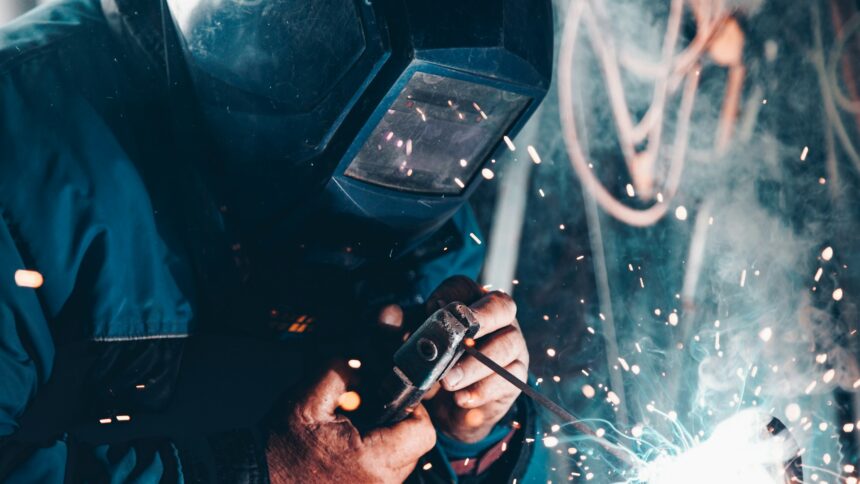
“The definition of career success is being rewritten in real time,” says Sam Pillar, co-founder of Jobber, the field service software company founded in Edmonton. For that to be true in Alberta, a teenager’s change of plan has to become a classroom seat, a sponsor willing to sign the papers and, eventually, a journeyperson ticket.
The first part is happening. Jobber’s 2026 Blue Collar Report, released July 21, found that 52% of parents of children aged 11 to 16 believe the skilled trades offer a better return on investment than college. Only 18% picked the degree. That is close to three to one, and the reason parents gave was plain enough: 68% said artificial intelligence has made them rethink how stable white collar work really is.
Key facts
- Jobber’s 2026 Blue Collar Report, released July 21, 2026, surveyed 1,012 American parents of children aged 11 to 16 and 1,033 Americans aged 18 to 20, with fieldwork by the research firm Conjointly.
- Jobber’s 2026 Blue Collar Report found that 52% of surveyed American parents rate the skilled trades as a better return on investment than college, 18% rate college higher, and 68% say artificial intelligence made them rethink white collar job stability.
- Alberta Advanced Education’s 2025/26 Apprenticeship Education Survey, published in June 2026, collected 8,208 responses from first period apprentices and recent graduates between October 14, 2025 and January 18, 2026.
- Alberta Advanced Education’s June 2026 apprenticeship survey found that 12% of first period apprentices and 28% of graduates delayed classroom instruction at some point.
Why an American survey still lands in Alberta
Start with the honest limit. Every respondent in the Jobber survey lives in the United States. Nobody should quote those percentages as Alberta numbers, and a careful reader will not.
The optimistic case deserves its full weight anyway, because the logic travels. A welding ticket describes work done with hands on steel in a specific place, which is hard to hand to a language model. A first year document reviewer’s day is mostly reading and summarizing, which is exactly what these systems do well. Parents on both sides of the border can see that difference, and 76% of the young Americans surveyed said it matters to them that a career is hard to automate. On that point the optimists are right.
Alberta is also where the thesis meets payroll. The province is chasing data centres and new export pipe at the same time, which is the argument we made in the Alberta AI Advantage blueprint: the AI economy gets built twice, once in code and once in concrete and wire. The code can be written anywhere. The concrete gets poured here.
What Alberta’s own apprentices say about the pipeline
Enthusiasm is the easy input. The hard step is the supply chain behind it, and Alberta happens to publish good data on that. Its June 2026 survey of apprentices is encouraging on outcomes. Among graduates, 93% were satisfied with their training and 95% of those employed were working in their trade.
The friction shows up in the middle of the program. Among first period apprentices, 12% had delayed classroom instruction, and 22% of those who delayed said there was not enough space at a post-secondary institution. By our arithmetic, that is about 2.6 in every 100 first period apprentices held back by seats alone. Money was the bigger reason: 37% of those who delayed did not want to give up wages, and 24% could not afford the classroom portion. Sponsorship is its own gate, since only 62% of first period apprentices had an employer sponsor when they applied.
Those numbers describe a system that works well for people who get through it and leaks at the joints. Every trade depends on a journeyperson willing to supervise and an employer willing to release an apprentice for weeks of classroom training without losing the job to someone else.
What would prove the parents right
The survey mood will not fill a shop class. Seats, sponsors and paid classroom time will. Alberta employers are already finding where AI pays off across the province’s industries, and every one of those gains still runs inside a building somebody had to wire. If parents keep steering kids toward the tools, the pressure lands on those three joints first.
Here is a prediction that can be checked. If Alberta Advanced Education’s next apprenticeship survey, expected around June 2027 if it keeps this year’s timing, shows the share of first period delays blamed on a lack of seats still at 22% or higher, the province will have plenty of willing teenagers and a bottleneck at the classroom door.