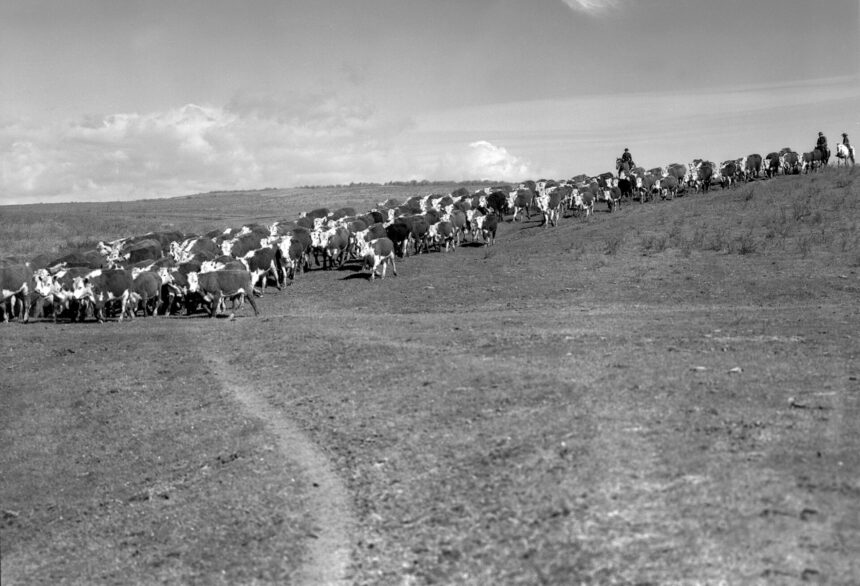
The Alberta cattle herd stood at 5,315,000 head on July 1, 2026, up from 5,050,000 on the same date in 2025, according to Statistics Canada’s livestock estimates. That’s 265,000 more cattle and calves on Alberta farms, a 5.2% gain by Alberta Tribune’s arithmetic, and the largest increase of any province. Alberta now holds about 44% of the national herd of 12.1 million.
More cattle doesn’t mean more beef this year. Much of the growth is breeding stock that ranchers are deliberately keeping off the truck.
Why is beef still expensive if the herd is growing? Because ranchers are holding back breeding stock to rebuild, and Statistics Canada counted the fewest cattle slaughtered in a January to June period since 2016.
Key facts
- Statistics Canada counted 5,315,000 cattle and calves on Alberta farms on July 1, 2026, up from 5,050,000 on July 1, 2025.
- Statistics Canada reported 12.1 million cattle and calves on Canadian farms on July 1, 2026, up 3.2%, the largest year-over-year increase since 2004.
- Statistics Canada reported that beef heifers kept for breeding rose 5.7% nationally between July 1, 2025, and July 1, 2026.
- Statistics Canada reported that cattle and calf slaughter fell 4.6% to 1.5 million head from January to June 2026.
- Statistics Canada reported on January 1, 2024, that the national herd of 11.1 million was the smallest since 1989.
How the Alberta cattle herd shrank before it grew
In early 2024 the numbers ran the other way. On January 1, 2024, Canada had 11.1 million cattle and calves, the smallest herd since 1989, down 2.1% in a year. Statistics Canada named the reasons plainly: record producer prices, drought and tight feed supply. Ranchers short of grass and hay sold breeding stock into feedlots, and they kept fewer heifers back. Cows sold in 2023 and 2024 aren’t calving in 2026, and a herd rebuilt from that base starts with the heifers kept since.
Pasture water matters to that decision as much as price does, which is why the province’s reopening of water registration for pre-1999 grazing use carries weight for cow-calf operators deciding how many head they can hold.
Why keeping heifers raises beef prices first
A heifer kept for breeding is a heifer that isn’t sold for slaughter this year. She has to be bred, carry a calf, and raise it, and that calf then has to be grown out before it reaches a packer. Rebuilding takes beef off the market before it adds any back.
The July 1, 2026 release shows exactly that pattern. Beef heifers for breeding rose 5.7%, beef cows 1.9%, and calves 4.6% to 3.9 million head. Over the same six months, slaughter fell 4.6% and live cattle exports fell 16.4% to 326,300 head, while imports of live cattle rose 31.4% to 235,700. Feeder, slaughter and calf prices hit record highs in the first half of 2026, which Statistics Canada tied to strong global demand for beef and live animals.
Record calf prices are good news for a cow-calf operator who has calves to sell. They’re harder news for one rebuilding, because every heifer kept is a heifer not sold at those prices. The rise in Alberta farm cash receipts this year sits on top of that trade-off, and it doesn’t show who held back and who sold.
Who explains the spread between ranch and checkout
Imported beef isn’t the explanation, as the Tribune argued when it looked at why Alberta ranchers get squeezed. Fewer animals going to slaughter explains part of what the shopper pays. It doesn’t explain how the price of a record-priced steer is divided between the packer, the processor and the retailer, and Statistics Canada doesn’t publish that split.
The Competition Bureau’s 2023 grocery market study looked at retail competition. So the question goes to the Competition Bureau in Gatineau: with fed cattle at record prices and slaughter at a ten-year low, will the Bureau publish how the beef dollar divides between packer, processor and grocery shelf, and when?