


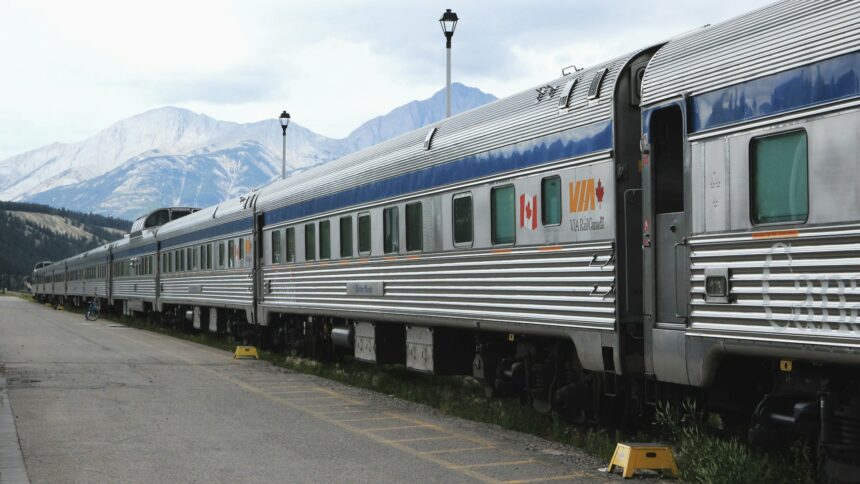
In 1985, VIA Rail stopped running its passenger train between Calgary and South Edmonton, and the line the Calgary and Edmonton Railway had laid in 1891 has carried freight only in the years since. A child born that year is now past forty; the corridor has filled in around the tracks, and a person still cannot buy a ticket to ride a train from one downtown to the other.
That is the measuring stick for the Alberta Passenger Rail Master Plan, which the province made public in June and will present to the public in a virtual information session on July 23. It is finished and costed, and it sets out a 30-year network with high-speed service between Calgary, Red Deer and Edmonton. After four decades of studies, it deserves to be read as something other than the next study.
Key facts
- The Government of Alberta’s Passenger Rail Master Plan proposes a 30-year network of more than 500 kilometres of passenger rail corridors, with an estimated capital cost of $60 billion in 2025 dollars for the full network.
- The master plan’s summary document sets a travel time of 1 hour 45 minutes between downtown Edmonton and downtown Calgary on high-speed service, with a benefit-cost ratio of 1.1.
- The Government of Alberta states it is committing $15 million over three years to first steps drawn from the master plan, including planning for a rail link to Edmonton International Airport and a central station in downtown Calgary.
- In May 2014, the Legislative Assembly of Alberta’s Standing Committee on Alberta’s Economic Future reported that Alberta was not ready for high-speed rail and recommended planning for it by securing a transportation corridor.
What the earlier studies promised and what they left behind
The record is long enough to be instructive. The Van Horne Institute studied the corridor in 2004 and updated its work in 2011, when it priced a line at between $2.5 billion and $5 billion depending on the technology chosen. In 2014 a committee of the legislature held hearings in Calgary, Red Deer and Edmonton and concluded that the province was not ready, though it should begin securing land. In 2021 a private consortium put its own estimate at $9 billion and spoke of construction starting in 2023.
None of those figures should be set directly beside the new one, and I will not pretend they can be; the earlier estimates priced a single line, while the $60 billion in the master plan covers a full network with regional and commuter service. What the sequence does show is a pattern familiar to anyone who has kept a ledger over a working life. Each study was delivered and filed, and the entry that never appeared was the one that mattered, a dollar committed to the next step.
Why this round carries more weight than the last
Three things are different this time, and they are the kind of difference a banker would recognize. The plan is complete rather than promised. There is money attached, $15 million over three years, which is small against the capital cost but large against the sum of nothing that followed earlier reports. And the plan names its own first steps: corridor planning and engineering, the start of impact reviews, and legislation to create an agency that would own the work.
That last item deserves the most attention. A project of this length outlives cabinets, and a standing agency is how a province keeps one set of books on a thirty-year undertaking rather than opening a new file every time the political season turns. The plan’s own benefit-cost ratio of 1.1 is thin, and it should be said plainly; the benefits clear the costs, though not by a wide margin, and the case will rest on what the corridor becomes as much as on what it is.
There is also the matter of who pays. Ottawa has funded Ontario trains in the billions while this corridor waited, and a network on this scale will need federal money on terms that treat Alberta as a partner rather than an afterthought. The province’s population growth has made the argument stronger each year, as the country’s growth has concentrated in Alberta.
What to watch before the next decision
The July 23 session will not settle the question, and nobody should expect it to. The useful questions are the old ones: who pays, and in what year the first contract is let. A plan that answers those in public has earned more patience than its predecessors; a plan that cannot answer them will join them in the drawer.
Forty years after the last passenger train left this corridor, Alberta finally has a document that prices the return trip in dollars and minutes. A study measures the distance; only a budget closes it.