


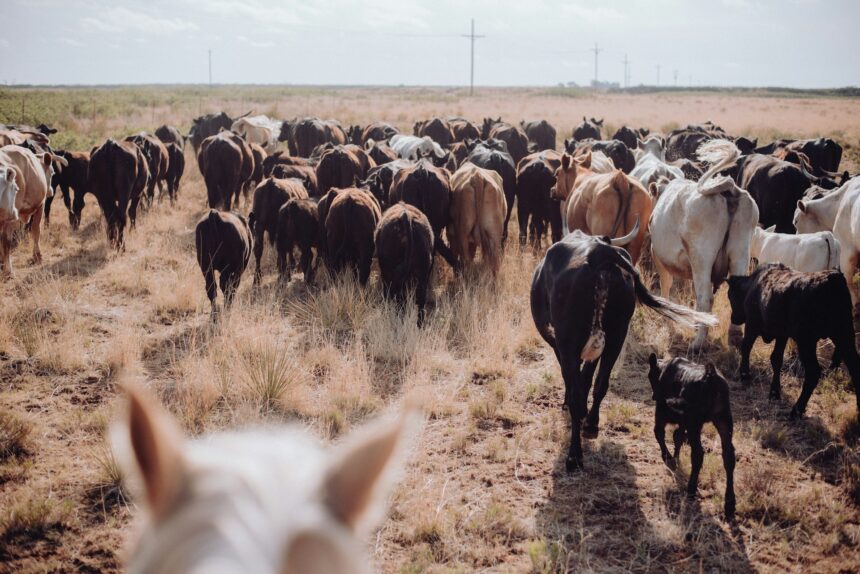
Stand in front of the meat case at a big grocery store in this province and eventually you will find it. Beef from Australia. Shrink wrapped, shipped across an ocean, and priced under a cut that came off an animal raised an hour up the highway.
The first reaction writes itself. Anger. Who signed off on this? How does a rancher near Olds lose a shelf fight to a feedlot in Queensland?
Fair question. Wrong target.
A herd is not a factory floor
Canada’s cattle herd sits near 11.1 million head. That is up about 2.5% after several years of shrinking, which is good news carrying an asterisk the size of a barn door. You cannot turn a cow into supply on a quarterly schedule. Decide in March that the country needs more beef by August and the arithmetic laughs at you. A heifer held back today is a calf next spring and a finished animal the year after that.
That lag is the whole story. Drought, input costs that went up and stayed up, and a generation of operators aging out with nobody behind them all pushed the herd down. Rebuilding it means keeping females at home instead of selling them, which means less beef available in the short run in order to have more of it later. A rancher who does the right thing for the long haul takes the hit today and waits three years for the reward.
Meanwhile the store still has to fill the case.
The gap between the gate and the till
Retail beef has been running better than 40% above its five-year average. One agri-food analyst pegged ground beef at 18% higher in parts of the country in July alone. Read those numbers cold and you would assume Alberta ranchers are having the best summer of their lives.
They are not, and the reason sits in the distance between two prices that are supposed to move together.
What a producer gets at the gate and what a family pays at the till have drifted apart, and the drift is not small. In between sit the processors, the truckers, the wholesale desks and the retail margin. Every link takes a cut. The links have also gotten fewer and bigger over several decades while nobody in Ottawa treated the concentration as a file worth opening. When a handful of buyers matter and thousands of sellers do not, price discovery stops being a negotiation and becomes a phone call.
So the shopper is angry about the sticker. The rancher is angry about the cheque. Same animal, two furious people, and neither one of them set the number.
What imports actually do
Now put the Australian package back in the picture.
Imported beef puts pressure on that middle. It gives the retailer a second source, and a second source is the only thing that has ever moved a margin. It also does something less obvious and considerably more important. It keeps families buying beef at all.
That part deserves more attention than it gets. There is a price at which a mother of three stops reaching for the ground beef, buys chicken instead, learns eight new recipes and never comes back. Food habits are sticky in both directions. A customer lost at today’s price does not return when the price eases. She is gone, and her kids grow up eating something else.
While the herd rebuilds, that is the long-term risk worth losing sleep over. Not a container of Australian striploin. A generation that walks away from the counter and stays away.
Point the fire where it belongs
None of this is a defence of the arrangement and it is certainly not a knock on the people doing the work. Alberta ranchers run hard on land that gives away nothing for free. Up before light, out in weather that would put the rest of us in the ditch, carrying a herd on borrowed money against a market they do not control. They are absorbing this, not causing it.
The problem is structural and it took decades to build. A national herd allowed to shrink while the population grew. A processing sector concentrated to the point that competition is mostly theoretical. Trade and regulatory files that sit in a drawer in Ottawa until somebody remembers they are there. Every one of those was a choice, or a failure to make one, and the bill lands at the ranch gate and the checkout counter on the same day.
Blaming the import for that is like cursing the thermometer for the fever.
What would actually help is not complicated. Keep the herd rebuild going, which requires the price signal to reach the person who owns the cattle instead of stopping three handoffs short. Widen the buyer pool so a producer has somewhere else to call on a Tuesday morning. Get more small and mid-size processing capacity back into this province so the middle of the chain stops being a bottleneck with a lock on it.
Do that and the Australian label on the shelf stops being an insult. It goes back to being one option among several, sitting next to a better one raised down the road.
What will it take for the price on the shelf to finally reflect what the rancher earns at the gate?