

The plan Alberta tabled on June 5 is the most substantial passenger rail document the province has ever produced. Trains at up to 320 kilometres an hour linking Calgary and Edmonton through Red Deer. Twenty-minute airport express frequencies. Commuter service reaching Airdrie and St. Albert. A network designed to carry 80,000 daily passengers by 2055, with Calgary to Edmonton in about an hour and forty-five minutes.
The thirty-year build is costed at roughly $60 billion. The money committed so far is $15 million, from Alberta’s own budget, to take planning to the next stage over three years.
Hold those two numbers in your head while you look east.
The Alto Comparison Ottawa Would Rather Skip
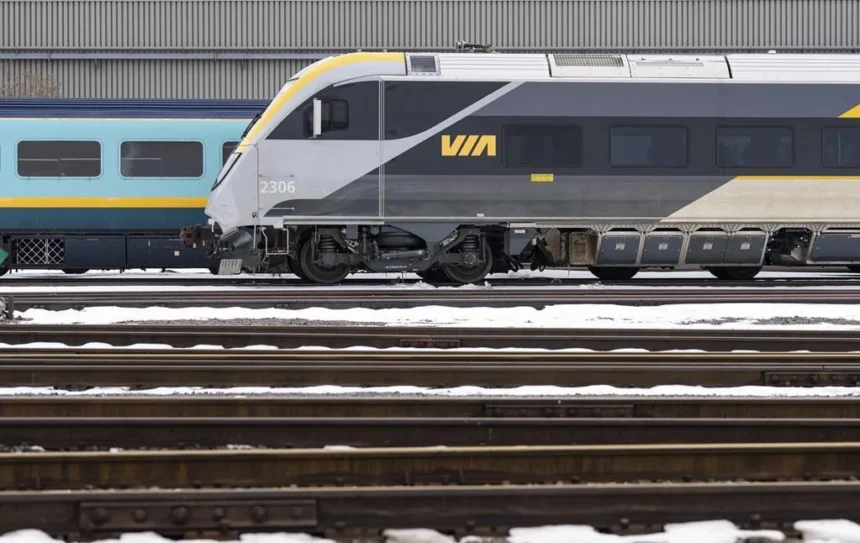
Alto, the federally sponsored fast train connecting Toronto with Quebec City, already holds $3.9 billion of committed federal money just for its planning and pre-construction phase. The full project is estimated at $60 billion or more. A federal Crown corporation is delivering it, carrying Ottawa’s full institutional weight, with no track yet laid.
Ontario’s corridor drew $3.9 billion in federal planning support. Alberta’s corridor, the fastest-growing in Canada, is planning with $15 million of its own. The federal contribution to Alberta’s plan, as of today, is zero.
The Corridor Earns the Investment
This is not a complaint about geography. It is a complaint about criteria. About four of every five Albertans live along the Calgary-Edmonton spine. The QE2 carries brutal volumes and the population on both ends is growing faster than anywhere else in Canada. The province’s master plan arrives with engineering, ridership modelling and economic projections, built with input from more than 150 professionals. If federal rail dollars followed demand, growth and economic output, this corridor would qualify on every test.
Albertans already watch their taxes flow into a federal apparatus that keeps growing and into transfer programs that send nothing back. The rail file now adds a cleaner example. When central Canada wants infrastructure, the federal chequebook is somehow already open by the planning stage. When Alberta needs it, the province is invited to be entrepreneurial.
Alberta Is Building Anyway
To its credit, the province is not waiting by the mailbox. The master plan leans on private development partners and transit-oriented development to carry weight that taxpayers otherwise would. That discipline is healthy. Projects that must attract private capital tend to get scoped honestly, an instinct Ottawa might have benefited from before its own megaproject history.
But discipline at home does not excuse the double standard from the centre. A government that talks constantly about nation-building cannot keep defining the nation as the corridor between Windsor and Quebec City. If high-speed rail is national policy, the second-busiest intercity corridor in the country is part of the nation.
Alberta has the demand, the growth and the plan. What it is owed now is the same federal seriousness Ontario received before a single shovel moved.
Should Ottawa fund Calgary-Edmonton rail the way it funds Alto, or is Alberta better off keeping the feds out of it? Tell us below.
Frequently Asked Questions
Released June 5, 2026, the plan outlines a 30-year network of roughly 500 kilometres, including high-speed rail of up to 320 km/h between Calgary and Edmonton via Red Deer, along with airport-express and commuter service.
The full build-out is estimated at at least $60 billion. Alberta has committed $15 million over three years to advance planning, not construction.
The early steps focus on planning rail links to the Edmonton and Calgary international airports, a central station in downtown Calgary, and engagement with industry on financing and delivery models.