


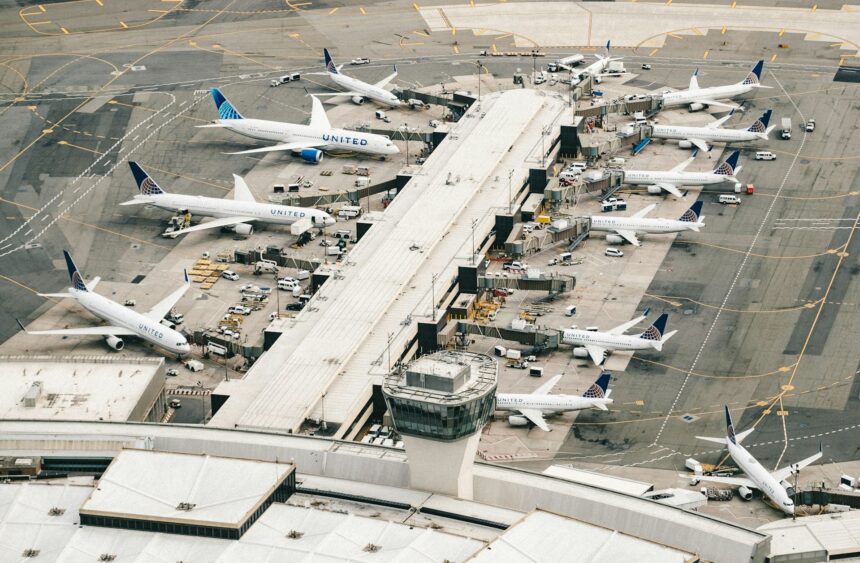
WestJet cancelled 81 flights on a Friday morning when not one flight attendant had walked off the job. The strike deadline was still ahead, set for 12:01 a.m. Mountain the following day.
Passengers who reached the Calgary airport that morning with a valid boarding pass and no work stoppage anywhere in progress found their flight gone regardless. The explanation is less dramatic than it looks and a good deal more useful to understand.
How a deadline turns into cancellations before it arrives
An airline is a network, and a network has to be positioned. Aircraft and crews finish each day somewhere specific, and where they finish determines what the next day can be. A 737 that overnights in Toronto on Friday is a Toronto departure on Saturday morning. If the crew assigned to it cannot legally work at 12:01 a.m., that aircraft sits at a gate in the wrong city with nobody to move it and a terminal full of people holding tickets for it.
So carriers facing a strike deadline all do the same thing. They begin winding the network down in advance, pulling aircraft toward maintenance and crew bases, thinning the schedule so that when the clock runs out the fleet is parked where it can be restarted rather than scattered across six time zones.
That wind-down cannot begin at 11:59 p.m. It runs roughly two days ahead of the deadline. Which is why the disruption shows up well before the event supposedly causing it, and why the cancellation count climbs while both parties are still at the table saying talks continue.
The 81 flights were not a bargaining tactic. They were logistics running on a clock nobody at the table controls.
The sequence
CUPE served strike notice on the Thursday on behalf of about 4,400 cabin crew. WestJet responded with a lockout notice running on the same clock, which is a standard countermove and does not signal that either side has given up on a deal. Both parties said they remained in negotiations.
The substance of the dispute is pay for work performed on the ground. Cabin crew are on the aircraft during boarding and deplaning, doing work that has historically not been compensated at the same rate as time in the air. That is the argument, and it is the same argument that has run through cabin crew bargaining at more than one carrier on this continent.
By Friday morning the airline had started parking 737s. By the weekend the schedule was in pieces.
Alberta absorbs more of this than anywhere else
Calgary is where WestJet is headquartered and where its largest hub sits. When the airline thins its schedule, the thinning concentrates here by arithmetic. More departures out of this airport means more cancellations at this airport, and more people standing in a line that is not moving.
Then there is the calendar. This was the busiest travel weekend of the year, which means aircraft were full outbound and full inbound and there was no spare capacity anywhere in the system to reaccommodate anybody.
The alternatives were thin to the point of nonexistent. Air Canada had already said its seats were largely sold and its fleet fully deployed, so there was nowhere to rebook at scale. There is no practical passenger rail option between Alberta and the rest of the country. And inside WestJet’s own network there is no second hub of comparable size to route traffic around Calgary. A traveller in a city with three carriers and a train station has choices. A traveller here in the first week of August had a rental counter and a long drive ahead.
That concentration is worth understanding on its own terms. A labour dispute at a Montreal-based carrier disperses across a national network. A labour dispute at this one lands on one airport, in one city, in one province, and it lands there first.
The framework produces the timing
The rules this dispute runs under are federal. Ottawa writes the Canada Labour Code, and Ottawa has developed a habit of letting deadlines land and then reaching for Section 107 once the disruption is already underway. It happened with the other national carrier last August. It happened with rail, with ports and with the post office before that.
Both sides can read that history as clearly as anyone else. If a party expects the file to be lifted out of its hands the moment the noise gets loud enough, the incentive to close a gap at hour ten rather than hour seventy-one weakens considerably. That is not a moral failing on either side of the table. It is a rational response to a framework that keeps producing the same ending.
The cost of that design lands on people who had nothing to do with the bargaining. A family in Lethbridge driving to the airport at five in the morning for a flight cancelled at midnight. A small business owner who paid for a trade show booth in a city they can no longer reach.
The dispute itself will resolve. They always do. What stays behind is a set of rules that makes the two days before a deadline more disruptive than the deadline itself, and that keeps producing brinkmanship for the straightforward reason that brinkmanship is what it rewards.
How many more long weekends should Albertans lose to a bargaining framework that rewards waiting?