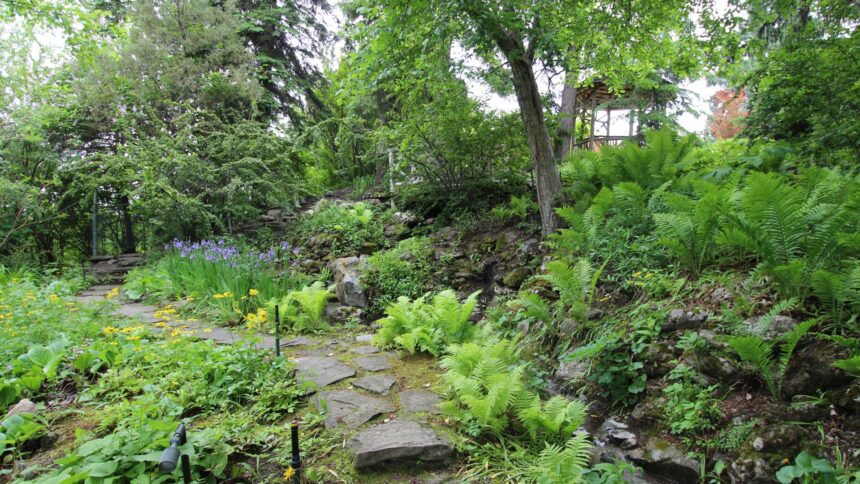
The cottage at the top of Reader Rock Garden in Calgary is a reconstruction. The register says it was rebuilt in 2005, a Calgary magazine puts the work between 2004 and 2006, and the magazine adds that the city had pulled the original down in 1944. Rock-lined paths climb the slope behind it, a slope that William Roland Reader began setting stones into in 1913 or 1914, depending on which record you read.
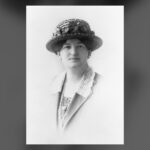
He was the parks superintendent, and he lived on the job.
Reader came from England in 1908 as a gardener for Pat Burns, according to the register, and moved into a cottage on Union Cemetery land in 1913, by the magazine’s account. He stayed for the better part of three decades. Parks Canada calls what he built “an Arts and Crafts style alpine rockery.”
Key facts
- Reader Rock Garden in Calgary was formally recognized as a Provincial Historic Resource on November 17, 2006, according to the Canadian Register of Historic Places.
- William Roland Reader served as Calgary’s Superintendent of Parks and Cemeteries from 1913 until 1942, according to the Canadian Register of Historic Places.
- Parks Canada records that Reader Rock Garden was designated a National Historic Site of Canada on February 27, 2018.
- The Canadian Register of Historic Places gives the garden’s area as 0.57 hectares and its peak diversity as more than 3,500 botanical species.
- Parks Canada describes the garden as divided into five distinct areas, among them the South Slope, the Upper Garden and the High Rockery.
The Garden Was an Argument About What Calgary Could Grow
The register says Reader saw the garden as “a showpiece for a progressive, sophisticated Calgary.” It also describes a working laboratory, a place to learn how Alberta soils received plants from elsewhere. Parks Canada gives the sharper purpose, which was to show what could grow in a harsh climate and to challenge the belief that southern Alberta was no place for gardens. The magazine says Reader brought mountain plants down to the hillside to see what would thrive.
A news report on the garden’s heritage review says he planted large Russian poplars to make about seven different growing zones on the slope. The register adds that seeds from the collection went to gardens in North America and Europe.
Visitors Got In by Invitation and Some Paid in Stone
Access was by invitation only, and the magazine reports that visitors would “bribe” him with rocks for a look, a detail that suits a man who built a garden out of them. The register says Reader kept records of the site and wrote a book about its plants that was never published.
The magazine places his death in April 1943 and the demolition of the cottage in 1944, with reconstruction under way from 2004. About 60 years separate the demolition from the start of the rebuild.
No Two Accounts Measure the Garden the Same Way
The register gives the garden as 0.57 hectares, and Parks Canada gives the same figure. The news report gives 1.65 hectares. The register counts more than 3,500 botanical species at the peak, while the magazine and the news report both say more than 4,000 were tried. The register dates construction from January 1914, and Parks Canada says the garden was established in 1913. The larger area is nearly three times the smaller, and that changes what a visitor thinks the hillside is.
Some of the difference may come from what is counted. The 0.57 hectares may describe the designed garden and the 1.65 a wider slope, but none of the sources reviewed says so, and a heritage record should not leave that to guesswork. Reader left records, an unpublished book among them, so the garden’s size and plant count should not be matters of opinion. If a copy of that manuscript sits in an archive, it belongs online where anyone can check the figures against the man who made them.
From the paths above the rebuilt cottage a visitor can look back toward the city the garden was built to impress.
Related from Alberta Tribune: The Banff Cave Where Canada’s National Parks Were Born · Hillcrest Cemetery Holds the 1914 Dead and Records That Disagree · The Corral Came Down and Its Neon Cowboy Was Rebuilt