

The faces that welcomed the world
In 1988, Calgary did more than host the Winter Olympics. It introduced itself to the world.
Before the global broadcasts, before the corporate branding machines, before the modern era of Olympic spectacle, two smiling polar bears carried the province’s personality on their shoulders.
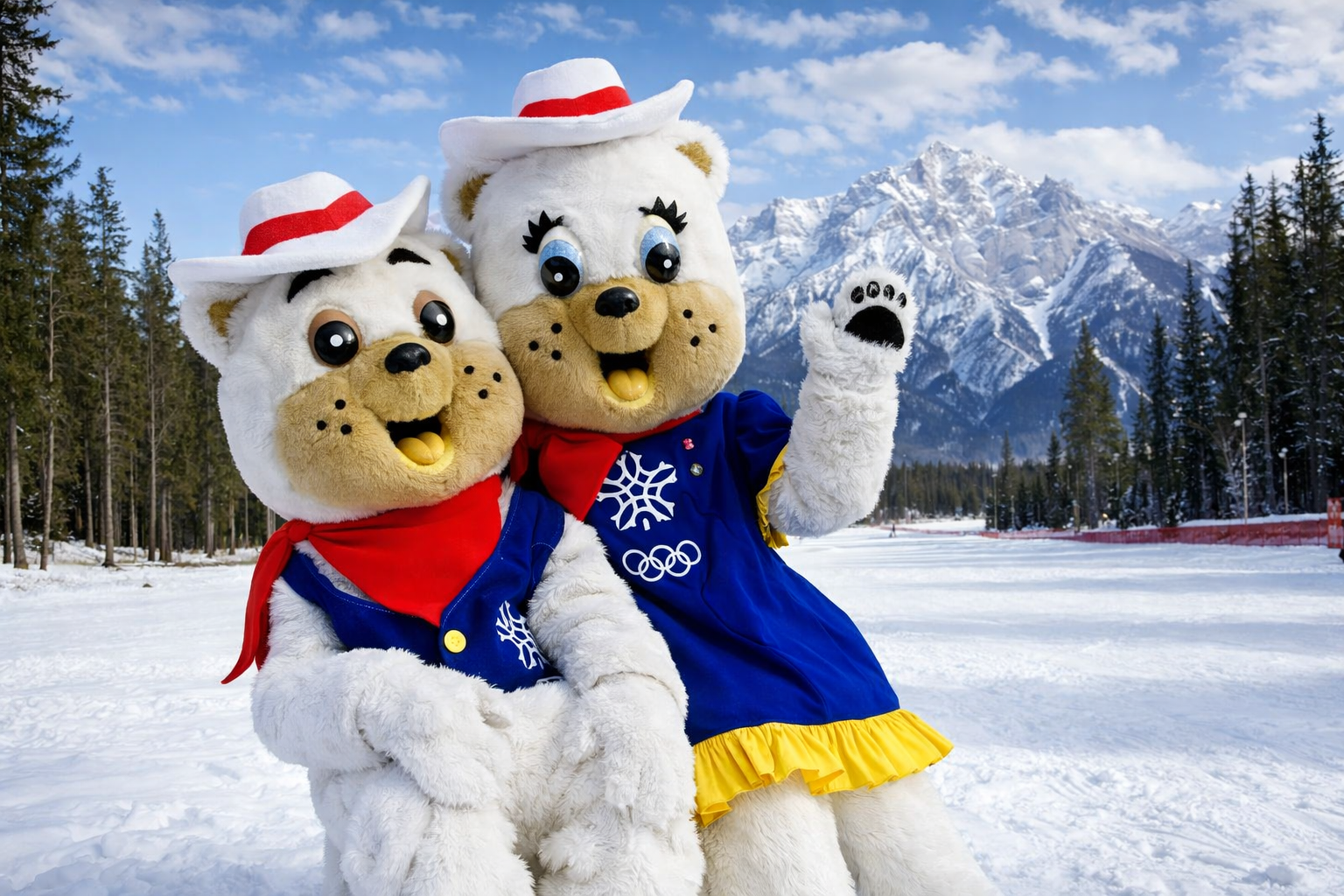
Hidy and Howdy were not just mascots. They became the emotional shorthand for who Alberta believed it was, and who it wanted to be seen as.
Friendly. Open. Proud. Welcoming.
That mattered then, and it still does.
A simple idea that became iconic
When Calgary won the bid to host the XV Olympic Winter Games, organizers understood something important. The world would not only judge the athletic performance. It would judge the host.
A public naming contest led to the now famous pair, Hidy and Howdy, names rooted in Western greeting culture. The design, created by local talent, dressed the polar bears in Western-style attire, grounding them in Prairie identity while keeping them unmistakably Canadian.
There was no irony in their design. No sharp edges. No global branding strategy that stripped away personality.
They were simple. They were cheerful. They were unmistakably ours.
That authenticity is part of why they endured.
More than marketing
Today, mascots often feel like brand extensions. In 1988, Hidy and Howdy felt like ambassadors.
Volunteers wore the suits in schools, shopping centres, airports and community events for years leading up to the Games. They were not hidden behind controlled appearances. They were everywhere.
When athletes and visitors arrived from dozens of countries, they did not encounter a slick campaign. They encountered warmth.
That was not accidental. Alberta in the late 1980s was emerging from economic difficulty. Hosting the Olympics was a statement of resilience and confidence. The mascots carried that tone without saying a word.
They smiled. They waved. They embodied optimism.
The Alberta character in costume
It is easy to underestimate mascots. It is harder to explain why some become cultural touchstones.
Hidy and Howdy worked because they reflected Alberta’s self image at the time. This is a province that prides itself on hospitality, on being direct, on making visitors feel at home.
The Western shirts and cowboy hats were not gimmicks. They were signals. Calgary was modern enough to host the world, but rooted enough to know where it came from.
That balance defined the Games.
The 1988 Olympics are still remembered as one of the most financially successful and community-driven Winter Games in history. Much of that success came from volunteers and local engagement. The mascots were the most visible extension of that community spirit.
Why they still resonate
Decades later, mention Hidy and Howdy in Alberta and watch the reaction. People smile. They remember the welcome signs at the city limits. They remember school visits. They remember the pride of watching Calgary shine on the global stage.
That emotional reaction is not nostalgia alone. It reflects a moment when Alberta felt united in purpose.
The province has changed since 1988. The economy has shifted. Politics have evolved. Calgary has grown taller and more global.
Yet those bears still symbolize a version of Alberta that many people feel connected to.
Confident, but not arrogant. Ambitious, but grounded. Welcoming without apology.
Heritage that lives beyond the stadium
The Olympic venues still stand. Canada Olympic Park continues to train athletes. The Saddledome remains part of Calgary’s skyline.
But infrastructure is not what people remember most clearly.
They remember moments. They remember feelings.
Hidy and Howdy captured that feeling.
They represented a province that opened its doors in winter and said to the world, come in, you are welcome here.
For Alberta, that message may be the most valuable legacy of the 1988 Games.
Not the medals. Not the broadcasts. Not the ceremonies.
The welcome.
And sometimes, that is what makes something truly iconic.