

Wildhorse Jack Parked His Chuckwagon Downtown and Fed Strangers for Free. A Hundred Years Later Calgary Still Does
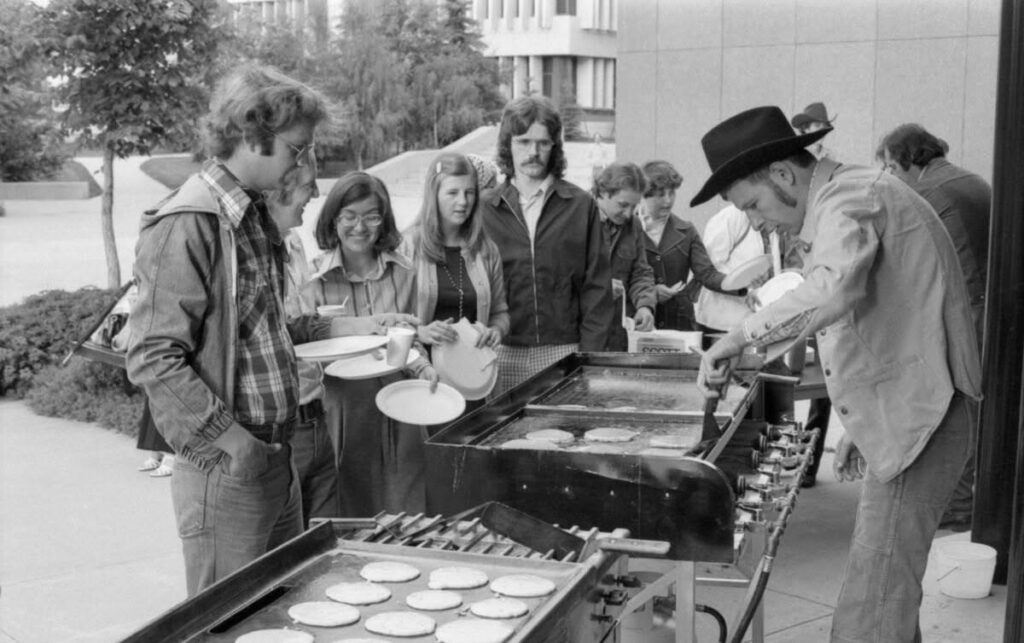
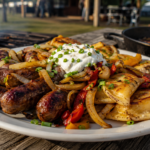
Somewhere in Calgary this morning, a volunteer who got up before the sun is scraping down a griddle in a parking lot while a lineup forms behind a folding table. Nobody in that line will pay a dime. Nobody will be asked to sign anything. They will get pancakes, syrup, maybe a sausage if the budget stretched, and they will stand around talking to strangers like it is the most natural thing in the world.
It has been happening every July for a hundred and three years. And it started with one of the strangest, most generous men Alberta ever produced.
The Morning It Started
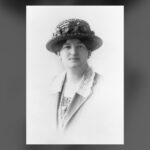
In 1923 the Calgary Exhibition and the Stampede merged for the first time, and Guy Weadick needed something new to put in front of the crowds. The answer was chuckwagon racing, a sport invented almost on the spot from the old trail habit of breaking camp fast and racing for home. Among the first drivers was a rancher from the Rosebud country named Jack Morton, known to most people as Wildhorse Jack.
Morton was famous for three things. He could gentle horses nobody else could touch. He travelled with a pair of pet badgers. And he never turned away a person in need. The Stampede’s own archives carry a story about a neighbour who lost cattle in a blizzard and found the loss replaced out of Morton’s pocket, no fuss made.
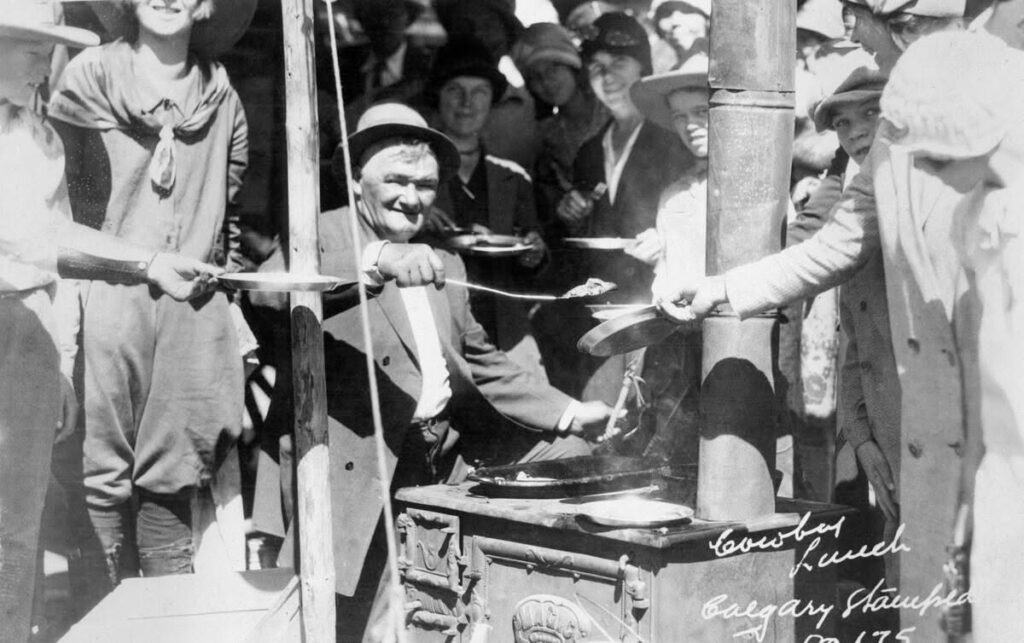
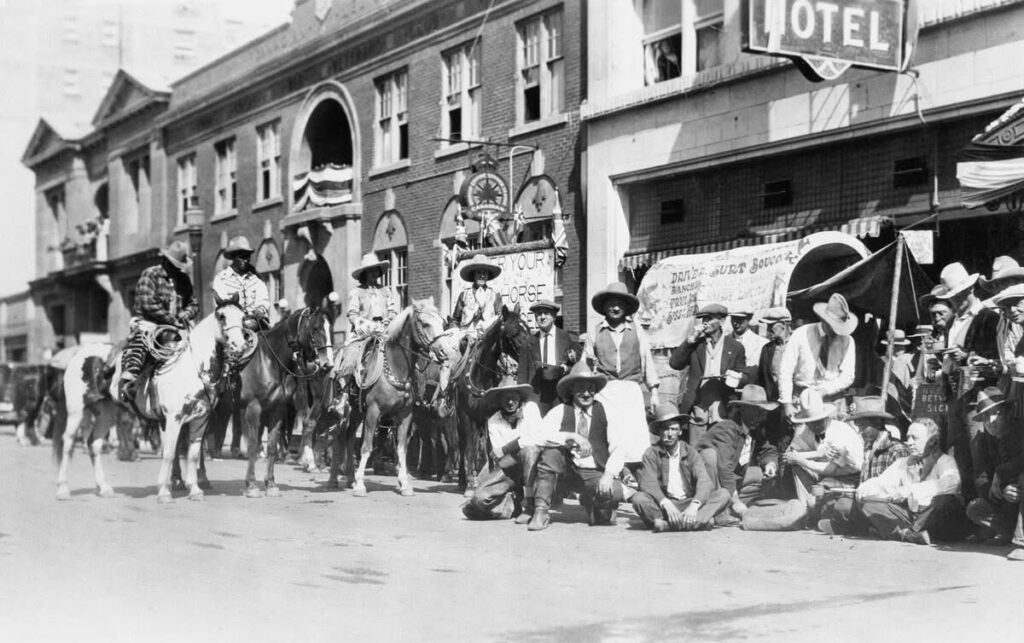
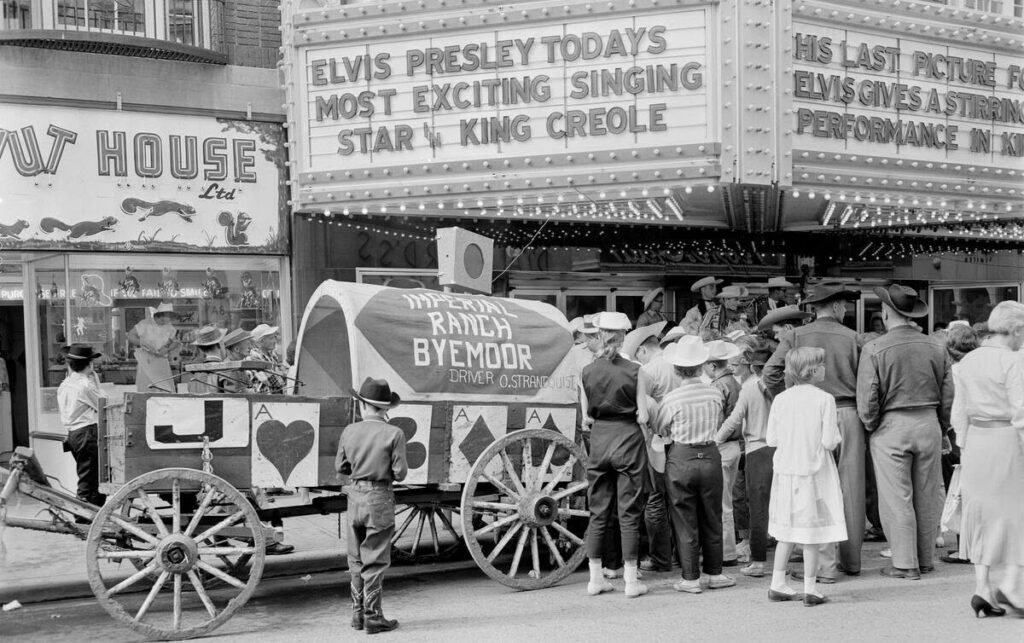
He was not much of a racer. It didn’t matter. In July of that year Morton brought his CX Ranch outfit down Eighth Avenue, penned his horses behind hay bales, fired up the wagon’s cookstove, and let his cook, Horace Inkster, work the griddle for anyone who slowed down long enough to take a plate. Butter. Syrup. Tall tales on the side. A downtown newspaper described the whole spectacle as “howling, whooping, rip-snorting,” which sounds about right. A second breakfast ran that same summer on the exhibition grounds behind the Old Timers’ Hut, a mock pioneer cabin.
Nobody was founding a tradition. Morton was promoting a horse race and being himself. The city simply decided it wanted more of both.
One Wagon Becomes a City Habit
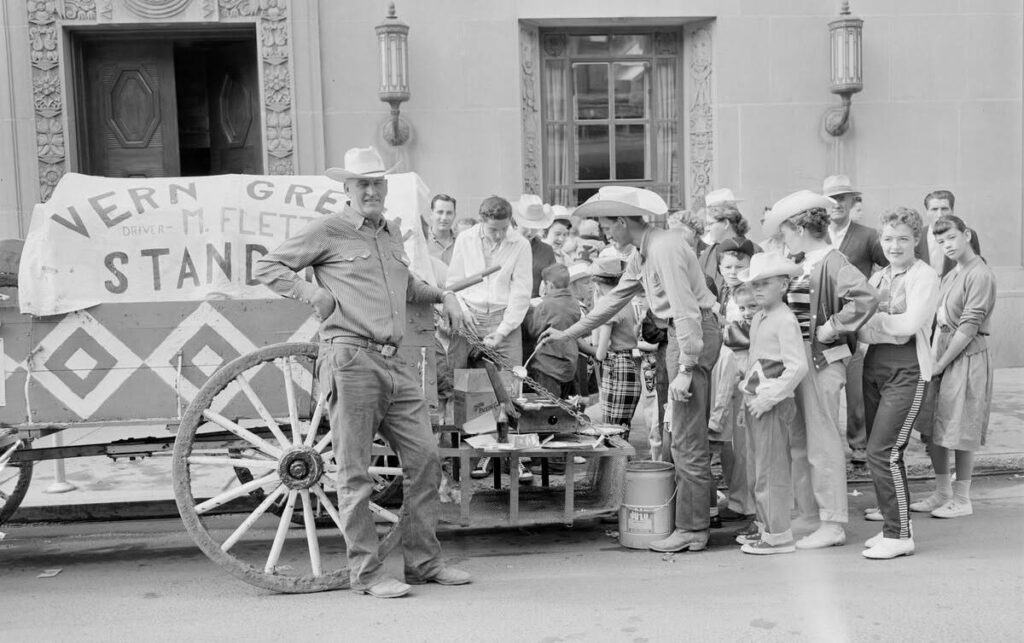
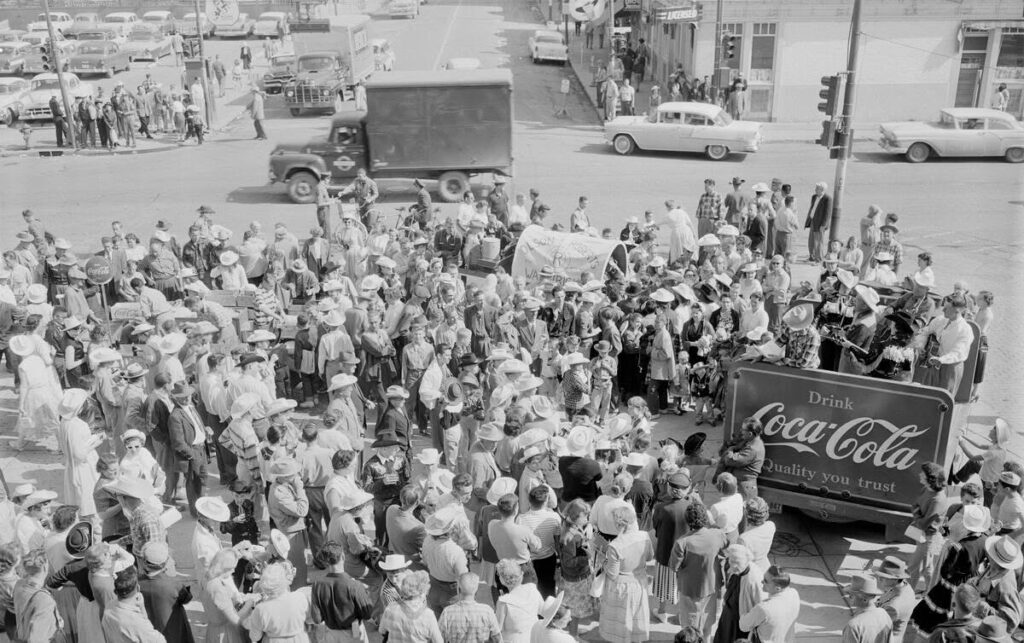
By the end of the 1920s other wagons had joined in, and the street breakfast was part of Stampede as surely as the rodeo itself. The Second World War could not stop it. Crews trimmed iron off their own cookstoves to donate to the war effort and kept flipping with what was left.
The 1950s turned a cowboy gesture into a civic institution. Businesses, churches, and service clubs began hosting breakfasts of their own. A downtown breakfast in 1955 fed roughly four thousand people. The next year the same event served ten thousand. In 1976 a volunteer group called the Stampede Caravan Committee formed to haul griddles into parking lots across the city, carrying the breakfast to neighbourhoods that would never otherwise see a chuckwagon.
Then came the 1980s, when the economy went over a cliff and Calgary bled jobs for years. The breakfasts kept going anyway. Whatever was carrying the tradition by then, it was sturdier than a promotions budget.
The Politician’s Apron
Somewhere in that postwar expansion, elected officials discovered the pancake breakfast, and it has held them ever since. It may be the healthiest ritual in Canadian politics. For one week a year the arrangement flips, and the people who ask for your vote stand over a hot griddle handing you a plate. It is hard to be pompous with batter on your sleeve. Calgarians have been grading the flipping form of premiers and prime ministers for seventy years now, and the grading is not gentle.
What a Free Breakfast Says About a Place
Here is the part worth sitting with. Nobody legislated the Stampede breakfast. No department administers it. There is no admission charge, no registration link, no eligibility criteria, no fine print. It runs on church basements and community association griddles, on small businesses that give up a morning of trade, and on volunteers who set alarms for five o’clock because a stranger deserves a hot breakfast.
That model should not have survived a century of everything else changing. It did, and the reason is simple. Traditions last when they are given away. Morton wasn’t selling anything on Eighth Avenue in 1923, and the best breakfasts this week aren’t either.
If anything, it matters more now. A restaurant breakfast for a family of four is a real expense in 2026. For ten days every July, this city hands out the same meal by the tens of thousands and calls it hospitality. Western hospitality would be an empty slogan if Calgary didn’t restock the syrup every year. Instead it is the one claim about this province that nobody, anywhere, bothers to dispute.
Find a Lineup This Week
The 2026 Stampede runs through July 12, and the breakfasts are everywhere. Rope Square downtown every morning. Community halls in all four quadrants. Malls, churches, YMCAs, the airport arrivals level, and at least one dog-friendly gathering in Canyon Meadows. You do not need a schedule so much as a nose for griddle smoke.
Go stand in one of those lines this week. Talk to whoever ends up beside you. And spare a thought for a horse-taming prankster with a pair of pet badgers who parked his wagon downtown one July morning and started handing food to strangers.
The wagon never really left. It multiplied.