Transit Buses Levy, $20,451 per hectare. That’s a line in Calgary’s 2026 off-site levy rate calculations, charged on new greenfield land under Off-site Levies Bylaw 1H2024.
Calgary off-site levies are the fees developers pay the city for the infrastructure a new community needs before anyone moves in. The bus line is small next to the rest of the sheet.
It’s also the line the province took a red pen to this spring.
Bill 28, the Municipal Affairs and Housing Statutes Amendment Act, 2026, received Royal Assent on May 14. It adds section 648(2.11) to the Municipal Government Act, which bars levy money for anything not permanently affixed to a facility. The Alberta Municipalities analysis of the bill lists vehicles and furniture as examples. A bus isn’t bolted to anything.
Key facts
- Calgary City Council approved the current Off-site Levies Bylaw on January 16, 2024, at an average of $22,600 per housing unit, according to the City of Calgary.
- The City of Calgary’s 2026 greenfield rate sheet totals $635,963 per hectare, including a Transit Buses Levy of $20,451 per hectare.
- Bill 28, the Municipal Affairs and Housing Statutes Amendment Act, 2026, received Royal Assent on May 14, 2026 and clarifies which costs off-site levies may cover.
- The City of Calgary releases its proposed 2027 to 2030 budget on November 10, 2026, and public submissions to council begin November 23, 2026.
What Calgary off-site levies pay for in a new community
When council passed the bylaw, the city’s announcement put the average levy at $22,600 per home, up about $1,700, and named water pipes, roads and emergency service stations among the things it builds. The 2026 sheet breaks the bill into nine lines. Sanitary is the biggest at $223,694 per hectare. Transportation follows at $163,204. Water, recreation, storm, transit buses, fire, police and library make up the rest.
Think of it as the renovation quote for a whole subdivision. Most lines are walls and plumbing. One is the rental truck.
How much the bus line adds to the price of one new home
The city doesn’t publish a per-home figure for each line, so the kitchen-table version takes two steps. In 2024, $609,000 per hectare worked out to $22,600 per home, which implies about 27 homes per hectare. Apply that same density to the 2026 bus line, and by Alberta Tribune’s arithmetic the Transit Buses Levy comes to roughly $760 per new home. That’s an estimate built on 2024 density, not a city figure.
Whether the city still collects that line after May 14 isn’t stated on the rate sheet or on the city’s 2026 levy review page, which lists engagement sessions with industry through March and doesn’t mention Bill 28. That gap is administrative. The law changed in May. The public paperwork hasn’t caught up.
The province’s summary of Bill 28 says it clarifies allowable off-site levy costs and exempts charter and independent schools. BILD Alberta’s chief executive, Scott Fash, backed the reforms when the bill was announced on April 2 as protection for housing affordability. For background on what else sits under new streets, see the $533 million North water servicing project and Calgary’s 2026 development agreement deadlines.
Which new communities come to council with the budget in November
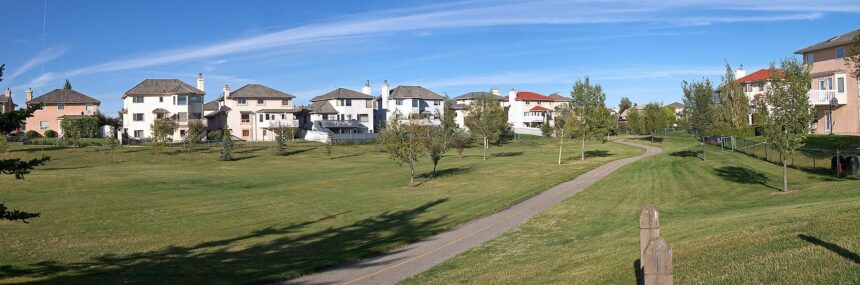
Four new-community growth applications went to council’s Infrastructure and Planning Committee on March 11, 2026, with decisions expected at budget time. The largest reported is Providence, on the city’s southwest edge, at about 9,600 homes. Each one would pay levies under whatever rate sheet is in force when its land is serviced.
Building costs pile up from more than one direction. The next national building code adds its own share to a new house.
The proposed budget lands November 10. Register to speak from that date through the city’s 2027 budget page, then on November 23 ask administration one question: which 2026 levy lines changed after section 648(2.11), and what each now costs per hectare.