


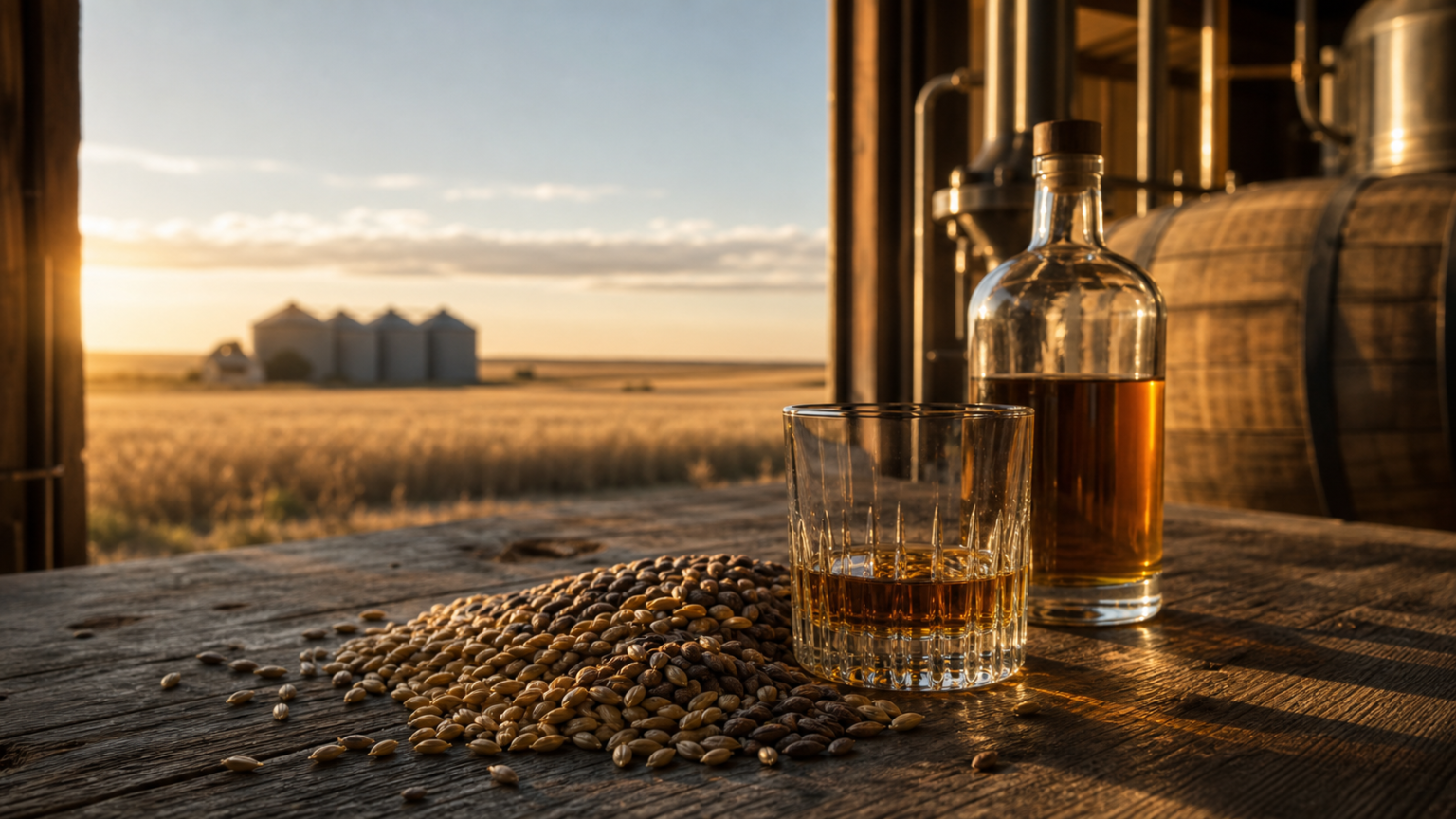
On May 22, 2026, Alberta’s Whisky Act came into force. Bill 24, introduced March 31 and sponsored by Service Alberta and Red Tape Reduction Minister Dale Nally, establishes the first legal definition of Alberta Whisky and sets binding production standards for any distiller wishing to use that designation. The rules are clear: the spirit must be mashed, fermented, aged, proofed, and bottled entirely within Alberta. Water must be sourced entirely from within the province. At least two-thirds of the total grain used in production must be grown in Alberta. The Alberta Gaming, Liquor and Cannabis Commission administers compliance. Participation is voluntary, meaning distillers who do not meet the standard may continue producing whisky in Alberta under Canadian whisky requirements but simply cannot use the Alberta Whisky label. That is a reasonable design for a standard: exclusive without being prohibitive.
What a Standard Actually Does
Geographic indication protections exist in most serious spirits-producing jurisdictions. Scotch Whisky has been legally defined in the United Kingdom since the Scotch Whisky Act 1988, with further regulation tightened in 2009. Bourbon must, under United States federal law, be produced from a grain mash that is at least 51% corn, aged in new charred oak containers, and meet specific proof requirements at distillation and bottling. Cognac is geographically defined under French appellation law. Each of those labels carries legal weight because regulators decided that the name should mean something precise, not whatever a marketing department chose to print on a bottle.
Alberta’s spirits industry has grown considerably over the past decade. The province has developed a cluster of craft distilleries, several of which have earned international recognition for rye-forward whiskies produced from Alberta-grown grain. That reputation is commercially valuable. A legal standard protects it from dilution. Without one, any producer anywhere could theoretically label a product in ways that trade on Alberta’s reputation without contributing to it. The new Act closes that gap.
The Agricultural Connection
The two-thirds local grain requirement is not incidental to the legislation. Alberta produces rye, barley, and wheat in substantial volumes. Using Alberta grain as a prerequisite for the Alberta Whisky designation creates a direct link between the distillery sector and the farm sector. A distiller who wants to carry the designation sources locally. That local sourcing generates a premium market for growers. It is a modest connection in terms of overall grain volume, but it is the type of agricultural integration that adds value to primary production without requiring government subsidy programs to make the economics work. The premium is built into the product category itself.
Alberta’s liquor landscape was already unusual before this legislation. The province privatized retail liquor sales in 1993, a decision that transformed the sector and gave Alberta consumers more choice than anywhere else in the country. That context matters here. Alberta is not a jurisdiction that instinctively reaches for heavy-handed product regulation. The Whisky Act is not heavy-handed. It establishes a voluntary premium tier and protects the integrity of that tier. Producers who want the recognition earn it by meeting the standard. Those who do not face no penalty. If you want to understand how far Alberta has come from the old ALCB model, the story of the 1993 privatization is worth reading in full at our piece on the ALCB and Alberta’s liquor revolution.
Identity and Economic Confidence
There is an argument beyond the economic one, and it deserves to be stated plainly. Alberta is a province with a tendency to export raw value and import finished product. It sends bitumen, grain, and lumber. It buys cars, consumer goods, and processed food. That pattern reflects history and geography, but it does not reflect an economy operating at full potential. The whisky sector is a small but instructive counter-example. Alberta distilleries are taking locally grown grain and converting it into a finished, branded, internationally competitive product. The Whisky Act says that this process, from soil to bottle within this province, deserves a name that is protected by law. That is not provincial vanity. It is a reasonable assertion of value.
Brand protection and product standards feed tourism, hospitality, and export markets in ways that accumulate over time. Scotland’s whisky industry contributes roughly five billion pounds annually to the UK economy. Alberta will not build that scale of industry quickly. However, the infrastructure of protection, a legal definition, enforced standards, and a recognized designation, is the necessary foundation for any sector that wants to grow internationally. For a broader look at how small fees and policies shape Alberta’s cost of living, see our analysis at small fees and Alberta’s cost of living.
A Province Worth Naming
The Alberta Whisky Act is now law. Distillers who meet the standard can begin using the designation. Those who do not will continue to operate without it. The AGLC will administer the framework. Over time, the test will be whether the designation builds genuine market recognition, whether consumers in Alberta, across Canada, and in export markets learn to look for it and pay a premium for it. That outcome depends on the distillers, on the AGLC’s credibility as an enforcement body, and on whether the provincial government supports the designation with consistent trade and tourism promotion.
Alberta made a product worthy of a name. It gave that name a legal definition. The harder work of making the name mean something internationally starts now.
Would you be more likely to choose a bottle labelled Alberta Whisky knowing it meets strict local grain and production standards?