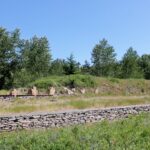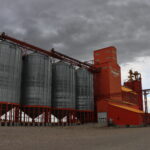


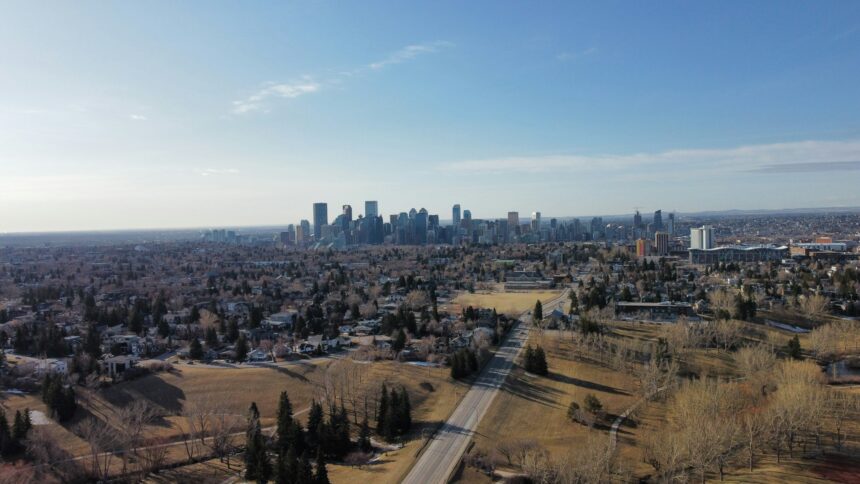
West View. Glacier A North. Write both names down, because the City of Calgary has not explained what outranked them.
On April 28 and 29, the industry association representing the region’s homebuilders went before City Council with letters on two agenda items. Councillor Andre Chabot tabled them. One of those letters contains a line that should stop anyone who has sat through a Calgary speech about the housing shortage.
Growth applications for West View and Glacier A North were delayed. The reason given was “higher priority projects.”
That is the entire explanation. Three words, no list, no ranking, no accounting of what those higher priority projects actually are.
The framework that decides which neighbourhoods wait
The item was IP2026-0155, Capital Planning and Growth Certainty. Behind the file number sit two documents that run this city without ever making the news, the Corporate Capital Prioritization Framework and the 10-year Capital Plan.
Together they decide the order in which Calgary spends money on water, sewer, roads and the rest of the plumbing that turns raw land into somewhere a family can live. Nothing gets built on land the City has not agreed to service. A growth area without capital behind it is a map with nothing under it.
The industry asked Council for one thing on that item. Transparency. Publish the ranking. Publish the criteria. Show which projects moved ahead of the growth applications and explain the basis for it.
Council approved the Framework, and the next milestone was set for May 7, when it was due to move on to Executive Committee and then back to Council.
Approving a prioritization framework is not the offence here. Any city with finite capital has to rank things, and someone has to make hard calls about which pipe gets funded in which year. The problem is a ranking that only exists inside the building. If the criteria are defensible, publishing them costs nothing. If they are not, that is precisely why the public should see them.
What a deprioritized growth area actually costs
A delayed growth application does not look like anything. There is no news footage of it. It is a field that stays a field.
The cost shows up years later, in the form of lots that were never serviced, homes that were never framed, and buyers competing for a smaller pool of finished product than the city needed. Land does not become housing on demand. It moves through servicing, subdivision, permitting and construction on a schedule measured in years, and the first domino in that chain is a capital decision made at City Hall.
Meanwhile the demand side never pauses. Alberta’s population surge keeps arriving on schedule, entirely indifferent to which projects the City ranked higher this budget cycle. That gap between people arriving and lots being serviced is where affordability actually gets decided, long before anybody argues about interest rates.
The flood file got the slower treatment
The second letter went to item IP2026-0212, Flood Resilience and Land Use.
Worth being clear about the position, because this one gets misread easily. The industry supported aligning City regulations with the updated provincial flood hazard mapping. Supported it. The mapping is not the fight. Updated hazard data is how a province avoids repeating expensive mistakes on the same riverbanks.
The point raised was about consistency in how the City applies the rules, and specifically that consistency has to hold beyond the approval process itself. Builders can work with a strict standard. What they cannot work with is a standard that shifts depending on which desk the file lands on.
Council referred the item back to Administration for more engagement. The timeline stretched to Q4 2026, which is the quarter we are in now. That is two more quarters of the current arrangement, on a file where the provincial data was already updated and sitting there.
Alberta moved the other way on this general problem when it set a 120-day approval timeline to stop files drifting. The province put a clock on itself. Calgary added two quarters.
Ask for the list
There is a straightforward test available here, and it does not require a consultant.
Calgary says it wants more housing. Calgary also deprioritized two growth areas and described the reason in three words. Those two statements can both be true only if the higher priority projects are more urgent than housing supply in a city with a housing shortage. Maybe they are. Nobody outside the room can check, because the list has not been published.
BILD Calgary Region put both letters on the public record, which is the only reason any of this is known outside a committee room. That is the useful part of an industry that keeps its own minutes.
West View and Glacier A North are now two names in a public document. The projects that beat them are still anonymous.
Should Calgary publish the ranked list of projects that outranked West View and Glacier A North before the next capital milestone?
Related from Alberta Tribune: Edmonton Wants Half Its New Housing Built Inside Existing Neighbourhoods