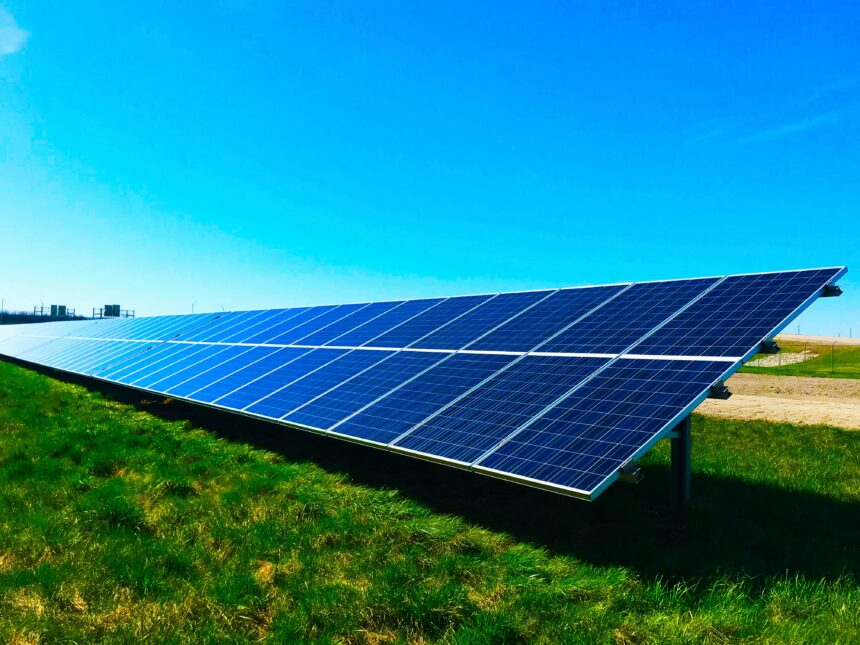
Beginning 1 October, every new solar panel sold in Alberta measuring a square metre or larger carries a $14 environmental fee, and no solar panel may go into a provincial landfill.
Key facts
- From 1 October, every new solar panel of a square metre or larger sold in Alberta carries a $14 environmental fee, and no panel may go to a provincial landfill.
- The Alberta Recycling Management Authority runs the program, and the fee funds collection, transport and recycling instead of general revenue.
- Alberta has close to 2,000 megawatts of installed solar, which works out to about five million panels at a typical 400 watts, by simple arithmetic.
- More than 95% of those panels are expected to reach end of life by 2045, roughly 72,700 tonnes of material.
- A 20 panel home system costs about $280 more, and the fee is not retroactive.
The program is administered by the Alberta Recycling Management Authority. The fee revenue funds collection, transport and recycling. It does not flow into general provincial revenue, which is what separates a stewardship charge from a tax.
Alberta is doing this before it has to
The province has close to 2,000 megawatts of installed solar, one of the largest fleets in the country. At a typical 400 watt panel that works out to something in the range of five million panels already standing in fields and on roofs.
More than 95% of those are expected to reach end of life by 2045, producing roughly 72,700 tonnes of material. Glass, aluminium frame, silicon, silver and copper, all of it currently with nowhere formal to go.
The environment minister framed the reasoning plainly, which is that the province would rather build the system now than wait until dead panels are stacking up at landfill gates. That is the right instinct and it deserves credit.
The gap between the fee and the fleet
Here is the structural question, and it is a design question rather than a complaint. The fee applies to new panels. It is not retroactive, so nothing already installed pays into the fund.
Those five million existing panels are precisely the ones that reach end of life first. A panel installed in 2016 is closer to the recycling stream than one bought next spring, and the panel bought next spring is the one paying for the facility.
That is not a flaw unique to Alberta. Almost every stewardship program in the country works this way, because charging retroactively on installed equipment is administratively close to impossible. It does mean the fund starts collecting on the newest units while the oldest ones queue up, and the arithmetic of that gap deserves to be published rather than assumed.
What it costs a household
A 20 panel residential system costs about $280 more under the new charge. The province corrected an earlier figure of $240 to reach that number, and a homeowner comparing quotes across the 1 October line will see that difference.
On a system priced in the tens of thousands, $280 is not the deciding factor. It is real money and it should be disclosed clearly in every quote, but anybody claiming this ends residential solar in Alberta is not doing the math.
The scale side matters more. Utility scale installations carry thousands of panels, and a per panel fee at that volume becomes a line in a project model. Developers deciding between Alberta and a neighbouring jurisdiction will run that number, and the province should be watching whether it moves any decisions.
The recovery side is the part that could pay
An Alberta operator already reports recovering about 95% of the silicon, silver and copper out of end of life panels. If that holds at volume, the province gets a domestic materials supply instead of a disposal system, at a moment when critical mineral supply chains are a live strategic question.
That is the same logic behind funding Calgary clean tech projects and the same logic that keeps surfacing in every power generation argument from Olds outward. Alberta does best when it treats a waste stream as an input rather than a cost.
The bill comes first and the panels come later. Whether that turns out to be good policy depends entirely on whether the recycling capacity exists by the time the first big wave arrives.
Related from Alberta Tribune: The Power Bill Argument Turns On Two Different Line Items