


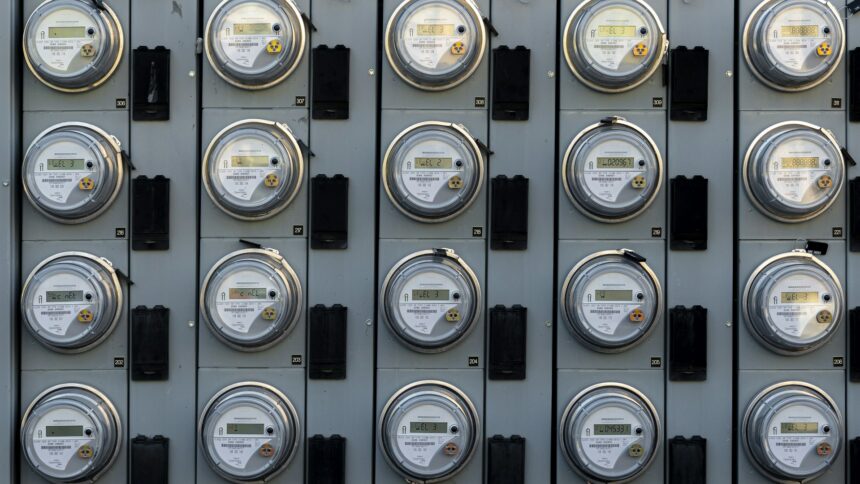
Up to 6% down, or $267 to $462 a year up. Those are the two published claims about what a single Sturgeon County data centre does to an Alberta household power bill, and both of them are defensible, because they are not talking about the same part of the bill. The province is describing the transmission line item. The critics are describing the total. Nobody at any of the four town halls held this summer was handed that distinction, and it is the only thing in this file a homeowner actually needs.
Key facts
- The Government of Alberta held data centre engagement sessions in Lacombe on 19 August 2026, in Sturgeon County on 20 August 2026, online on 27 August 2026 and in Grande Prairie on 11 September 2026.
- More than 12,500 people joined the virtual session on 27 August 2026.
- The Government of Alberta states that the transmission portion of a household power bill is expected to fall by up to 6% as a result of fees paid by the Sturgeon County project, which draws about 970 megawatts from the grid and pays close to $200 million a year in transmission fees.
- The Pembina Institute, in a report published 26 August 2026, estimates the same project could add $267 to $462 a year to a typical household bill between 2027 and 2031, an increase of 15% to 25%.
- The Utilities Statutes Amendment Act, 2025 received royal assent on 11 December 2025 and establishes a cost-causation model assigning transmission upgrade costs to data centre proponents.
A power bill has two halves and they move in opposite directions
Here is the mechanism, in the order it happens. An Alberta residential bill splits into an energy charge, set by what generation clears at in the pool, and a delivery charge covering transmission and distribution, which recovers the fixed cost of the wires. Those two are set by different processes and respond to different things.
Add a 970 megawatt customer paying close to $200 million a year in transmission fees, and the fixed cost of the wires gets spread across a much larger volume of megawatt hours. Everybody else’s share of that fixed cost goes down. That is a real effect and the province is right to claim it.
Now take the same 970 megawatts and buy energy with it. Alberta dispatches generation in merit order, cheapest first, so a large new load pushes the system further up the stack and the marginal unit that sets the price is a more expensive one. The pool price rises for every buyer in the market, including the household whose transmission charge just fell. Both things happen. They land on two different lines of the same piece of paper, and they are not the same size.
Which one dominates depends almost entirely on timing, and that is where the argument actually sits. The Sturgeon County campus is paired with a 932 megawatt gas plant of its own. If the plant runs before or alongside the load, the campus is largely self-supplied and the pool effect is modest. If the load energizes first and buys bridging power from the grid, the existing fleet runs harder for however long the gap lasts, and prices move for everyone. That gap is measured in years, not months.
The rules governing that gap are not finished
The province has already done the part that is straightforward. The Utilities Statutes Amendment Act, 2025 puts transmission upgrade costs on the proponent rather than the ratepayer, which is the correct answer to the wires question and settles it. What it does not settle is the energy question, because no statute can legislate a merit order.
The rules that would settle it are the bring your own generation provisions, and those are still in development. The AESO ran its stakeholder process through the first half of this year, closed written feedback in July, and in an 8 September update moved finalization to the fall. Until that document exists, there is no published rule specifying how long a large load may draw bridging supply from the grid before its own generation is in service, or what it pays for the privilege.
That is the gap the town halls were really about, whatever else got asked. Water use matters and the water use questions were fair ones. Property tax matters. But the bridging rule is the single variable that decides whether the bill number is minus 6% on one line or plus $462 on the total, and it was not available to be discussed in Lacombe on 19 August because it did not exist yet.
Sequencing, not opposition, is the actual complaint
Roughly 300 to 500 people turned out in Lacombe, depending on which count you take, and no official attendance figure was published. Another 300 or so came to Grande Prairie against more than 500 registrations, with registration closed at capacity. More than 12,500 joined online. Those are not the numbers of a province that is indifferent to this file. They are the numbers of a province that wants the arithmetic and has not been given it in a form that can be checked.
Alberta should build these. The investment is real, the grid advantage is real, and the alternative is watching the industry go to a jurisdiction with worse power and a slower regulator. But the strongest case for building them is a published cost allocation that a person in Redwater can read, not a percentage on one line of a bill set beside a competing percentage on the whole bill.
The date to watch is the fall publication of the bring your own generation framework. If it lands without a stated limit on bridging supply and a price attached to it, the $267 to $462 estimate stops being a projection and starts being a forecast.