


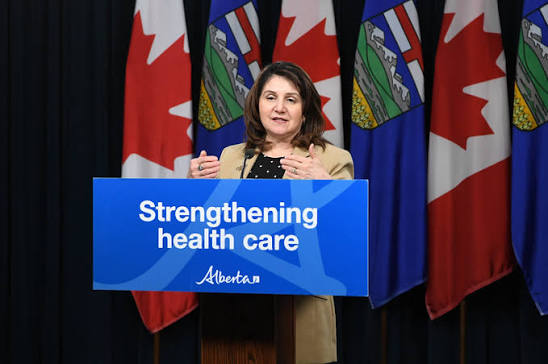
Alberta’s Health Statutes Amendment Act, 2026, known at the legislature as Bill 29, received royal assent in May after being tabled on April 13 by Primary and Preventive Health Services Minister Adriana LaGrange. The bill does two substantive things: it opens the door to self-referred preventive testing at private clinics, and it allows authorized prescribers to keep a limited supply of certain opioid agonist medications on hand for urgent addiction treatment. Both provisions sound sensible in the abstract. Whether they amount to anything depends entirely on the regulations that follow.
What the Bill Actually Does
Under Bill 29, Albertans will eventually be able to walk into a participating private clinic and request certain preventive tests without first obtaining a doctor’s referral. The catch, and it is a significant one, is that the list of qualifying tests has not been written yet. Government has signalled those details will arrive through regulation by fall 2026 at the earliest. The same timing uncertainty applies to the pricing structure. Whether patients receive any reimbursement from Alberta Health remains an open question.
The addiction treatment component is more concrete and arguably more urgent. Prescribers, including nurse practitioners and physicians, will be permitted to stock a limited supply of low-risk opioid agonist drugs for on-site dispensing. The intent is to close the gap between a clinical assessment and the nearest dispensing pharmacy, which in parts of rural Alberta, remote communities, and Indigenous reserves can represent hours of travel or days of logistical delay. In those circumstances, delay is not an inconvenience. It is a withdrawal window that often ends badly.
Why the Rural Gap Matters
Critics of Bill 29, including the Alberta Union of Provincial Employees and the Canadian Centre for Policy Alternatives, have characterized the self-referral testing framework as the leading edge of a two-tier health system. That is not an unreasonable concern to raise. Private diagnostic capacity in Canada has a history of absorbing supply without expanding it. If every radiologist and ultrasound machine pulled toward paying private clients spends less time serving AHS patients, wait times in the public system worsen. The minister’s office has maintained that the framework will be designed to add capacity rather than redirect it. That design work is exactly what the regulations must accomplish.
The case for the addiction medication provision is less contested. Rural physicians have raised access barriers around opioid agonist therapy for years. Requiring a patient in a remote community to travel to a compounding pharmacy to collect methadone or buprenorphine creates friction at precisely the moment when eliminating friction is the clinical priority. Allowing a prescriber to hold a supply on-site is a structural fix, not a gesture. Provided the approved medication list is written broadly enough to cover the drugs that actually work, this piece of Bill 29 could make a practical difference fairly quickly. For a deeper look at how spending decisions affect Alberta’s health system, see our coverage of the Alberta budget and healthcare deficit.
The Accountability Test
Legislation that delegates its substance to future regulation is a familiar pattern in this building. The House passes a framework, cabinet fills in the numbers later, and public scrutiny dissipates before the details are written. Bill 29 follows that pattern on the diagnostic testing side. The government deserves credit for at least establishing the enabling authority. It deserves accountability for what it does with that authority when no one is watching the committee stage.
There are concrete benchmarks worth watching. How many tests qualify for self-referral, and are they the ones most likely to catch serious conditions early? Will private testing prices be disclosed publicly so patients can make informed choices? How will Alberta Health track whether the new private capacity actually reduces public wait times, or merely coexists with them? On the addiction side, how many additional prescribers take up the on-site dispensing authority within the first twelve months, and in which communities? The province can answer all of those questions with data it already has the machinery to collect. Read our analysis of the $56-million medication deal for context.
Results Are the Only Metric
Alberta has introduced health reform legislation before that looked purposeful at first reading and quietly stalled at the regulatory stage. Bill 29 has the architecture of a useful reform. The diagnostic provision could relieve pressure on family physicians who spend appointment time ordering tests that patients could have accessed directly. The addiction medication provision could meaningfully shorten treatment initiation times in communities where the current system makes starting difficult by default.
Royal assent is the beginning, not the finish line. Fall 2026 will tell Albertans whether a bill about improving access actually improves access, or whether it becomes another piece of legislation that sounds right and does less.
If the regulations for self-referred testing arrive this fall, what specific tests would matter most to you or your family?