

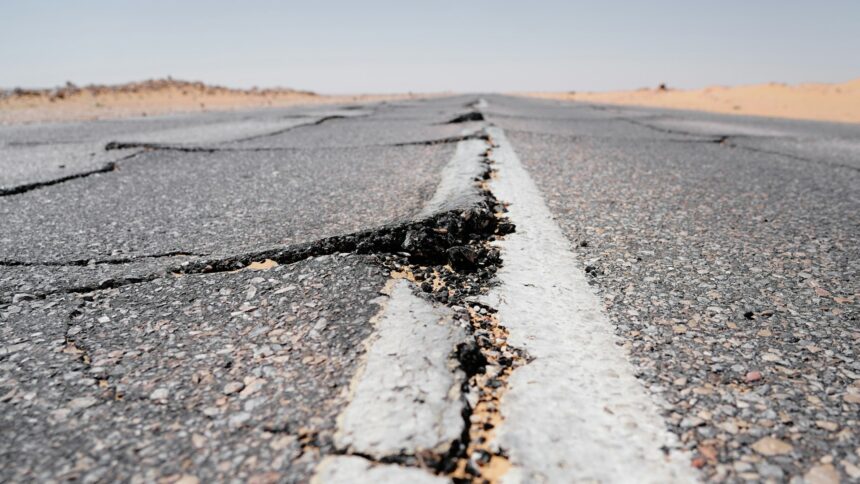
June 12. Downtown Fort McMurray. Dozens of volunteers were out on Highway 63 filling potholes themselves, working the stretch from Hardin Street to Beacon Hill.
No road crew. Neighbours.
The man who organized it, Mohammed Tarrabin, said he had already spent more than $5,500 fixing his own vehicle. He summed up the road in one line. “I have been here for 20 years and I’ve never seen it ever like this.”
Three weeks later the province answered. On July 5, Alberta put $15 million into Highway 63 maintenance, out of $22.4 million it added to the highway maintenance budget. Good. Take it. Now make it last past the first frost.
Key facts
- Alberta Transportation and Economic Corridors Minister Devin Dreeshen announced on July 5, 2026 that $15 million of a $22.4 million increase in provincial highway maintenance funding would go to Highway 63.
- The July 5, 2026 announcement expedited repaving on 48 kilometres of southbound Highway 63 near Wandering River and on 30 kilometres of Highways 63 and 881 in the Fort McMurray area.
- The Alberta Roadbuilders and Heavy Construction Association counted 36 Highway 63 segments needing repair before the July 2026 funding, 11 of them inside an 18 kilometre stretch through Fort McMurray.
- A Government of Canada news release dated May 25, 2010 put the Highway 63 twinning program at 240 kilometres from Grassland to Fort McMurray and about $1 billion in total, with a federal contribution of up to $150 million.
What the $15 million buys on Highway 63
Two jobs jumped the queue. The southbound lanes near Wandering River get 48 kilometres of fresh pavement. Around Fort McMurray, 30 kilometres of 63 and 881 get paved too.
The rest is plain work. Potholes. Patching. Sweeping. Line paint. Nobody cuts a ribbon for line paint, and that is exactly why it gets skipped when budgets get tight.
The province also promised updates every two weeks. That matters more than it sounds. A crew people can track is a crew that shows up. And the Regional Municipality of Wood Buffalo is talking with the province about taking a hand in maintenance on the stretch through town. Fine by me. Whoever holds the shovel, fill the hole.
The roadbuilders’ own count tells you how far behind this was. Thirty-six bad segments on one highway. Eleven of them packed into 18 kilometres through the city, where the traffic is heaviest and the trucks stack up at shift change.
Who paid to twin this road and who stood back
Think about what rolls down 63 on a Tuesday. Crew buses. Fuel haulers. Lowboys carrying iron north. Pickups leaving town at 4:30 in the morning with a lunch kit on the seat. Every barrel that ends up in a pipeline started with somebody driving this road to go get it.
Now look at the twinning bill. The federal release from May 2010 priced the whole 240 kilometre job at about $1 billion. Ottawa’s share was up to $150 million. By our arithmetic that is 15 cents on the dollar, at most. Most of the rest came from Alberta.
The first phase was announced in August 2006. The last stretch opened in 2016. Ten years to twin one road, and people drove it the whole time, in whiteouts, behind wide loads, in the dark at shift change.
Ottawa loves a speech about projects in the national interest. This road has been one for decades. It moves the product that pays a big slice of the federal bills, and the federal government keeps writing rules that make it harder to move that product any farther, like the pipeline with buyers blocked by a federal law. A country that wants the royalties and the tax revenue ought to want the road in one piece too.
What drivers on Highway 63 should hold this money to
Judge the $15 million next spring, when the frost comes out of the ground. Count the potholes between Hardin Street and Beacon Hill. Count how many weeks the southbound lanes near Wandering River sit under orange signs, then count how many months they stay smooth after the crews leave. Read those two-week updates and see if the numbers in them move. If the patching holds through one hard winter and the volunteers can stay home, the money did its job, and the province deserves the credit for it. If the same holes open in the same spots by April, everybody on that road will know it before any report does.
Mr. Tarrabin and his crew did the province a favour in June.
They should never have to do it again.