


A railway town built on one buyer
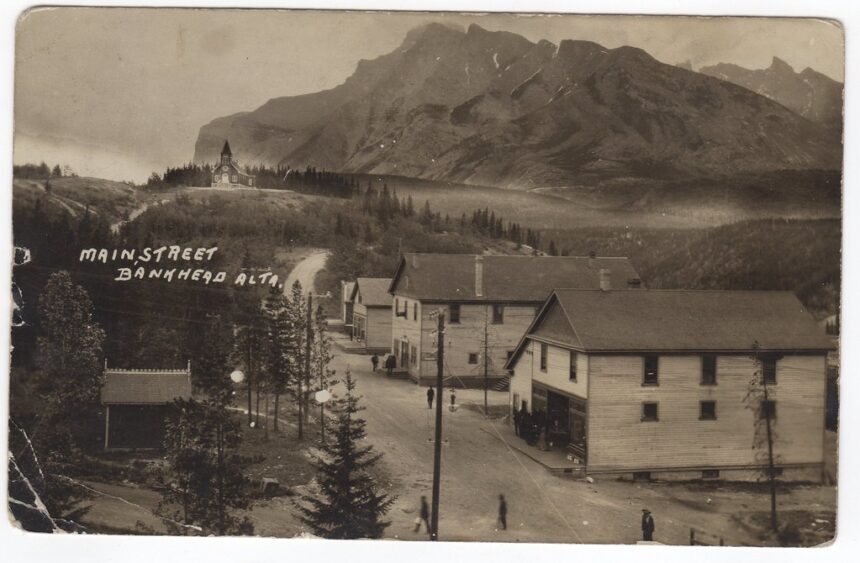
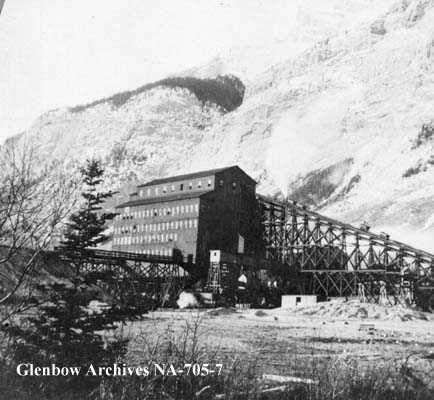
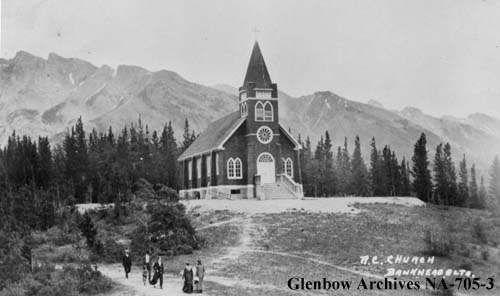
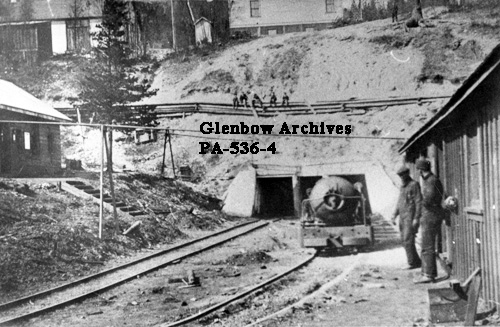
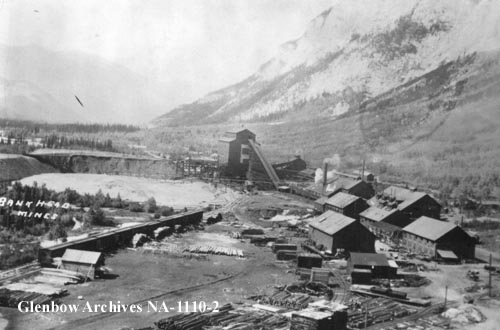
In the early years of the twentieth century, Bankhead was not a footnote in Alberta history. It was a functioning coal town in the Bow Valley, established in 1903 by the Canadian Pacific Railway to supply coal for its locomotives. At its height, roughly a thousand people lived there. Homes, a school, a hotel, and a company store stood beneath the Rockies.
Bankhead existed for one clear purpose. The railway needed coal, and the town was built to provide it.
When demand was steady, the arrangement worked. The mine produced. The railway ran. Families settled into a rhythm defined by shift whistles and mountain winters.
It did not last.
Dependency revealed
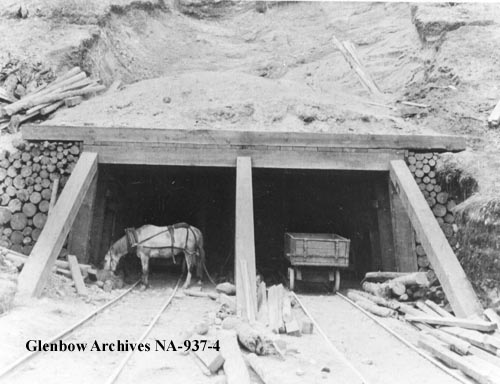
By the early 1920s, changing fuel economics and operational decisions made Bankhead’s coal less essential. The mine closed in 1922. Within a short period, buildings were dismantled and either relocated or demolished. Residents moved on. Today, only stone foundations remain, preserved within Banff National Park as a reminder of what once stood there.
Bankhead’s collapse was not the result of mismanagement alone. It reflected a structural vulnerability. The town’s economy was tied almost entirely to a single customer and a single commodity.
When that demand disappeared, so did the town.
For Alberta, the lesson is neither romantic nor abstract. It is practical.
The single buyer problem
Resource-based economies can be durable, but they are exposed when they rely on narrow markets. Bankhead supplied one railway company. When that relationship ended, there was no diversified base to cushion the blow.
Alberta’s broader history contains echoes of that pattern. Coal communities across the province rose and fell with demand. Later, oil towns expanded rapidly when global prices were strong and tightened sharply when prices declined.
Economic growth rooted in resource development is not inherently fragile. It becomes fragile when it lacks diversification and long-term planning.
This is not an argument against resource industries. Alberta’s prosperity has been built in large measure on energy and natural resources. It is an argument for breadth within that strength.
Resilience through range
Modern Alberta is far more diversified than Bankhead ever was. Energy remains central, but agriculture, petrochemicals, technology, logistics, and professional services all contribute to provincial output. Population growth in Calgary and Edmonton has supported finance, construction, and education sectors.
Yet the Bankhead story remains relevant when discussions turn to trade access, infrastructure, and market concentration. Overreliance on a limited number of export corridors or a narrow customer base carries risk, even in a larger economy.
Communities across Alberta understand this intuitively. Municipal leaders court varied investment. Business owners seek multiple clients. Farmers hedge between crops and contracts.
These instincts are grounded in experience.
Memory as discipline
It is tempting to treat ghost towns as curiosities, scenic stops for hikers and history enthusiasts. Bankhead offers something more. It demonstrates how quickly a thriving settlement can unravel when its economic foundation narrows.
The lesson is not to avoid ambition. It is to pair ambition with durability.
Alberta has weathered numerous cycles precisely because it has learned to adapt. Pipeline constraints led to expanded rail capacity. Downturns in oil spurred investment in upgrading and petrochemical value chains. Trade disputes have encouraged exploration of new markets.
Bankhead did not have that flexibility. It was designed for one purpose, at one moment in time.
A province shaped by cycles
There is a tendency in contemporary debate to view economic challenges as unprecedented. Alberta’s history suggests otherwise. Cycles are familiar. The key question is whether institutions and industries evolve alongside them.
When coal gave way to oil as the dominant fuel source in Western Canada, some communities adjusted. Others did not. When natural gas markets expanded, certain regions seized the opportunity. Others remained tied to fading demand.
The province’s long-term stability has depended less on avoiding cycles than on building structures capable of absorbing them.
Bankhead’s stone foundations, dusted with mountain snow, are not simply relics. They are evidence of an economic model that proved too narrow to endure.
Modern Alberta does not face the same constraints. But the principle remains. Growth anchored to a single buyer or single market carries inherent vulnerability.
The Rockies still stand above Bankhead’s remains.
The town does not.
That contrast offers a sober reminder that resilience must be built deliberately.