


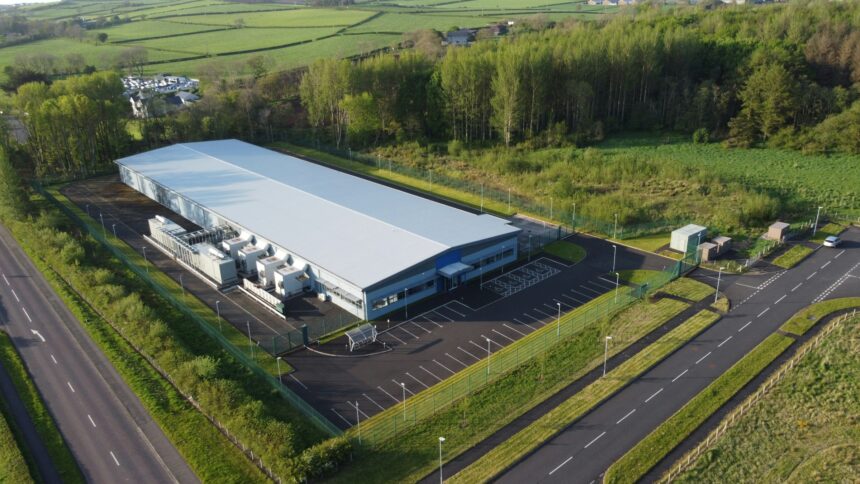
The motion carries a title that reads like a budget line: Addressing Large-Scale Data Centre Impacts on Municipal Resources. Calgary city council passed it 13 to 2 on Nov. 17.
Nothing stops today. The vote sends administration to draft amendments to Land Use Bylaw 1P2007 that would define data centres by size, set out where each size can locate, and let council temporarily stop taking new rezoning applications for the largest ones while rules are written. Those amendments come back at council’s public hearing in March 2027. Until council votes again after that hearing, the bylaw stays as it is.
Key facts
- Calgary city council voted 13 to 2 on Nov. 17, 2026 to direct administration to prepare amendments to Land Use Bylaw 1P2007 dealing with large-scale data centres.
- The proposed amendments are scheduled for City of Calgary council’s public hearing meeting in March 2027.
- The motion also calls for reports on the economic and environmental effects of data centres and on large industrial water users and Calgary’s water security, due by the end of 2027.
- Land Use Bylaw 1P2007 has been in effect in Calgary since June 1, 2008, according to the City of Calgary.
Calgary has a data centre application and no size category for one
The trigger was a real file. A land use redesignation application for a data centre and future power generation sits on the city’s northeast edge, past Stoney Trail near Redstone. Ward 2 Coun. Jennifer Wyness, who brought the motion, has said residents have been emailing council asking what the rules are.
The honest answer is that the Land Use Bylaw took effect in 2008, years before artificial intelligence campuses started looking for land in Alberta. The motion asks administration to define data centres by scale, which says plainly what the current bylaw lacks. A small server building behind an office park and a campus built for artificial intelligence workloads can arrive under the same general industrial designations. Edmonton faced the same gap with a 253-hectare data centre plan that listed no megawatt figure.
The water report arrives after the bylaw
Calgarians need no briefing on water. After the Bearspaw South feeder main broke in June 2024, the city asked residents to cut use for weeks while crews repaired it. Large data centres can draw water for cooling, and the motion asks for a report on what large industrial water users would mean for the city’s water security.
That report is due by the end of 2027. The bylaw amendments are due in March 2027.
So council is set to write size rules for data centres about nine months before it receives the water study that is supposed to inform them. That sequence is backwards for a household budget and backwards for a city. Power raises a similar timing question. Alberta’s grid already runs tight between 4 and 7 p.m., and the provincial debate over how data centres reach power bills is still open.
A pause has a cost as well as a case
Calgary is not first. Rocky View County, which wraps around the city’s north, east and west edges, voted in July 2026 to pause new applications to redesignate land for data centres while it writes its own framework.
The case against a pause is that Calgary already has tools. As the Fraser Institute argued, the city already requires developers to show that water, wastewater, stormwater and road servicing exist for a proposal, and its noise limits apply to any building. A pause also has a price. Every month it runs is a month an applicant waits for a decision and a month the city goes without the property tax a finished industrial building would pay, which is worth weighing against the province’s own data centre jobs figures. A pause is a fair trade only if the rules arrive on time.
Two questions to ask before the March hearing
The amendments come to council’s public hearing in March 2027. Anyone near a proposed site can ask administration two things before then: what size threshold would trigger the new rules, and whether the water security report will be finished before council decides any large application. Written submissions for public hearings go to the City Clerk’s Office, and residents can register there to speak to council.