


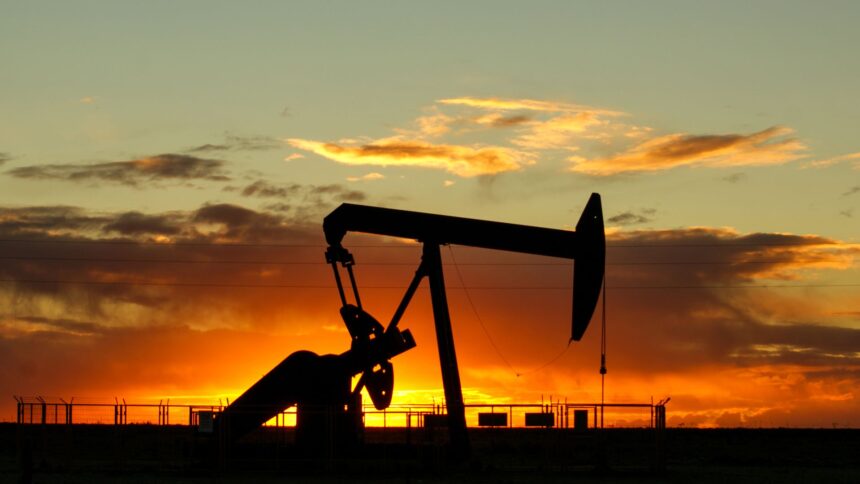
A barrel of oil sands crude produced in 2024 carried 28% less greenhouse gas than a barrel produced in 2012. The Government of Alberta put that figure in its oil sands emissions intensity report on July 13, 2026, measured in tonnes of carbon dioxide equivalent per barrel. Over the same stretch, production climbed past 3.3 million barrels a day.
Intensity is emissions divided by output. It falls when the numerator grows slower than the denominator, and in the oil sands the numerator is mostly the fuel burned to make steam or run mining fleets and upgraders. Cut the gas burned per barrel and the ratio drops, even while the plant runs harder.
The report also shows a further 2% improvement over the previous reporting year. That is the part worth watching, because a trend that keeps moving after the easy gains are gone is a trend built on engineering rather than luck.
Key facts
- The Government of Alberta reported on July 13, 2026 that oil sands greenhouse gas emissions intensity, measured in tonnes of carbon dioxide equivalent per barrel, fell 28% between 2012 and 2024.
- Alberta oil sands production exceeded 3.3 million barrels a day in 2024, an increase of roughly 1.7 million barrels a day since 2012, according to the same provincial report.
- Oil sands emissions intensity improved by 2% compared with the previous reporting year, according to the Government of Alberta’s July 13, 2026 release.
- Environment and Climate Change Canada’s 2026 national greenhouse gas inventory reports a 254% rise in crude bitumen and synthetic crude oil production from Canada’s oil sands between 2005 and 2024.
How a barrel gets cleaner at twice the volume
Every gain in that 28% came out of a specific piece of equipment. In a steam-assisted operation, the largest lever is the steam-to-oil ratio, the amount of steam injected for each barrel recovered. Better reservoir modelling puts the steam where the bitumen is. Cogeneration pulls electricity and steam out of the same unit of gas. Solvents mixed with steam lower the heat needed to move the bitumen. Each one trims the ratio a little, and the report credits new technology and more efficient operations for the total.
Nobody does this for publicity. A lower steam-to-oil ratio means less natural gas bought per barrel, and gas is a line on the operating statement. The carbon gain and the cost gain come from the same valve. That alignment is why the curve kept bending while production roughly doubled, from about 1.6 million barrels a day in 2012 to more than 3.3 million in 2024, by our arithmetic from the report’s stated increase.
What the 28% does and does not tell you about total emissions
The critics have one fair point, and it deserves a straight answer. Intensity is a ratio. Total emissions are a product. Multiply roughly 2.06 times the output by 0.72 times the carbon per barrel and, by our arithmetic, total oil sands emissions in 2024 sit about 48% above 2012. They went up.
Now run the same calculation the other way. Had every 2024 barrel carried the 2012 footprint, by our arithmetic total emissions would be about 39% higher than they actually were. That gap is carbon that never left a stack, and it came from the operators’ capital budgets.
So the industry grew and got cleaner per unit at the same time, and the national debate keeps treating those as a choice. A policy that counts only the total would push the same barrels to producers elsewhere, under rules nobody in Canada writes. A policy that counts only intensity would ignore the product. The honest measure holds both numbers in the same sentence.
The people writing national energy policy tend to quote one and hide the other. That is a failure of arithmetic. Most of them have never stood beside a steam generator and asked what it burns per barrel, and it shows in the rules they draft.
Why the next round of capital depends on this number
Intensity gains are bought. Solvent pilots, cogeneration units and the carbon capture network the sector keeps proposing all need investment decisions made years ahead of any return. A country that refuses to credit a measured 28% improvement tells the people holding that capital that the improvement buys nothing. Alberta already carries carbon costs that outlived the consumer tax, and those costs fall hardest on the operators that have not yet improved.
The barrels are going to be produced. The only open variable is how much carbon rides with each one, and the export case in files like the million barrel a day pipeline application now on Ottawa’s desk gets stronger with every point the intensity line drops.
The number to watch next is the 2025 reporting year. If intensity falls another 2% while output holds above 3.3 million barrels a day, the 28% becomes roughly 29.4% by our arithmetic, and the gap between the operating record and the national conversation widens by another 1.4 points.