Alberta’s Condominium Property Act gives two ways to end a condominium. Every owner agrees, or a judge decides.
Section 60 of the Condominium Property Act sets out both. The owners can pass a unanimous resolution, or the corporation, an owner, a registered mortgagee or a vendor under an agreement of sale can apply to the Court. Section 61 lets the Court end condominium status when it finds that just and equitable, having regard to the rights and interests of the owners as a whole.
Read together, those two sections protect the owner who wants to stay. No majority vote ends a condominium on its own. Getting past an owner who says no means persuading a judge.
Key facts
- Section 60 of Alberta’s Condominium Property Act allows condominium status to be terminated only by a unanimous resolution of the owners or by an application to the Court.
- Section 61 of the Condominium Property Act allows the Court to terminate condominium status when it is satisfied that termination is just and equitable, having regard to the rights and interests of the owners as a whole.
- The Condominium Property Act defines a special resolution as one passed by not less than 75% of all persons entitled to vote, representing not less than 75% of the total unit factors for all units.
- Service Alberta and Red Tape Reduction’s guide to condominium rules states that a special resolution is required to amend, repeal or replace a condominium corporation’s bylaws.
The pressure in Edmonton arrives long before any vote
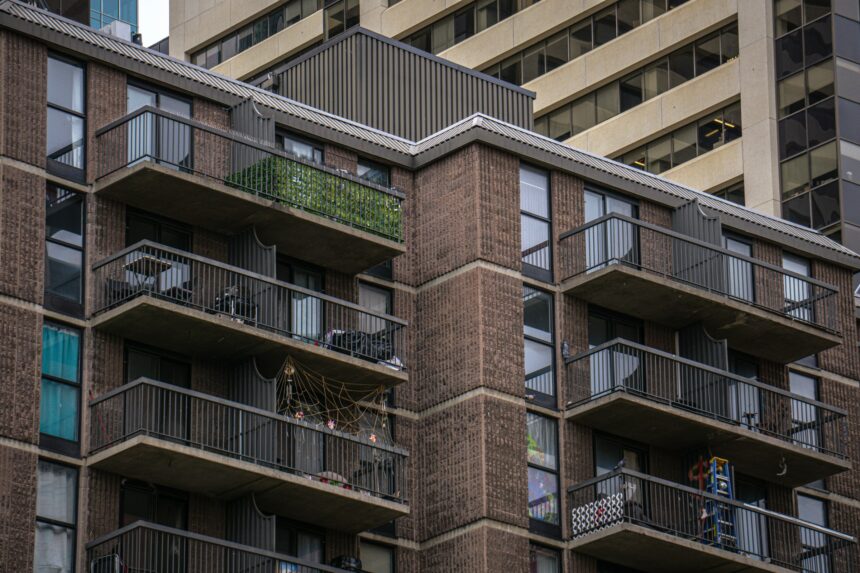
Owners at The Berkeley, a condominium near 101 Avenue and 116 Street in central Edmonton, say they have been receiving letters from firms offering above-market prices for their units and pitching a conversion of the building to rental housing.
One firm named by owners, Harmani Investments, has said its goal is long-term rental housing, that it makes voluntary offers to buy units and that it exercises the rights attached to any unit it owns. Darlene Reid of the Realtors Association of Edmonton has said the approach is turning up at several buildings in the city.
Both halves of the firm’s description are lawful. An owner can sell. A buyer can buy. The second half is where the Act starts to matter, because the rights attached to a unit include its unit factors, and unit factors carry weight in the votes that elect boards and change bylaws.
The Act weighs the building as a whole
The firm describes its approach as voluntary offers, while section 61 asks a judge to weigh the “rights and interests of the owners as a whole,” a test that looks at the building and does not say how much weight the last owner in it should carry.
That is left to the Court, case by case. The Act sets a high bar for ending a condominium and a lower one for running it. A special resolution needs 75% of the persons entitled to vote and 75% of the unit factors. A buyer that holds enough units can reach those numbers years before anyone files a termination application, and the board it helps elect sets budgets and maintenance priorities in the meantime.
The same Act governs every condominium in Alberta, including the units that remain a common first home in Calgary.
Property rights have to run in both directions
The case for the buyer is real. A willing seller and a willing buyer settling on a price is how property is supposed to work, and nobody should be lectured for taking a strong offer. Rental housing in central Edmonton is a legitimate use for a building, in a country still paying the cost of housing paralysis.
The same principle covers the owner who says no. The Act already treats ending a condominium as serious enough to need unanimity or a court. Service Alberta’s own guide lays out how much of daily condominium life runs through bylaws and the votes that change them. What the Act does not address is the stretch before termination, when control of those votes moves to an owner whose plan for the building differs from the plan of the people living in it.
Under the Act as written, an owner who will not sell keeps the unit until every other owner agrees or a judge orders the condominium ended. Until then, that owner pays the fees, votes the unit factors on title and lives under the bylaws the majority passes.